
Dot Transmissions has served drivers since 1978 with clear, reliable auto care. If your car stalls or feels rough during a cold morning start, this may point to a transmission issue that needs attention.
Understanding the way your engine and gears interact is the first step. Taking a bit of time to inspect fluid levels and service history can prevent bigger failures.
Our team has seen many vehicles suffer over the years because owners ignored early signs. Dot Transmissions offers expert checks to ensure your car shifts smoothly and safely.
Act early. A quick service visit saves money and keeps you on the road with confidence.
Key Takeaways
- Early signs on a cold morning often indicate a serious transmission issue.
- Dot Transmissions has offered trusted service since 1978.
- Inspecting fluid and gear engagement can prevent costly repairs.
- Professional checks keep engine and gears working together.
- Schedule service promptly to avoid long-term damage.
Understanding the Hard Shifting When Cold Transmission Problem

Low morning temps can alter fluid flow inside gear systems, and that change often shows up on the first drive. Thicker fluid slows valve movement and delays gear engagement. This is a common issue across many models.
The Science of Cold Starts
At lower temp, transmission fluid becomes more viscous. The valve body and clutches take longer to reach operating range.
Reduced flow means the tranny may feel like it is stuck in a specific mode until things warm up. This effect is usually temporary but can mask mechanical wear.
Identifying the Problem
Many people post on home forums describing a rough morning engagement. Our service team reviews posts and replies from members to find patterns across cars and models.
Use the click expand feature on our website to compare models and see when to contact a dealer. Dot Transmissions also provides info about whether warranty coverage applies or if normal wear is likely the cause.
Why Cold Weather Impacts Your Transmission
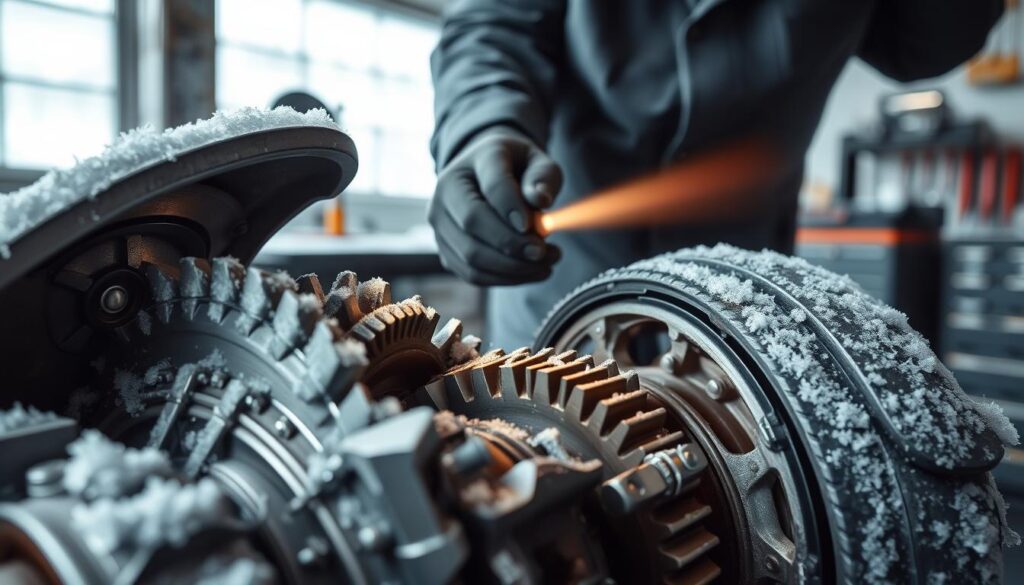
Edmonton’s extreme lows force gear systems to work outside their designed range. In very low temps, lubricants thicken and valves respond more slowly. This raises stress on clutches and seals in many vehicles.
Our technicians have studied these effects for years. They find some models show failures after only a few thousand miles in harsh climates.
A minor issue can escalate quickly. Continuing to drive high mileage without proper checks often voids warranty coverage. Documenting every visit helps protect that coverage.
“Regular inspections are the best defense against early wear,” says a senior technician.
- Inspect fluid and seals before winter starts.
- Record dealer and service visits to preserve warranty.
- Address odd noises or slow engagement immediately.
| Region | Typical failure miles | Recommended action |
|---|---|---|
| Edmonton (extreme cold) | 3,000–15,000 miles | Pre-winter inspection + documented service |
| Cold climates (general) | 5,000–30,000 miles | Use approved fluids; dealer check |
| Milder regions | 30,000+ miles | Routine maintenance per schedule |
Common Symptoms of Cold Weather Transmission Issues
A brief pause between ignition and gear engagement is a common signal drivers notice first. This “Cold-Start” Hesitation happens when thicker fluid causes a several-second delay before the gear engages. The pause protects the engine and drivetrain but also warns of viscosity or seal concerns.
Delayed Engagement
During a cold morning, you might notice a delay in gear engagement. Many people report this across the first few miles of their commute. It is often a sign to inspect fluid level and mileage history.
Harsh Shifting
If your car experiences hard shifts or abrupt changes as it moves at low mph, that indicates increased wear or thickened fluid. This type of shift can strain gears and shorten service life.
Slipping Gears
Slipping occurs when the engine revs but the car does not accelerate. Hardened seals or degraded fluid often cause this. If the issue persists after the vehicle warms up, visit a dealer to protect gears and avoid higher repair miles.
- Click expand on our service page to see recommended inspection mileage.
- Our team reviews replies from members to track common causes.
- If symptoms continue, schedule a professional check to stay safe on the road.
The Role of Fluid Viscosity in Gear Engagement
Viscosity directly affects how quickly gears accept power at startup. Synthetic transmission fluid stays thinner in extreme low temp. That allows better lubrication and faster flow through the valve passages.
Changing to a synthetic fluid can improve how your tranny functions over the years. Proper fluid keeps clutches and the valve body responsive.
Watch the pan and filter. Our service technicians inspect the filter and pan for debris. They ensure no blockage hinders fluid flow through the valve.
If oil or fluid looks milky, water may have entered the pan. That condition needs immediate service to protect seals and gears. Consult a dealer about warranty coverage for fluid change during colder months.
- Benefit: Synthetic fluid maintains flow at lower temp and reduces wear.
- Check: Filter and pan inspections reveal contamination or debris.
- Action: Ask a dealer if a fluid change is covered under warranty.
| Item | Why it matters | Recommended action |
|---|---|---|
| Fluid type | Determines viscosity at low temp | Use approved synthetic transmission fluid |
| Filter & valve body | Control flow and pressure for gear engagement | Inspect and replace during service |
| Pan & oil appearance | Shows contamination or water ingress | Drain, clean, and repair seals if milky |
How to Properly Warm Up Your Vehicle
Giving the engine a couple of idle minutes helps oil and gear fluid flow where they must. This simple step lowers wear and protects seals in the first few miles.
Best Practices for Idling
Allow 2–3 minutes at startup so engine and transmission fluid circulate. Two to three minutes is usually enough to reduce strain before driving off on a cold morning.
Drive gently for the first 3–5 miles. Keep speeds below 30 mph for the first few minutes to let gears and the engine reach normal temp.
- Tip: Many members on home forums recommend steady, light acceleration for the initial miles.
- Check: Click expand on our website to find model-specific info and recommended mileage for warm-up routines.
- Benefit: A bit of patience in the first minutes helps keep the warranty intact and extends miles of reliable service.
“A short warm-up prevents the system from entering protective mode and saves costly repair work.”
Benefits of Switching to Synthetic Transmission Fluid
A high-grade synthetic fluid keeps moving parts lubricated when conventional oil thickens.
Synthetic fluid stays thinner in extreme low temps, so it flows faster through the pan and valve passages. That helps gears engage smoothly and reduces stress on the engine and clutches.
Dot Transmissions recommends a professional change and a filter inspection at an approved dealer. A proper service ensures the correct fluid formula and a clean filter for long-term performance.
- Better lubrication: Protects gears and internal parts across many years and mileage.
- Smoother shifts: Reduces abrupt engagement caused by thickened oil in the pan.
- Preventive care: A synthetic change is a proactive service that limits wear and repair costs.
Choosing synthetic is a smart step. It improves how a gear engages at startup and helps your car keep reliable miles for years.
Inspecting for Water Contamination and Seal Damage
Water in the gearbox can show up as milky fluid and signal urgent service. Milky or pink oil means moisture mixed with oil. That mix can freeze and crack the valve body. Act quickly to avoid costly failures.
Dot Transmissions offers a comprehensive inspection of seals, gaskets, and fluid levels. Technicians lift the pan and inspect the filter and the pan for contamination. They also check valves for corrosion or cracking.
Early detection protects your warranty and extends vehicle years of reliable use. A detailed check documents findings and helps preserve coverage with your dealer.
- If your transmission fluid looks milky, schedule an immediate inspection by Dot Transmissions.
- Technicians inspect the valve and filter for damage to keep warranty valid for years.
- Professional pan and seal checks prevent major failures as mileage increases.
- You can click expand on our service page to learn how seal breaches allow water entry.
When to Seek Professional Transmission Service
Persistent rough engagement after a few miles means it’s time for a pro inspection. If your car still shifts poorly for more than a few minutes after warming up, book a diagnostic.
Dot Transmissions has provided honest, professional service since 1978. Their team reviews mileage, service history, and member replies on the website to find trends across models.
Technicians inspect the valve, filter, and pan to locate long‑term wear. They check oil and fluid condition and test how the gear and engine work under light load.
Don’t ignore recurring signs. Whether you drive a few miles or many, early service protects mileage and years of reliable road use.
“A short diagnostic visit prevents costly repairs later.”
- Book an inspection if symptoms return consistently or last beyond a short warm-up.
- Ask about warranty coverage with your dealer and keep records of service miles.
- Call to schedule a check and avoid a bigger problem down the road: info@bestcarshippinginc.com or (307) 288-5972.
Long Term Effects of Ignoring Cold Weather Shifting Issues
Small, recurring delays at startup compound into major service needs after many miles. Repeated cold starts and rough engagement add steady wear to clutches, valves, and seals.
Left unchecked, this wear speeds deterioration over years. Driving while the vehicle stays in protective mode can damage the filter and pan. Debris builds up and clogs passages. That raises stress on gears and oil passages.
Owners often report a few minutes of hesitation, then drive on. Waiting a bit too long has turned a minor issue into a costly repair. Persistent slipping or failure to shift can cut overall mileage and force a full rebuild after many miles.
- Ignoring hard shifts for years may require a complete rebuild of internal gears.
- Continuing to drive in protective mode risks irreversible filter and pan damage.
- Dealers advise addressing transmission fluid concerns promptly to avoid debris in the valve body.
Preventive action saves money. A bit of maintenance today preserves mileage and protects years of reliable service. For service, contact the dealer or call (307) 288-5972 or email info@bestcarshippinginc.com.
Conclusion
A brief, regular check of fluid and seals prevents small issues from growing into costly repairs. Routine care saves time and protects drivability through winter months.
Inspect the pan, verify fluid level, and allow a short warm-up before driving. These steps reduce wear and limit the chance of a larger problem.
Schedule professional service with an approved dealer if any signs persist. Dot Transmissions’ team stands ready to help and to document findings for warranty protection.
Call (307) 288-5972 or email info@bestcarshippinginc.com to book a check and keep your vehicle reliable all season.