
Best Car Shipping Inc. provides a clear, business-focused overview of typical auto transport expenses and what to expect when you request a quote.
Current benchmarks show per-mile ranges near $0.40–$2.00, with an average move often cited around $650 and other nationwide figures nearer $1,215 depending on route length and market conditions.
Shipping cost depends on distance, carrier type, vehicle condition, season, and delivery speed. Professional service includes scheduling, pickup, loading, transit, delivery, and the paperwork that protects the shipment.
Buyers should compare total rates and per-mile pricing, pick open or enclosed transport, and consider operable versus inoperable vehicle handling. Transparent pricing, no hidden fees, and clear communication cut surprises at pickup and delivery.
For current prices and availability, request a quote and speak with a coordinator at Best Car Shipping Inc.: info@bestcarshippinginc.com or (307) 288-5972. This guide will follow with route examples, per-mile ranges, and tips to lower cost without risking the vehicle or schedule.
Key Takeaways
- Per-mile ranges vary widely; expect $0.40–$2.00 in many cases.
- Average moves often fall near several hundred dollars; market reports can differ.
- Professional transport covers pickup, loading, transit, delivery, and documentation.
- Compare total price and per-mile rates when evaluating offers.
- Choose open vs enclosed and standard vs expedited based on budget and risk.
- Request a live quote from Best Car Shipping Inc. for current rates and schedules.
What car shipping costs right now in the United States
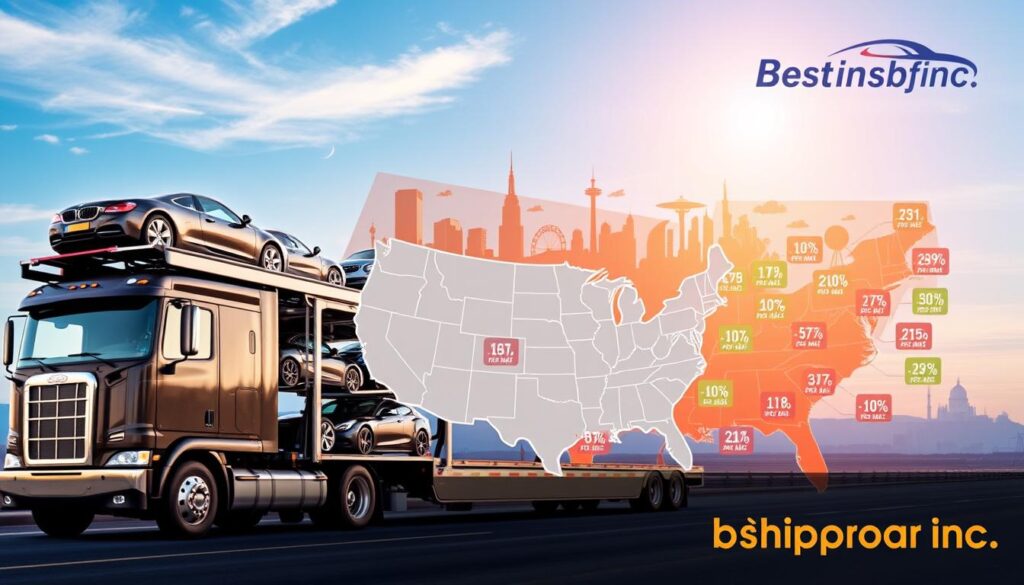
Data from recent lane pricing shows carriers quoting between $0.40 and $2.00 per mile for many vehicle transfers. The national average total cost sits near $650, though specific routes and timing change that figure.
What a typical total price covers:
- Truck space, driver labor, route planning, loading and unloading.
- Standard cargo insurance and delivery coordination.
- Exclusions such as terminal storage, special permits, and extra handling fees.
Per-mile ranges and why they vary
Short runs often show higher per-mile prices because fixed carrier costs spread across fewer miles. Longer distances usually fall in the $0.50–$1.00 per mile band, while short lanes can reach $1.50–$2.00 per mile.
“Per-mile figures are decision support, not a final invoice; accessorials can change totals.”
The table below gives a quick comparison of typical bands and common inclusions.
| Range | Typical per-mile | Common coverage |
|---|---|---|
| Short (under 500 miles) | $1.50–$2.00 | Door delivery, basic insurance, loading |
| Medium (500–2,500 miles) | $0.75–$1.50 | Door-to-door options, standard handling |
| Long (over 2,500 miles) | $0.40–$1.00 | Route planning, multi-stop loads, standard insurance |
Request a live quote that reflects current truck availability and exact ZIP code lanes: per-mile benchmarks. For direct assistance email info@bestcarshippinginc.com or call (307) 288-5972.
Average car shipping cost benchmarks by distance and carrier type

Benchmark averages give shippers a quick reference for planning budgets by distance and carrier type. These figures are market averages and serve as starting points before requesting a formal quote.
Short moves: under 500 miles
Open transport averages about $630 for this band. Enclosed transport averages about $930.
Note: Fixed logistics and scheduling play a larger role on short lanes. That raises per-mile and total costs compared with long runs.
Mid-range moves: 500–2,500 miles
Open transport averages near $1,135. Enclosed transport averages about $1,550.
This range covers most state-to-state transfers. Open transport often provides the best value for everyday vehicles and routine delivery.
Long hauls: over 2,500 miles
Open transport averages about $1,350. Enclosed transport averages about $1,830.
For coast-to-coast shipments, enclosed transport is chosen more often for higher-value vehicles. The trade-off is extra protection versus higher prices.
| Distance band | Open transport | Enclosed transport |
|---|---|---|
| Under 500 miles | $630 | $930 |
| 500–2,500 miles | $1,135 | $1,550 |
| Over 2,500 miles | $1,350 | $1,830 |
“Use these market averages to spot outlier quotes that may hide missing services or extra fees.”
The carrier type affects exposure to weather and road debris. Choose based on risk tolerance, vehicle value, and delivery needs. For a tailored estimate, request a average car shipping rates.
Per-mile pricing explained: what “cost per mile” really means
Per-mile figures condense a full quote into a simple number that helps buyers compare options quickly. Cost per mile equals the total quote divided by the total mileage. It is a comparison tool, not the full story.
Why longer trips often show a lower per mile price
Longer runs lower the per-mile number
Fixed tasks like dispatch and loading spread across many miles on long hauls. Highway routing also improves predictability and allows carriers to plan fuller loads.
Lower per mile does not mean lower total
Total cost rises with distance
Even though per mile falls, total cost climbs because fuel, driver hours, and time increase with distance. Use per-mile as a sanity check, not the final decision metric.
| Distance band | Per-mile (approx) | When to expect higher prices |
|---|---|---|
| 0–500 miles | $0.80/mi | Rural pickup, enclosed transport, expedited request |
| 500–1,500 miles | $0.73–$0.70/mi | Metro access eases costs; oversized vehicles add fees |
| 1,500–3,500 miles | $0.48–$0.33/mi | Long-haul efficiencies; seasonal demand can still raise rates |
- Upward drivers include remote delivery, inoperable condition, and tight pickup windows.
- Request a written quote that lists these factors so final costs match expectations.
- Choosing flexible dates and metro meeting points keeps rates competitive for car shipping and auto transport.
How much is car shipping from state to another based on your route
Where pickup and delivery fall on the map often matters more than the listed states when carriers set a rate. Route economics drive pricing because carriers favor lanes they can fill and return on.
Major metro routes vs rural pickup and delivery
Urban-to-urban shipments are usually easier to schedule. More carriers run those lanes, which lowers rates and shortens transit windows.
Rural or hard-to-reach pickups add time and detours. That creates access fees and possible surcharges for the shipment.
Popular corridor demand and how it affects rates
High-demand corridors show predictable patterns. For example, Florida–Northeast snowbird flows and California–Texas volume lanes draw steady carrier availability.
When demand rises on a corridor, rates climb. When lanes balance, carriers can offer more competitive prices.
Practical advice:
- Exact ZIP codes matter more than state names; a nearby metro ZIP can reduce the quote.
- Customers in rural areas often save by meeting a truck at a local terminal or parking lot.
- Provide access notes (gates, low branches, narrow streets) when requesting a quote to avoid day-of changes.
“Route economics and demand patterns shape fair rates; precise pickup and delivery details protect schedules and budgets.”
Best Car Shipping Inc. helps customers choose a plan that protects the vehicle and the schedule while keeping rates transparent. Request a tailored quote with real pickup/delivery notes: info@bestcarshippinginc.com or (307) 288-5972.
Quote calculator inputs: what carriers and brokers use to price your shipment
Carriers and brokers base a quote on a short list of measurable inputs that drive final prices. These clear items let a provider return accurate shipping estimates and reduce back-and-forth.
Pickup and delivery ZIPs and location access
Exact ZIPs matter. A downtown address with easy truck access lowers the price. A tight cul‑de‑sac or gated lot raises costs because drivers need extra time and equipment.
Total distance and planned route
Long highway corridors are efficient. Remote detours add miles, time, and fuel burn. That changes the final quote for any shipment.
Vehicle type, size, weight and condition
Larger vehicles use more space and fuel. Inoperable units require winches and dollies and limit available carriers. Those condition changes increase prices.
Transport method, timing, and market levers
Open transport is the economical option; enclosed transport adds protection and cost. Flexible pickup windows help match available truck space and lower prices. Expedited service demands priority dispatch and a premium. Fuel and market conditions are live factors; reputable providers update quotes to reflect current rates.
“Provide exact ZIPs, vehicle specs, and preferred dates to get the most accurate quote.”
Vehicle size and type: how your car changes the shipping cost
A vehicle’s size often dictates the truck space required and the fee that follows.
Carriers price shipments by space on the trailer and by weight. Larger vehicles use more deck slots and more fuel. That raises the final transport cost and can limit carrier options.
Typical pricing differences for sedans, SUVs, and trucks
Use these practical benchmarks to estimate price impact before requesting a quote.
| Category | <500 mi | 500–2,500 mi | >2,500 mi |
|---|---|---|---|
| Sedan | $425 | $725 | $925 |
| Compact SUV | $455 | $775 | $1,025 |
| SUV | $505 | $825 | $1,075 |
| Truck | $575 | $925 | $1,275 |
Accessories that can raise your quote
Racks, oversized tires, lift kits, and other modifications change dimensions and clearance needs. Carriers may require special loading angles or fewer vehicles per load.
- Disclose roof racks, bike racks, and lifts when requesting a quote.
- Measure altered height, length, and width to avoid a re-rate at pickup.
- Modified vehicles sometimes need enclosed transport or specialty carriers.
“Accurate vehicle details protect the customer: the right truck gets dispatched and the quote stays reliable.”
Need a precise estimate? Best Car Shipping Inc. can review vehicle details and recommend open or enclosed transport. Request a tailored vehicle transport quote or call (307) 288-5972.
Open transport vs enclosed transport: cost, protection, and best use cases
Choosing between open and enclosed transport starts with assessing asset value and exposure risk. Open carrier transport remains the default for daily‑driver vehicles. It delivers the lowest price and wide availability for most vehicle transport needs.
Open carrier transport for everyday vehicles
Open transport offers efficient, frequent service and lower rates. It provides standard protection against routine road conditions while keeping costs manageable.
Enclosed transport for luxury, classic, exotic, and high-value vehicles
Enclosed transport adds weather and debris protection. Expect costs several hundred dollars higher than open options. This method is prudent for antiques, exotics, and high‑value pieces where finish and trim matter.
When “top-load” and premium handling make sense
Top-load and premium handling reduce exposure on multi‑level trailers and can lower risk for low‑clearance or pristine vehicles. Availability can be limited, so early booking helps control rates and schedule impact.
- Match protection level to vehicle value and route conditions.
- Weigh extra cost against risk and seasonal weather.
- Request a side‑by‑side quote for open vs enclosed options.
“Choose protection based on value, not impulse; the right option balances cost and risk.”
Discuss protection needs and request a comparative quote: info@bestcarshippinginc.com or (307) 288-5972.
Door-to-door pickup and delivery vs meeting at a nearby lot
Local access limits often determine whether a driver can reach your front door. Drivers will approach as close as legal and safe access allows. That is the practical meaning of door-to-door for auto transport.
City restrictions and physical limits
City restrictions, tight streets, and large-truck access
Narrow streets, low branches, weight limits, HOA rules, and tight turns can block curbside pickup. Some municipalities ban large trucks on residential blocks. In those cases a nearby public lot becomes the pickup point.
Practical meeting-point guidance
- Choose large, flat lots such as shopping centers or grocery stores for safe loading.
- These spots reduce time on site and lower damage risk to vehicle and property.
- Confirm gates, hours, and permission with the lot owner before the scheduled pickup.
| Access factor | Common impact | Customer action |
|---|---|---|
| Narrow roads | Requires alternate meeting point | Provide nearest accessible lot |
| HOA or permit rules | Possible fines or denied entry | Obtain permission or choose nearby public lot |
| Low clearance | Smaller equipment or top-load needed | Note vehicle height and obstacles |
Communication matters. Confirm pickup delivery details in advance to avoid delays. Limited access can raise costs because of extra time or special equipment. Safer access lowers risk and stress on pickup day.
Need help? Coordinators at Best Car Shipping Inc. will recommend a convenient meeting point if the address is restricted. Email info@bestcarshippinginc.com or call (307) 288-5972.
Seasonality and weather conditions that move auto transport prices
Seasonal cycles reshape carrier availability and directly influence transport pricing across the calendar. These shifts are among the largest factors carriers use when setting quotes and planning routes.
Winter
Lower demand in January and February can bring lower costs. But snow and ice raise delay risk and complicate pickup and delivery windows.
December requires early booking because holiday and snowbird flows create mixed demand patterns.
Spring
April and May show rising demand as relocations increase. Northbound corridors can backlog, lifting rates and slowing transit time.
Summer
Peak volume arrives in summer. Favorable weather makes transport easier, yet tight capacity creates higher prices and shorter scheduling windows.
Fall
October and November often offer better availability and lower costs. Mild weather and reduced demand let customers find competitive rates and flexible pickup dates.
“Book early during peak months and stay flexible on dates to protect timelines and reduce extra costs.”
| Season | Demand pattern | Common impact |
|---|---|---|
| Winter | Mixed—lower overall | Lower prices but higher delay risk |
| Spring | Rising | Higher rates on northbound lanes |
| Summer | Peak | Tighter schedules and premium pricing |
| Fall | Off-peak | Better availability and lower costs |
Practical advice: request early quotes and note flexible pickup windows. For a current look at typical charges, review car shipping charges and contact Best Car Shipping Inc. with specific dates and ZIPs for a tailored estimate.
Expedited shipping and guaranteed pickup: what you pay for speed
Expedited transport means the provider reserves truck space and shortens the scheduling window for priority pickup. This service reduces wait time by moving a shipment higher on the carrier’s dispatch list.
Operationally, expedited tiers require tighter planning and often a premium. Carriers like Nexus or RoadRunner price expedited open services above standard open. Enclosed expedited carries the highest price due to limited capacity and extra protection.
Expedited vs standard scheduling windows
Standard windows offer flexibility. They let carriers consolidate loads and lower rates.
Expedited or guaranteed pickup narrows the window. That forces a carrier to hold or reassign deck space. The result is a higher price and fewer available trucks.
When faster pickup-delivery is worth the premium
Choose expedited when time loss causes financial harm. Typical cases include closing dates, job relocations with firm start dates, military moves, auction timelines, and dealer deadlines.
Expedited still relies on safe routing and weather. Reputable providers share realistic ETAs and update status during transit.
“Priority scheduling reduces wait, but it does not eliminate routing constraints or weather delays.”
Practical guidance:
- Request a quote that labels the service level: standard vs expedited.
- Ask whether “guaranteed pickup” is a true guarantee or priority scheduling.
- Weigh the premium against potential losses from late delivery.
| Service level | Typical impact on price | When recommended |
|---|---|---|
| Standard scheduling | Base rates; most competitive | Flexible dates; non-urgent transport |
| Expedited open | Moderate premium | Firm deadlines; faster pickup needed |
| Expedited enclosed | Highest premium | High-value vehicles with tight timelines |
Best Car Shipping Inc. can compare standard and expedited options so customers pick the right balance of time and cost. For a labeled quote, email info@bestcarshippinginc.com or call (307) 288-5972.
Real route examples: sample prices for popular state-to-state shipments
Real-world lane snapshots help set expectations for delivery time and likely rate ranges.
New York → Florida: snowbird season swings
Example: RoadRunner reported an average near $1,315 in Feb 2025 and about $1,215 in Oct 2025.
Why it moves: Seasonal demand raises rates in winter. Booking early secures better delivery windows and protects price.
California → Virginia: coast-to-coast benchmark
Average moves around $2,225 reflect long distance and transit time. Enclosed transport is commonly chosen for extra protection on these long runs.
Michigan → Texas: urban-to-urban efficiency
January 2025 averages were about $1,495. Urban pickup and delivery lower access fees and often improve carrier availability, reducing total costs.
California and Texas lane snapshots
| Lane | Delivery (days) | Price range |
|---|---|---|
| California → Florida | 4–5 | $1,200–$1,500 |
| California → New York | 6–8 | $1,200–$1,500 |
| Texas → California | 2–3 | $649–$849 |
| Texas → Illinois | 1–2 | $549–$749 |
- Use these lane examples as benchmarks; exact quotes depend on ZIPs, vehicle specs, and dates.
- Compare any price against these rates to spot lowball offers or hidden fees.
- Book early for high-demand corridors to lock a favorable rate and delivery window.
“Route benchmarks make quote comparisons practical; they reveal outliers and protect timelines.”
Request a route-specific quote from Best Car Shipping Inc. with exact pickup and delivery notes: info@bestcarshippinginc.com or (307) 288-5972.
Auto cargo insurance and coverage: what’s included and what may cost extra
Auto cargo insurance defines who pays for damage during transit and sets expectations for a claim. Standard coverage often appears in written quotes, but limits vary by carrier and route.
Standard coverage versus added protection
Standard carrier insurance usually covers collision and loss within set limits. It protects most routine vehicle transport, but payouts follow policy language and exclusions.
Added protection suits high-value or collectible vehicles. Enclosed transport is often chosen together with higher coverage levels as part of a broader protection plan.
- Confirm in writing: coverage limits, deductible, exclusions, and the claims timeline.
- Document the condition with pre-trip photos and Bill of Lading notes.
- Keep delivery inspection records; they speed any claim against the carrier’s policy.
“Request explicit policy language and deductible amounts before accepting a quote.”
Best Car Shipping Inc. reviews insurance questions and recommends the right protection level for your vehicle. Email info@bestcarshippinginc.com or call (307) 288-5972.
How to spot lowball quotes and avoid hidden fees
When a quote sits well below market norms, buyers should pause and probe details. Low pricing can win a booking but then cause delays, re‑rating, or limited carrier acceptance.
Why “too good to be true” pricing is a red flag
Unrealistic offers often aim to secure the order quickly. After booking, the provider may add fees or assign a carrier that declines the load.
Signs to watch:
- Very short pickup windows with no carrier confirmation.
- Rates listed without insurance language or payment terms.
- Requests for large, last‑minute balance payments.
What transparent pricing should include
A clear quote lists the carrier type, pickup and delivery window, insurance terms, payment schedule, and cancellation policy.
- Ask about inoperable handling, oversized surcharges, rural access, guaranteed pickup, and storage/wait time.
- Compare multiple quotes and favor clarity over the lowest price.
“Significantly lower-than-average pricing can signal later increases or service gaps.”
Best Car Shipping Inc. offers businesslike communication and upfront pricing to avoid surprises. Request a transparent quote review by phone at (307) 288-5972.
How to lower your cost to ship a car out of state without cutting corners
Flexibility and the right meeting point often deliver the biggest savings on vehicle moves. Small planning changes reduce rates while preserving protection.
Be flexible on pickup dates
Open windows let carriers match available deck space. That lowers premiums for priority requests. Offer two or three pickup days to improve matching and reduce total cost.
Choose metro-area meeting points
Meeting at a terminal or public lot trims deadhead miles. Urban pickup reduces access fees and simplifies loading. That makes the quote more competitive and reliable.
Ship during slower months
Late fall and some winter weeks often show softer demand. Booking early around holidays helps secure lower rates without risking delivery time.
Confirm operable condition
Declare vehicle operability. Inoperable units need winches and add handling fees. Accurate details prevent re‑rating and day‑of delays.
| Action | Main benefit | Expected impact |
|---|---|---|
| Flexible pickup dates | Better truck matching | Lower price; shorter wait |
| Metro meeting point | Reduced deadhead | Fewer surcharges |
| Off-peak timing | Lower demand | Lower rates |
| Confirm operable | No winch fees | Avoid re-rate/delay |
“Lower price should come from efficiency and flexibility, not reduced protection.”
Best Car Shipping Inc. can recommend the lowest‑risk way to reduce cost ship car without sacrificing reliability. Email info@bestcarshippinginc.com or call (307) 288-5972.
Preparing your vehicle for shipment to prevent delays and disputes
A clear checklist for the pickup day saves time and preserves proof of pre-existing condition. Follow firm steps so the carrier can inspect, load, and deliver without surprises.
Cleaning and documenting condition
Clean inside and out so scratches, dings, and stains show clearly. Take photos from multiple angles and close-ups of any damage. Time-stamp images when possible for recordkeeping.
Fuel, alarms, and personal items
Keep fuel at about a quarter tank. Disable alarms and confirm tires and battery are ready for loading. Remove personal items. If small items remain, get the allowance in writing, including any weight or placement limits.
Inspection and the Bill of Lading
The driver will walk the vehicle and complete the Bill of Lading. This document is the official condition report and receipt. Review and sign at pickup, then compare it with the delivery copy before accepting the vehicle.
- Photograph condition before pickup and again at delivery.
- Give the carrier access notes for tight driveways or gates.
- Keep the signed Bill of Lading and photos for any claim.
Preparation protects the owner and speeds service. For questions email info@bestcarshippinginc.com or call (307) 288-5972.
Conclusion
Conclusion
Pair live per mile ranges (typical market: $0.40–$2.00; common band $0.50–$2.00) with exact pickup and delivery notes for a reliable budget. Distance and vehicle size set base rates. Carrier type, seasonality (for example, NY→FL snowbird cycles), and pickup access shift final prices and time.
Key actions: gather ZIP codes, vehicle details, preferred pickup windows, and decide open versus enclosed transport before requesting quotes. Enclosed transport makes sense for high‑value vehicles or exposed routes.
Choose a transparent provider that lists inclusions and avoids lowball surprises. For a current, clear estimate and scheduling support contact Best Car Shipping Inc. at Upton vehicle transport, email info@bestcarshippinginc.com, or call (307) 288-5972.