
Dealerships rely on steady logistics to move inventory across the United States. Efficient transport keeps lots stocked and sales flowing. Professional shipping companies protect high-value vehicles and cut operational downtime.
Choosing the right partner matters. Evaluate carrier reputation, insurance, and tracking before you book. Proper planning for cross country transport reduces delays and unexpected costs.
A trusted provider handles multi-vehicle moves with clear timelines and real-time updates. This helps meet customer expectations and manage budgets. For a deeper look at service models and selection criteria, visit service options and tips.
Key Takeaways
- Reliable partners protect vehicles and reduce downtime.
- Check licensing, insurance, and customer reviews before hiring.
- Plan cross country moves early to secure capacity and rates.
- Choose open or enclosed transport based on vehicle value and risk.
- Real-time tracking and clear communication improve delivery confidence.
Understanding the Role of Professional Auto Transport
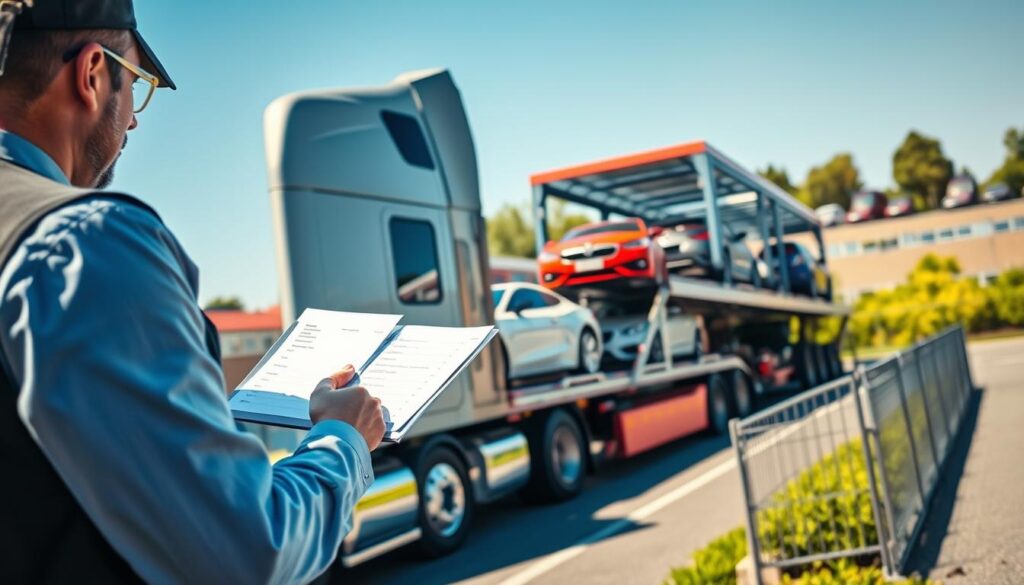
Professional auto transport keeps dealership lots stocked without adding strain to sales teams. It moves inventory safely between states and saves staff time.
Defining Auto Transport
Auto transport is the process of moving a car or vehicle using specialized trailers and trained drivers. This service covers pickup, secure loading, transit and final delivery.
Dealerships use car shipping to avoid long drives and mileage costs. Outsourcing transport protects vehicles and preserves trade-in value.
The Role of Logistics
Logistics coordinators assign each vehicle to reputable carriers and manage schedules. They verify insurance, run safety checks, and keep dealers informed.
- Carrier selection: match vehicles with the right transport and level of protection.
- Tracking & communication: provide real-time status to reduce uncertainty.
- Cost control: obtain quotes, compare prices, and optimize routes to save money.
- End-to-end handling: from pickup to delivery, the company manages paperwork and driver coordination.
For professional logistics support, dealerships can contact Sherpa Auto Transport at 877-850-1231 or email info@bestcarshippinginc.com. Reliable partners free staff to sell cars while carriers handle the transport process.
Why Dealerships Need Reliable Best Car Shipping Options for Car Dealerships

Dealerships depend on steady, predictable transport to keep inventory moving and sales on schedule. Reliable auto transport reduces downtime and helps managers meet delivery windows for promotions and auctions.
Consistent shipping lets dealers serve out-of-state buyers and expand market reach without adding internal logistics staff. Outsourcing lowers overhead and shifts risk to specialized companies with trained drivers and proper insurance.
Professional partners ensure vehicles arrive as they left the lot. That preservation of condition protects resale value and improves customer satisfaction.
“Reliable transport turns inventory into opportunity — on time, intact, and ready for sale.”
- Faster turnarounds: predictable transit times for scheduled events.
- Nationwide reach: access to buyers across state lines.
- Lower costs: reduced internal staffing and handling expenses.
Dealerships seeking vetted carriers can compare quotes, reviews and service levels. For a trusted partner and detailed information, see top-rated transport services.
Evaluating Different Types of Vehicle Transport Services
Dealers often weigh cost and convenience when choosing between terminal pickup and direct delivery.
Terminal-to-terminal delivery is a cost-effective choice when a dealership can access regional hubs. Major carriers consolidate loads at terminals to improve route efficiency and lower shipping costs. This method suits non-urgent inventory moves and multi-car transfers.
Door-to-door service delivers vehicles right to the dealership lot. It reduces handling and is ideal for high-value or luxury vehicles that need minimal contact. This service increases convenience and saves staff time during pickup and delivery.
Choosing between the two depends on timing, budget, and vehicle value. Professional auto transport companies offer both service types so dealers can tailor logistics to schedule and price. Reliable carriers provide clear guidance on the best option for each route and vehicle.
| Service | Cost | Best Use |
|---|---|---|
| Terminal-to-Terminal | Lower | Bulk shipments, flexible timeframes |
| Door-to-Door | Higher | High-value vehicles, tight schedules |
| Consolidated Hub Transport | Moderate | Route efficiency, multi-vehicle moves |
Open Versus Enclosed Carrier Considerations
Trailer selection is a key decision that balances price with protection during transit. Open carriers are the most common and cost-effective choice for standard dealership inventory moving across long routes.
Open trailers carry multiple vehicles. This makes them efficient for large transfers between lots. They lower per-unit shipping cost and speed up logistics.
Enclosed trailers add a layer of protection. They shield vehicles from weather, road debris, and salt. Luxury and classic inventory often travel enclosed to preserve condition and value.
Decide based on value and sensitivity. Use open transport for routine units and enclosed transport when damage risk or buyer expectations demand extra care.
- Capacity: open handles more vehicles per run.
- Protection: enclosed reduces exposure and handling touchpoints.
- Fleet upkeep: professional carriers maintain both trailer types to meet safety standards.
Understanding these differences helps dealerships craft a secure, cost-aware logistics strategy. For questions, contact the team at (307) 288-5972 or info@bestcarshippinginc.com.
Key Factors Influencing Shipping Costs
Several practical factors drive what a dealership will pay to move inventory between lots. Evaluating these elements helps secure accurate quotes and control costs.
Distance and Route Complexity
Distance is a primary driver of price. Short hauls under 200 miles average about $2.92 per mile. Mid-range trips (200–500 miles) sit near $0.93 per mile. Long runs over 1,000 miles can drop to roughly $0.78 per mile.
Route complexity adds charges. Heavy metro traffic, tight access, or long detours raise the shipping price and time.
Vehicle Size and Weight
Large cars and SUVs need more trailer space. That increases per-unit cost on shared loads. Enclosed transport may be required for high-value vehicles and pushes the price higher.
Condition of the Vehicle
If a vehicle is not drivable, carriers need special equipment and extra labor. That can substantially increase the quote from auto transport providers.
Dealership tip: Provide exact vehicle dimensions and condition up front. Accurate details produce precise quotes and fewer surprises from shipping companies.
| Distance Range | Approx. Price per Mile | When to Expect |
|---|---|---|
| <200 miles | $2.92 | Short, higher-cost runs |
| 200–500 miles | $0.93 | Regional moves |
| >1,000 miles | $0.78 | Cross-country transport |
Plan shipments during off-peak days and share precise info with carriers to lower costs and speed delivery. For assistance or a detailed quote, contact the company at (307) 288-5972 or info@bestcarshippinginc.com.
How Seasonal Changes Impact Transport Pricing
Seasonal demand and weather create clear windows that affect shipping prices and carrier schedules.
Winter typically brings higher rates. Snow and ice slow routes and raise risk. That pushes auto transport and shipping costs up.
Spring eases weather and increases driver availability. Many dealerships find better car shipping rates and more flexible pickup dates.
Summer is peak season. High demand means higher prices and tighter carrier capacity. Fall often offers a pricing window as demand drops.
- December: holiday schedules reduce drivers and complicate delivery.
- February: quieter demand can yield lower quotes and faster service.
| Month | Trend | Recommended Action |
|---|---|---|
| Winter | Higher prices, weather delays | Plan early; consider enclosed transport for valuable vehicles |
| Spring | Improved availability | Schedule regional moves to secure rates |
| Summer/Fall | Peak then easing demand | Book summer early; use fall for bulk transfers |
Seasonal planning helps logistics coordinators predict costs and secure reliable service. For timing or a competitive quote, contact the company at (307) 288-5972 or info@bestcarshippinginc.com.
Managing Transit Times for Inventory Logistics
Timely transit hinges on route demand, carrier schedules, and clear pickup windows. Dealership logistics teams should plan with realistic timelines and buffer days. Predictable arrival keeps sales ready and reduces lot downtime.
Typical cross-country transit runs seven to ten days. Popular corridors often finish faster because many carriers serve them. Rural pickups and deliveries can add time when local carrier coverage is limited.
Factors Affecting Delivery Speed
- Route demand: busy interstate lanes shorten transit days.
- Weather: storms and heavy rain cause delays and reroutes.
- Pickup access: tight or remote lots need extra scheduling time.
- Carrier capacity: limited trucks slow fulfillment during peaks.
Express services exist when a dealer must ship a high-priority vehicle quickly. These services raise the price but cut transit time. Reliable car shipping companies provide clear quotes and status updates so teams can manage customer expectations.
| Scenario | Typical Days | Recommended Action |
|---|---|---|
| Major corridor (high volume) | 5–8 days | Book standard service; expect regular updates |
| Cross-country (popular lanes) | 7–10 days | Allow buffer; confirm ETA with carrier |
| Rural pickup/delivery | 8–12 days | Schedule early; consider terminal drop-off |
Clear communication with the transport company reduces surprises. For help coordinating regional moves, see this regional pickup guide or contact the team at (307) 288-5972 or info@bestcarshippinginc.com.
The Importance of Insurance and Liability Coverage
Clear coverage terms let logistics teams manage risk and preserve vehicle value during transit. All professional auto transport companies must carry liability insurance to protect vehicles while en route.
Dealerships should verify cargo insurance limits and ask about deductibles. Ask for written policy details that state coverage amounts, exclusions, and the claim process.
Key verification steps:
- Confirm the carrier’s liability and cargo insurance certificates.
- Request policy limits for high-value vehicles and note deductibles.
- Ask about supplemental insurance if inventory needs extra protection.
Document vehicle condition before pickup and after delivery. Photographs and signed inspection reports speed claim resolution and prove losses when needed.
Transparency about insurance and liability is a core sign of a trustworthy transport company.
Reliable carriers prioritize safe handling to reduce claims and downtime. For questions or verification assistance, contact the team at (307) 288-5972 or info@bestcarshippinginc.com.
Preparing Vehicles for Safe Transit
Proper staging and paperwork cut processing time and limit disputes when the carrier arrives.
Document Preparation
Gather bills of lading, ownership records, and any special permits before the scheduled pickup. Clear documents let the auto transport company confirm legal title and speed the delivery process.
Note mechanical issues up front. If a vehicle is not drivable, state this on the paperwork so the carrier brings appropriate equipment.
Take signed inspection reports at pickup. These records reduce claims and clarify the vehicle condition for both the dealer and the driver.
Cleaning and Inspection
Wash and remove all personal items. A clean car allows a full inspection and helps identify pre-existing damage before shipping.
Photograph the vehicle from multiple angles. Store images with mileage and date. This visual record supports any later claim and confirms condition at pickup and delivery.
- Do a final walk-through with the carrier and sign the inspection sheet.
- Confirm pickup window and estimated delivery time with the carrier.
“Thorough preparation minimizes delays and protects inventory during transit.”
If help is needed, contact the company at (307) 288-5972 or email info@bestcarshippinginc.com for guidance on the inspection process and car shipping service.
Streamlining the Quote Collection Process
A centralized request form eliminates back-and-forth and produces consistent, comparable quotes. Using online platforms, logistics teams gather multiple bids from reputable shipping companies quickly. This saves staff time and creates a clear audit trail.
Provide exact vehicle details: make, model, condition, and pickup location. Accurate data yields reliable quotes and reduces surprise fees during pickup.
Dealerships should pick carriers that show transparent pricing. Look for line-item costs and written policies on insurance and delays. Direct communication with carriers lets teams ask about driver windows and delivery expectations before booking.
- Request at least three quotes to compare price and service.
- Check reviews and carrier insurance limits.
- Confirm pickup windows and any access restrictions.
A well-organized quote process reduces errors and improves cost control. For assistance or to get started, contact the company at (307) 288-5972 or email info@bestcarshippinginc.com.
Leveraging Technology for Real-Time Tracking
Modern GPS tools let logistics teams watch each vehicle move from pickup to final delivery in near real time.
Many auto transport providers send continuous digital updates. These messages show location, route progress, and estimated delivery time. Dealership staff use that data to plan lots and notify buyers.
Installing a discreet tracker in high-value vehicles gives added security and precise location data when needed. Reliable carriers pair GPS with driver communication to reduce unknowns during transit.
Integration matters. Modern platforms link tracking feeds to dealership management systems. That automates status reports and cuts manual check-ins, freeing staff for sales and service.
“Real-time visibility builds trust and turns transit time into a predictable part of the sales process.”
| Feature | Benefit | When to Use |
|---|---|---|
| Live GPS updates | Accurate ETAs and route alerts | All high-volume moves |
| Vehicle trackers | Extra security for valuable units | Luxury or classic inventory |
| System integration | Automated reporting, fewer calls | Dealerships with DMS integration |
For a practical reference on how dealers manage pickup and tracking, see our auto transport tracking guide. Contact the company at (307) 288-5972 or email info@bestcarshippinginc.com for help with quotes and setup.
Assessing Carrier Reputation and Customer Feedback
Reputation reviews reveal how reliably a carrier delivers vehicles and handles claims.
Check verified reviews on TrustPilot, BBB, and Angie’s to spot patterns in communication, safety, and punctual delivery. One practical example: a 2022 Volvo XC60 was shipped to Colorado without incident. That single move adds weight when paired with consistent positive feedback.
Dealers should favor companies with documented dealer experience. Feedback from other dealership customers highlights carriers that handle high-volume and high-value moves reliably.
- Ask for references and testimonials from past dealer clients.
- Request recent claim history and average delivery time.
- Compare quoted cost and service guarantees before signing.
| Source | What to Check | Why It Matters |
|---|---|---|
| TrustPilot / Angie’s | Repeat comments on punctuality and damage | Shows consistency in customer experience |
| BBB | Complaint history and resolution | Reveals responsiveness and professionalism |
| Direct dealer refs | Volume handled, special handling examples | Confirms capability with multiple vehicles |
Researching reputation is a proactive step. It protects inventory, reduces surprises, and preserves brand trust. For a practical rate comparison, consider our low-cost auto transport guide or contact info@bestcarshippinginc.com and (307) 288-5972 for help vetting carriers.
Handling Out-of-State Customer Deliveries
Delivering vehicles across state lines requires tight coordination between dealers and experienced carriers. Out-of-state sales let dealerships grow beyond local markets and meet online buyer demand.
Work with reputable car shipping companies that know regional rules and route challenges. Mountain passes in Colorado, some above 14,000 feet, can affect transit time and require drivers with local experience.
Offer customers regular updates during the transport process. Clear status messages and ETA changes build trust and reduce follow-up calls.
Professional transport services enable a five-star delivery experience. That service includes secure loading, transparent quotes, and a clean handoff at delivery.
Partnering with proven shipping companies simplifies permits, weather planning, and carrier selection. Reliable handling of out-of-state delivery boosts customer satisfaction and wins repeat business.
“A smooth interstate delivery reinforces the dealership’s commitment to customer care and professional service standards.”
For help coordinating deliveries or getting a quote, contact the company at (307) 288-5972 or info@bestcarshippinginc.com.
Navigating Regional Regulations and Permits
Regional rules and permit windows shape how carriers route and schedule each vehicle move.
Chain laws in mountain states and local idling limits in cities such as Denver require strict compliance. Professional auto transport companies handle permit lead times and paperwork so shipments meet state rules.
Oversize or overweight permits are needed for special loads. Reliable carriers secure these permits and arrange weigh station stops. This reduces roadside holds and unexpected cost.
Dealerships benefit when a transport partner knows regional nuances. That expertise speeds the shipping process and lowers risk to each car and vehicle during transit.
- Carrier responsibility: obtain permits and follow local laws.
- Compliance checks: follow weigh station and safety inspection rules.
- Stay informed: monitor permit changes to avoid delays.
| Regional Issue | Impact on Shipping | Dealer Benefit |
|---|---|---|
| Chain laws (mountain passes) | Seasonal route limits, added equipment needs | Fewer weather delays; safer transport |
| Oversize/overweight permits | Extra lead time and fees | Permits handled by carrier; smoother delivery |
| Urban idling & access rules | Restricted pickup windows, fines if noncompliant | Local knowledge shortens wait time and cost |
“Professional carriers manage permits and compliance so the dealer can focus on customers and inventory.”
Maximizing Efficiency with Multi-Car Transporters
High-capacity carriers let dealerships send multiple units on established routes with predictable timing.
Multi-car transporters consolidate shipments. This lowers the cost per vehicle and speeds up delivery time. Carriers load vehicles securely and manage tie-downs to protect each unit during transit.
Consolidation also reduces trips across country, cutting fuel use and emissions. That makes multi-vehicle moves both economical and greener.
Dealership logistics teams gain flexibility. Coordinating with companies that run regular multi-car routes helps maximize trailer space. Reliable transport companies offer adjustable pickup windows and clear quotes to match changing inventory needs.
| Benefit | Cost Impact | Best Use |
|---|---|---|
| Consolidation | Lower cost per vehicle | Bulk transfers between lots |
| Maximized trailer space | Improved speed and efficiency | High-volume runs on established routes |
| Professional loading | Reduced damage risk | High-value and mixed-condition vehicles |
“Leverage carriers that specialize in high-capacity moves to streamline inventory flow and protect assets.”
Conclusion
Clear logistics turn inventory into predictable sales by reducing delays and preserving vehicle condition. Reliable shipping choices let dealers move stock nationwide while protecting value and meeting buyer expectations.
Evaluate carrier reputation, insurance, and service types. Use technology and trusted partners to streamline workflows and lower transit costs. Plan around seasons and regional rules to avoid surprises and shorten lead times.
Partnering with experienced transport companies gives teams peace of mind. That lets staff focus on sales and service while professionals handle pickup, tracking, and claims.
For assistance or to discuss tailored logistics, contact the team at (307) 288-5972 or email info@bestcarshippinginc.com.