
This concise guide gives vehicle owners clear steps for moving a vehicle over the 1,352-mile route between the Bay State and the Sunshine State.
Readers will find an analysis of top transport providers and practical tips that protect time and value. The team evaluated more than 2,500 carriers to score reliability and safety.
Whether relocating for work or a seasonal move, this resource simplifies logistics and helps select the best auto transport option for individual needs. Expect straightforward advice on booking, insurance checks, and delivery expectations.
Priority: clear comparisons, safety metrics, and carrier oversight so owners can make confident decisions fast.
Key Takeaways
- Overview of trusted transport providers after reviewing 2,500+ firms.
- Steps to verify carrier insurance and on-time performance.
- Practical tips to prepare a vehicle for pickup and handoff.
- Cost and transit expectations for the long interstate run.
- Advice to match service type with personal needs for peace of mind.
Understanding the Car Shipping From Massachusetts to Florida Guide

This section summarizes the 1,352-mile route and explains why professional transport is the safer option for long hauls. Owners benefit from clear steps and a focus on reliability.
The Route Overview
The corridor spans roughly 1,352 miles and crosses varied terrain and traffic patterns. That distance increases exposure to delays and mechanical risks on the highway.
Why Professional Transport Matters
Licensed providers offer insurance, secure loading, and experienced drivers who manage schedules and road hazards. This protects a valuable asset during transit.
Customer satisfaction drives our recommendations. Companies with strong ratings, such as SGT Auto Transport at 4.7 stars, show consistent performance and care.
- Professional teams reduce downtime and minimize damage risk.
- Choosing reputable car transport companies avoids common DIY pitfalls.
- The complete process—booking, pickup, and delivery—is simpler with a dedicated service.
Average Costs and Transit Times
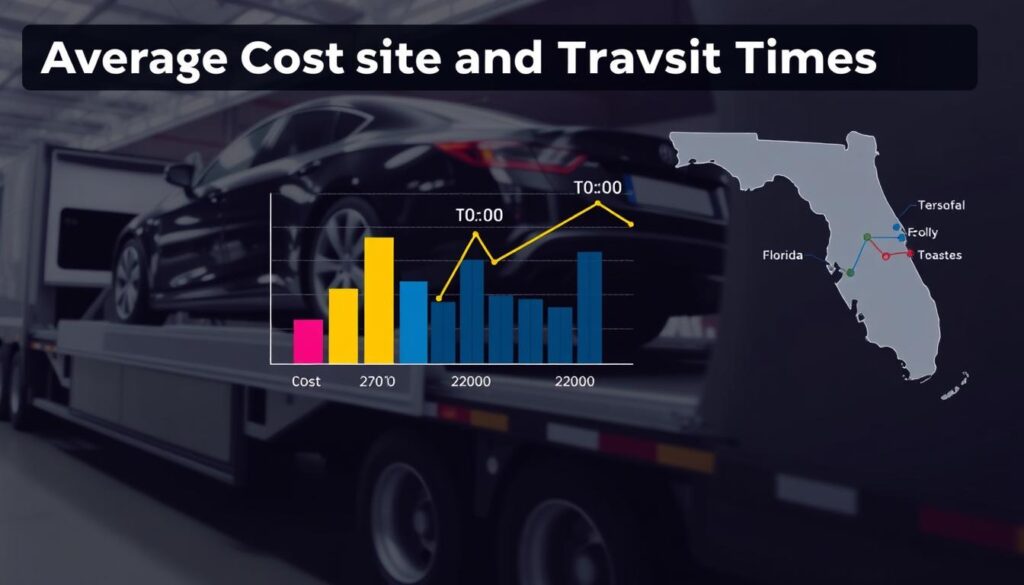
Knowing cost and duration ranges makes planning straightforward. The typical price to ship a car between the two states runs from $1,223 to $1,903. This range depends on pickup and delivery points, service type, and market rates.
Transit time for this 1,352-mile route usually falls between three and eight days. Shorter windows apply for direct routes between major hubs. Longer windows may occur with inland pickups or multi-stop schedules.
“Compare multiple quotes and check service details. Price alone should not dictate the choice.”
- Cost drivers: distance, carrier type, and current fuel and labor rates.
- Timing: expect 3–8 days for delivery on the main route.
- Recommendation: request several auto transport quotes to find the best balance of rates and reliability.
Clear expectations lower stress. Understanding these figures helps owners budget, schedule travel, and select a provider with confidence.
Factors Influencing Your Final Price
A handful of predictable factors shape pricing for long haul vehicle transport. Understanding them helps owners request accurate quotes and avoid surprises.
Fuel Price Fluctuations
Fuel costs directly affect carrier rates. Providers recalculate prices to cover a 1,352-mile route when diesel or gas climbs.
Seasonal Demand
Peak months—summer and holiday windows—drive higher demand for transport services. That demand often raises prices and extends delivery days.
Vehicle Size and Weight
Larger vehicles such as SUVs and trucks cost more. Size and weight reduce space and raise handling needs, which increases final invoices.
- Fuel swings impact base rates and surcharges.
- Seasonal demand can add to both costs and transit days.
- Vehicle type alters carrier capacity and per-unit pricing.
Recommendation: consider these variables when requesting a quote and compare multiple carriers. For a relevant comparison and a tailored estimate, check a detailed route quote at ship a car from Florida to.
“Knowing cost drivers lets owners plan and avoid last-minute fees.”
Selecting the Right Auto Transport Company
Choosing a reliable auto transport company sets the tone for a smooth long-distance move. Start with verification: confirm licensing and full insurance. This protects your vehicle during pickup and delivery.
Nexus Auto Transport stands out with a 4.7 rating and real-time tracking that keeps customers informed every step of the way. Real-time updates reduce unknowns and save time when coordinating schedules.
Sherpa Auto Transport offers a Price Lock Promise that guarantees the quoted cost will not change. That clarity in pricing removes surprise fees and helps customers plan with confidence.
Focus on communication and transparency. Look for companies that respond quickly, provide a clear quote, and publish customer reviews. Those elements often predict reliable service.
- Verify license and insurance before booking.
- Choose a provider with tracking and clear pricing.
- Check recent customer reviews and average delivery days.
“Transparent pricing and consistent updates make the transport experience predictable and low-stress.”
Comparing Open and Enclosed Carrier Options
Deciding between open and enclosed carriers hinges on vehicle value and tolerance for exposure to road elements. The right choice balances protection needs with realistic pricing and schedule expectations.
Benefits of Open Transport
Open carriers are the most common and cost-effective option for standard vehicles. They move more units per load, which lowers the cost for customers.
When to Choose Enclosed Shipping
Enclosed carriers provide maximum protection. They are recommended for classic, luxury, or high-value vehicles where damage risk and exposure to debris matter most.
- Open carriers suit daily drivers and budget-sensitive shipments.
- Enclosed carriers suit show cars, antiques, and luxury automobiles.
- Many reputable companies offer both services, making it easy to select the proper type.
- Customer feedback shows higher cost for enclosed service, but greater peace of mind for valuable vehicles.
- When requesting a quote, specify the carrier type—this will materially affect final cost and timing.
“Evaluate vehicle value and personal budget before selecting a transport type.”
For a tailored estimate and comparison, see a related route example at detailed route quote.
Preparing Your Vehicle for Pickup
A few simple checks before the carrier arrives can prevent costly hold-ups at loading. Start by removing all personal items; carriers typically do not cover household goods inside the vehicle.
Clean the exterior and interior. A tidy vehicle makes it easy to inspect for scratches and dents. Take high-quality photos from multiple angles to document condition before the transport process starts.
Keep the fuel tank low. A quarter tank or less reduces weight and helps the carrier meet safety rules. Verify that the battery, tires, and lights are in working order.
- Confirm pickup and delivery times with the chosen company to avoid delays.
- Note any pre-existing damage in writing and with photos.
- Disable toll tags and valet passes to prevent billing issues during delivery.
| Pre-pickup Check | Why It Matters | Estimated Time |
|---|---|---|
| Remove personal items | Carrier insurance usually excludes household goods | 5–10 minutes |
| Photograph condition | Provides proof in case of dispute after delivery | 10–15 minutes |
| Confirm pickup details | Ensures on-time door-to-door service | 2–5 minutes |
These steps reduce surprises and keep the pickup on schedule. For more route-specific tips and a tailored quote, see a related route example at Florida to North Dakota transport.
Navigating Florida Vehicle Registration Requirements
Moving a vehicle into Florida triggers a short window to meet registration and insurance deadlines. Owners should act promptly to avoid fines or processing delays.
Insurance and Registration Steps
Florida requires at least $10,000 in Personal Injury Protection (PIP) and $10,000 in Property Damage Liability (PDL) for all registered vehicles. Have these documents ready before visiting a local tax collector or DMV office.
There is no state-mandated safety or emissions inspection. That simplifies the process compared with states that require annual checks.
- Register the vehicle within the state’s required days after establishing residency.
- Factor registration cost and proof of PIP/PDL into your moving budget and any auto transport quote.
- Professional transport services manage delivery and pickup logistics, but final registration is the owner’s duty.
| Requirement | Minimum | Notes |
|---|---|---|
| Personal Injury Protection (PIP) | $10,000 | Required for registration; present proof at time of application. |
| Property Damage Liability (PDL) | $10,000 | Covers damage to others; must be documented with registration. |
| Vehicle inspection | Not required | No routine safety or emissions testing for registration. |
| Registration timeline | Limited days after residency | Start paperwork early to avoid late fees. |
“Have insurance documents available at delivery to ensure a smooth transfer and timely registration.”
For specific local procedures and office locations, refer to the Florida transport location page at Florida vehicle services. Preparing documents in advance makes the final steps fast and predictable.
Essential Insurance Coverage Considerations
Not all quotes include the same level of carrier protection—verify details early.
Most reputable auto transport firms include carrier insurance in the total quote. Ask for a written certificate before you finalize the booking.
Request the policy copy and confirm the limits. Make sure the coverage equals or exceeds the market value of your vehicle.
Your personal policy may offer some overlap, but the carrier’s insurance is primary while the item is in transit. Know which policy applies if damage occurs.
- Confirm carrier insurance is listed on the quote and in writing.
- Review limits, exclusions, and any deductibles before pickup.
- For high-value vehicles, ask about supplemental coverage options.
“Verifying insurance is the simplest way to protect your asset and avoid surprises after delivery.”
For a route cost example and related insurance notes, see this route cost example.
Alternative Methods for Vehicle Transport
When budget and convenience matter, several transport alternatives deserve attention.
Train delivery is often the most economical option for long hauls. Rail moves cut the per-mile cost and work well for standard vehicles. Companies like Fisher Shipping Company (DOT #2235479) and Intercity Lines Inc (DOT #223672) provide reliable interstate service.
Hiring a professional driver offers door-to-door flexibility but usually raises the total cost and requires trust in the driver.
Some long-distance movers bundle household and vehicle transport. That integrated approach simplifies logistics and reduces coordination work.
- Compare total cost, transit time, and insurance limits.
- Verify DOT numbers, licenses, and coverage for both states.
- Request a detailed quote outlining pick-up and delivery steps.
| Option | Typical Cost | Transit Time | Protection Level |
|---|---|---|---|
| Rail transport | Low–Medium | Medium | Standard carrier insurance |
| Professional driver | High | Fast | Varies by agreement |
| Integrated mover | Medium | Depends on routing | Bundled insurance options |
“Check credentials and insurance before booking any alternative service.”
Seasonal Demand and Its Impact on Scheduling
Peak seasons affect pickup windows and can stretch delivery timelines on long interstate moves. Summer and winter surges raise demand for car shipping and often add several days to transit on the 1,352-mile run.
Fuel prices and seasonal demand are primary factors that carriers account for when setting rates. When fuel climbs, quoted costs can rise; when demand spikes, available spots fill fast.
Plan ahead. Book at least a few weeks in advance during busy months. That secures a pickup slot and helps lock a competitive quote with reputable auto transport firms.
- Off-peak timing can lower costs and shorten wait times.
- Flexible pickup and delivery dates improve availability with carriers.
- Expect 3–8 days in most cases, but add extra days during peak demand.
“Booking early and staying flexible are the simplest ways to manage time and costs when moving vehicles across states.”
For scheduling help or a tailored quote, contact the team at info@bestcarshippinginc.com or (307) 288-5972.
Handling Inoperable or Specialty Vehicles
Transporting a high-value or inoperable vehicle demands careful coordination and the right carrier tools. These moves differ from standard service because they often require winches, ramps, and experienced handlers. Not every company maintains this equipment or trains drivers for non-running loads.
SGT Auto Transport maintains a 4.7-star record and has a proven track record moving specialty and non-operational vehicles. For owners, that reputation matters when selecting a firm for delicate shipments.
- Specialized gear like winches and lift plates is required for safe pickup of inoperable vehicles.
- Use enclosed carriers for premium protection against weather and road debris.
- Disclose vehicle condition fully — it directly affects the quote, insurance, and scheduling.
| Need | Why It Matters | Typical Impact |
|---|---|---|
| Specialized equipment | Enables safe loading of non-running vehicles | Increases cost and preparation time |
| Enclosed carriers | Provides max protection for specialty units | Higher pricing but lower damage risk |
| Accurate condition notice | Determines insurance limits and carrier selection | Helps avoid delays and extra charges |
“Expect additional time and higher pricing for specialty moves due to custom handling and protection needs.”
Recommendation: Prioritize companies with verifiable experience and written insurance details. For questions or to request a tailored quote, contact info@bestcarshippinginc.com or call (307) 288-5972.
Documenting Your Vehicle Condition
Accurate documentation protects owners and carriers. Start with high-resolution photos of all angles and interior features. Include close-ups of existing scratches, dents, and odometer readings.
Perform a joint inspection at pickup and again at delivery. Ask the driver to complete the bill of lading and sign each entry. Never sign the final report until you have reviewed the vehicle carefully for new damage.
Keep records current. Massachusetts requires an annual safety inspection for registered vehicles. Retain inspection certificates when arranging inter-state transport; they help verify pre-shipment condition and speed up any insurance review.
- Photograph all visible damage before transport begins.
- Confirm the bill of lading lists condition notes at pickup and delivery.
- Request a copy of the carrier’s insurance certificate before the quote is finalized.
| Step | Why It Matters | Action |
|---|---|---|
| Photo log | Proves pre-shipment condition | Take dated, high-res images |
| Signed inspection | Legal record for claims | Review before signing |
| Keep inspection records | Helps insurance reviews | Include state safety certificate |
“A clear inspection report and photo evidence reduce disputes and speed claims.”
For questions about the documentation process or to arrange service, contact info@bestcarshippinginc.com or call (307) 288-5972.
Managing Pickup and Delivery Logistics
Coordinating pickup and delivery requires clear timing, realistic access plans, and frequent updates with your transport provider.
Door-to-door service is the most convenient logistics option when locations are accessible. It lets the carrier collect and drop off the vehicle at specified addresses.
Large transport trucks can struggle on narrow residential streets. Customers should plan an alternative meeting point nearby if needed.
Most carriers cover about 500 miles per day. Use that rule to estimate transit days for the 1,352-mile route and set expectations when you request a quote.
Stay in regular contact with the assigned driver. Road work, traffic, and weather can change schedules quickly. Real-time updates reduce uncertainty.
Flexibility with pickup and delivery windows often yields better pricing and more reliable service. Small timing shifts can improve carrier availability and rates.
| Consideration | Impact | Recommendation |
|---|---|---|
| Door access | Affects ability to use door-to-door service | Confirm driveway width or select nearby meet point |
| Daily mileage | ~500 miles per day for planning | Estimate 3–4 days for full transit |
| Communication | Reduces delays and missed handoffs | Share direct phone numbers and confirm arrival windows |
“Clear access plans and ongoing communication make pickup and delivery predictable and low-stress.”
Understanding Tax Implications for Relocated Vehicles
Sales and use tax differences may affect the final cost when a vehicle changes residency. Florida may require payment of the difference if the tax paid in the previous state was lower. Owners should verify the computation before final delivery.
If a vehicle was owned and used outside Florida for at least six months, an exemption from Florida use tax may apply. Keep dated registration and mileage records to support this claim.
These tax expenses are distinct from auto transport fees. Plan for them when you estimate total moving costs so there are no surprises on pickup delivery day.
- Confirm sales tax obligations with the Florida Department of Highway Safety and Motor Vehicles.
- Retain registration, insurance, and usage history to expedite the process.
- Research tax rules well in advance to allow time for documentation and payment.
For route-specific transport questions or timing details, see an example quote at car shipping. Early preparation saves time and reduces last-minute costs during a state move.
Tips for a Smooth Long Distance Move
Scheduling your move four weeks in advance unlocks better carrier choices and steadier quotes for long-distance transport. Early planning helps secure competitive rates and avoids last-minute shortages.
Consider integrated services. Using a company that handles household goods and vehicle transport reduces coordination time. One provider managing both pickups and delivery simplifies logistics and communication.
Keep a digital folder with all important documents. Store the transport quote, insurance certificate, registration, and contact numbers. Digital records speed claims and confirm details on arrival.
Be flexible with pickup and delivery dates. A small shift in timing often opens lower-cost options and better routing with trusted carriers. Clear, frequent communication with the assigned driver keeps expectations aligned.
Perform a final check before the carrier arrives. Remove personal items, note fluid leaks, and take condition photos. These simple steps save time and protect value during transit.
| Action | Why It Matters | Recommended Timing |
|---|---|---|
| Plan 4+ weeks ahead | Better rates and carrier availability | At booking |
| Use integrated mover | Simplifies pickups and delivery | When getting quotes |
| Keep digital folder | Speeds claims and verification | Before pickup |
| Be flexible with dates | More options and lower cost | During scheduling |
| Final vehicle check | Prevents disputes and delays | Day of pickup |
“Plan early, stay flexible, and confirm documents to make any long-distance move predictable and low-stress.”
For questions or a tailored quote, contact info@bestcarshippinginc.com or call (307) 288-5972.
Conclusion
A clear plan and verified providers make long-distance vehicle moves predictable and stress-free.
Work with licensed, insured auto transport firms and request a written quote before booking. This reduces surprises and protects value during the 1,352-mile transit.
Document the vehicle condition and confirm pickup windows. Good records and steady communication help ensure the unit arrives on time and intact.
Prioritize carriers with strong reviews, verified insurance, and transparent pricing. Those elements save time and reduce risk over the move’s days.
If readers need assistance or a tailored quote, contact the team at info@bestcarshippinginc.com or (307) 288-5972 for reliable support.