
RoadRunner Auto Transport brings over 30 years of experience handling vehicle moves across the United States. Their network of more than 25,000 carriers helps ensure timely pickup and reliable delivery for customers relocating between these states.
For standard service, the average price runs about $592.00. That makes professional auto transport an efficient choice for avoiding long drives and wear on your vehicle.
RoadRunner offers transparent quotes and clear timelines. Call (888) 777-2123 for a free, no-obligation estimate and details on coverage, transit times, and pickup windows.
For more on route specifics and service options, see this helpful guide on shipping between regions: regional transport tips and choices.
Key Takeaways
- Experienced carrier network supports reliable pickup and delivery.
- Average standard price is roughly $592.00 for this route.
- Professional transport reduces travel wear and saves time.
- Customers get clear quotes and options for coverage and transit times.
- Call (888) 777-2123 for a free, no-obligation quote and scheduling.
Understanding the Cost to Ship a Car From Maryland to Florida
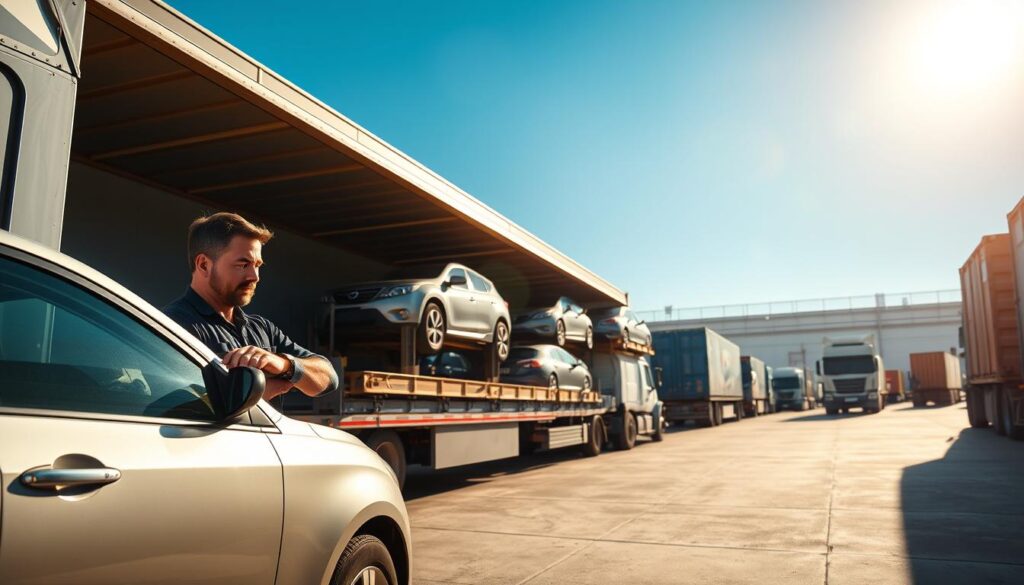
Understanding typical rate ranges clarifies what customers should expect when arranging long-haul vehicle transport. RoadRunner Auto Transport and similar providers publish regional averages so planners can set realistic budgets.
Average price ranges vary by origin and destination. For a Baltimore to Jacksonville route, estimates fall between $462.00 and $721.00. Longer routes, like Frederick to Miami, often range from $482.00 to $752.00 depending on seasonal demand and route availability.
Transit time estimates
Transit times are typically short. Most professional auto transport carriers cover about 500 miles per day. That makes the expected delivery window for this corridor roughly 2 to 4 days.
Longer distances or routing constraints can extend transit times to 3–5 days on some runs. Shippers provide an estimated transit time in the initial quote based on total mileage and carrier schedules.
- Budgeting tip: Use the average ranges to prepare funds and compare quotes.
- Timing tip: Confirm pickup and delivery windows with the carrier before booking.
Factors Influencing Your Auto Transport Quote

Your final auto transport estimate reflects a mix of distance, vehicle type, and service choices. The route averages about 949 miles, and that base mileage is a major driver of pricing and transit time.
Larger vehicles use more trailer space. SUVs and trucks often increase the final price compared with sedans. Choosing enclosed versus open transport also raises or lowers the shipping cost.
Fuel price swings affect carriers nationwide. When fuel rises, many carriers adjust pricing, which changes your quote even for the same route and pickup window.
Accessibility matters. Rural or tight-access locations can add fees because drivers need extra time or specialized routing. Expedited delivery shortens transit days but increases the price.
- Distance: 949 miles influences base pricing and transit time.
- Vehicle size: Larger cars take more space and cost more.
- Service level: Expedited, enclosed, or difficult pickup raises pricing.
Car transport specialists review these factors and provide a detailed quote tailored to the vehicle, pickup, and delivery needs. For specific questions, contact (307) 288-5972 or email info@bestcarshippinginc.com.
Comparing Open and Enclosed Carrier Options
The carrier you pick determines protection level, availability, and final pricing for most transports.
Open carriers are the industry standard and the most common choice for everyday vehicle moves. They offer broad availability and lower price for standard cars. Scheduling is easier, and transit times are often faster because more carriers run open trailers.
Benefits of Open Carriers
Open trailers move many vehicles at once, which keeps the price competitive. Drivers can usually add stops, which helps with flexible pickup and delivery times.
When to Choose Enclosed Transport
Enclosed transport shields vehicles from debris, weather, and road wear. This service suits luxury, classic, or high-value cars that need extra care.
- Protection: Enclosed trailers limit exposure to the elements.
- Value: Owners of high-end vehicles often select enclosed options.
- Decision help: RoadRunner Auto Transport offers both types and can advise based on make and condition.
For more details on route options and planning, see this regional transport guide.
Preparing Your Vehicle for Safe Transit
Prepare the vehicle carefully before pickup to prevent delays and document its condition. This short prep reduces risk during auto transport and keeps the schedule on time.
Cleaning Your Vehicle
Clean inside and out so the driver can record any pre-existing marks during inspection. A clean car makes the inspection faster and more accurate.
Removing Personal Belongings
Remove exterior items and disable alarms. You may keep up to 100 pounds of belongings below the window line.
Do not overload the trunk. Excess weight can affect pricing and safe loading for carriers.
Mechanical Checks
Ensure the vehicle can roll, steer, and brake. Leave a quarter to half tank of gas. This helps safety and reduces fuel-related delays during transit.
“A final inspection by the driver at pickup creates a clear delivery record.”
- Document dents and scratches before pickup.
- Confirm alarms are off and doors unlock.
- Keep keys and paperwork accessible for the driver.
Final note: Proper prep saves time, protects the vehicle, and supports a smooth car shipping experience. For questions about service or a quote, contact info@bestcarshippinginc.com or (307) 288-5972.
Navigating Seasonal Pricing Fluctuations
Certain months bring steady savings, while others drive higher rates and tighter schedules. Seasonal demand affects shipping and availability along this route.
February often has lower pricing because demand drops after the holidays. This month can be a good window for budget-conscious customers who have flexible delivery times.
Summer—especially June, July, and August—sees peak activity. More relocations and vacation travel increase pricing and reduce carrier availability.
Winter migration also shifts pricing. Many carriers face higher loads when snowbirds move south, which can push delivery times and increase quotes.
| Season | Typical Trend | Action |
|---|---|---|
| February | Lower rates, higher availability | Book short window for savings |
| June–Aug | Peak pricing, limited slots | Reserve early; expect higher quote |
| Winter migration | Demand spikes, longer transit times | Book 3–4 weeks ahead in December |
Fuel prices and driver availability change throughout the year. Those factors can alter final shipping cost even on the same route and within short timespans.
Tip: Plan at least 3–4 weeks ahead during busy periods. For reliable service and accurate pricing, consult trusted car-transport companies and request a firm quote well before your desired pickup days.
If you need a tailored estimate or have timing concerns, contact the team at (307) 288-5972 or info@bestcarshippinginc.com.
Selecting the Right Auto Transport Company
Start with credentials: confirm any provider handling your vehicle shows valid federal registration and clear insurance details.
Verify USDOT licensure and ask for proof of membership in trade associations. A reputable firm will share operating numbers and policy summaries without hesitation.
Check coverage. Ensure liability limits protect the full value of your vehicle during transit. Ask how claims are handled and what is included in the quoted price.
RoadRunner Auto Transport brings over 30 years of experience and a network of 25,000 vetted carriers. Their team offers door-to-door pickup and professional handling for every shipment.
- Confirm licensing and insurance by calling (888) 777-2123.
- Request carrier proof and safety protocols for drivers and trailers.
- Choose a provider that explains transit timelines, delivery windows, and available coverage.
Need help? For details on Maryland car shipping options, see our guide at best car shipping. Clear communication and documented credentials keep customers confident every step of the way.
Essential Documentation for Your Shipment
Complete documentation creates a transparent record from pickup through final delivery. The Bill of Lading is the primary contract and inspection report. It documents vehicle condition at pickup and again at delivery.
Review insurance paperwork carefully before the carrier loads the vehicle. Confirm coverage limits and claim procedures so there are no surprises during transit.
Keep your original quote and booking confirmation with you. Present them at pickup to verify agreed pricing, pickup window, and any special instructions.
- Sign the final inspection report with the driver to confirm delivery condition.
- Have vehicle registration and proof of insurance available for pickup and delivery checks.
- Request copies of all signed documents from the carrier for your records.
“The Bill of Lading secures both parties by recording condition, pricing, and terms.”
Need help preparing paperwork? The team provides all required forms and guidance. Contact (307) 288-5972 or email info@bestcarshippinginc.com. For additional regional guidance see essential route documentation.
What to Expect During the Pickup Process
Pickup day is a clear, scheduled step where responsibilities, keys, and condition checks are finalized. An adult at least 18 must be present to release the vehicle and sign the inspection report.
The assigned driver performs a detailed inspection and records existing marks before loading. This protects the shipper and the owner during transit.
RoadRunner and partner carriers provide door-to-door service when roads allow. If access is limited, the driver may request a nearby lot for safe loading.
Customers can track their shipment online 24/7 using the booking number provided at reservation. Tracking updates show location and estimated delivery days.
- Bring keys and ID: required at pickup.
- Confirm pickup window: check your quote and arrival time.
- Expect careful handling: drivers follow standard inspection and loading procedures.
Clear communication on pickup day reduces delays and unexpected costs. For questions, email info@bestcarshippinginc.com or call (307) 288-5972.
Managing Delivery and Final Inspection
Final delivery is a short, but critical, step that locks in the inspection, signatures, and completion of service.
The driver will offload the vehicle and run a final inspection that matches the original condition report. Both parties should walk the car together and note any differences.
Sign the final Bill of Lading after the inspection. This signature confirms the transport is complete and protects both owner and carrier.
If a balance remains, pay the driver by cash, bank check, or postal money order. An adult over 18 must be present at the door for handoff and paperwork.
All shipments include basic liability coverage. Customers who chose enclosed transport have additional protection options available. Ask your representative for coverage details and any extra pricing or costs that may apply.
- The delivery process ends with a joint inspection and the signed Bill of Lading.
- Accepted on-site payment methods keep final settlement simple.
- The team aims for safe offload and clear communication at delivery time.
“A thorough final inspection and clear paperwork create confidence at handoff.”
For questions about transit times, quotes, or coverage, contact info@bestcarshippinginc.com or call (307) 288-5972. The team will confirm arrival day and answer any final questions about car transport or shipping.
Understanding Florida Vehicle Registration Requirements
Registering a vehicle in Florida requires specific insurance minimums and documentation at the local DMV office.
All vehicles registered in this state must show proof of PIP and PDL coverage. Each policy must meet a minimum of $10,000 for both protections.
Florida does not require routine emission or safety inspections. That simplifies ongoing compliance compared with many other states.
You may drive using a valid out-of-state license. If you opt to get a Florida license, only a vision and hearing test are required; no written or road test is needed.
Tax rules can vary. Owners might be exempt from Florida use tax if they prove the vehicle was used outside the state for at least six months.
Practical steps:
- Confirm insurance meets the $10,000 PIP and PDL minimums before registration.
- Keep registration and proof of prior taxes handy to check for possible exemptions.
- Ask your auto transport provider about any documents they can deliver at pickup or drop-off to speed registration and coverage verification.
For up-to-date guidance contact the Florida DHSMV or reach out to the team at info@bestcarshippinginc.com or (307) 288-5972.
Alternatives to Professional Car Shipping
Rail transport provides a budget-friendly alternative when schedules align. It often lowers the overall shipping cost and reduces miles driven by the owner. Coordination with terminals is required, and door-to-door pickup may not be available.
Driving yourself adds roughly 949 miles and raises fuel, lodging, and food costs. It also increases wear and tear and takes valuable time from work or business obligations.
Hiring a private driver delivers door-to-door convenience. However, this option can be expensive and relies on trust in the individual handling your vehicle.
- Professional movers often coordinate with reliable carriers to include vehicles in a household move.
- Compare total costs and availability for each option before deciding.
- Factor pickup windows, delivery time, and the carrier’s experience into your choice.
“Weigh total expenses and risks carefully; the cheapest option may not be the most practical.”
| Option | Typical Advantage | Typical Drawback |
|---|---|---|
| Rail | Lower shipping cost, safer than long drives | Limited pickup/delivery availability, terminal handling required |
| Self-drive | Full control, door-to-door | High time commitment, added wear and additional costs |
| Private driver | Convenient delivery, no driving required | Higher fees, trust and liability concerns |
| Move coordinator (movers + carriers) | Simplified logistics, bundled service | May add handling fees; compare quotes carefully |
Recommendation: Compare the total cost ship car and shipping cost against time and risk. For combined household moves, consider a mover that works with vetted carriers. For detailed route options and carrier coordination, see this guide on car transport between regions or contact info@bestcarshippinginc.com or (307) 288-5972.
Conclusion
A clear plan and a trusted carrier make the final step of any vehicle move straightforward and stress-free.
Understand transit times, required prep, and protection options before booking. That knowledge helps keep your car safe and on schedule during transport.
RoadRunner Auto Transport focuses on transparent communication and careful handling. Customers can use online tools or call (307) 288-5972 for support and next steps.
For fast answers, email info@bestcarshippinginc.com. Begin your shipping request today and rely on professionals who treat every car with care.