
Professional vehicle relocation starts with clear logistics and trusted partners. This guide outlines how industry leaders handle pickup, transit, and delivery while protecting your asset.
Readers will learn how to choose a qualified carrier, why enclosed options cost more, and what to expect during transit. The process covers inspection, GPS tracking, insurance checks, and final delivery protocols.
For tailored advice, speak with logistics coordinators at 877-850-1231 or visit this related resource for a full route example: Florida to North Dakota transport guide. Our team emphasizes transparency, proper licensing, and hands-on handling to keep your vehicle safe.
Key Takeaways
- Understand service types to pick the best option for cost and protection.
- Verify FMCSA licensing and insurance before booking.
- Document vehicle condition with photos at pickup and delivery.
- Expect GPS tracking and regular status updates during transit.
- Contact expert coordinators at 877-850-1231 for a clear quote and guidance.
Understanding Door-to-Door Car Shipping in the USA Explained
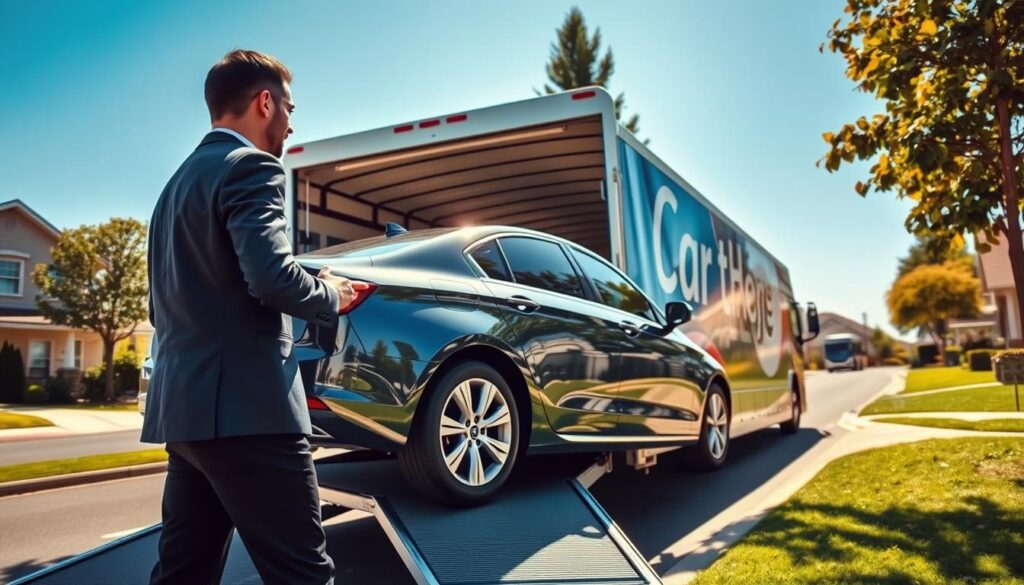
Understanding how a driver collects and returns your vehicle helps you plan timing, costs, and expectations.
Nexus Auto Transport has helped over 500,000 customers across the united states over a ten-year span. This company model centers on a pickup-to-delivery approach where a professional driver retrieves a vehicle at a chosen location and brings it as close to the final address as possible.
This method removes the need for terminal visits. Customers keep control of pickup and drop-off spots. That benefit suits busy professionals and families who value convenience and time.
Using point-to-point transport also reduces extra mileage and wear that come with long drives. The service is built to be stress-free, with regular updates, clear communication, and a trusted carrier assigned to each shipment.
- Control: You pick locations and timing.
- Convenience: No terminal transfers required.
- Protection: Less driving means less wear on vehicles.
| Feature | Door Service | Typical Benefits |
|---|---|---|
| Pickup method | Driver collects at chosen location | High convenience, fewer steps |
| Transit handling | Assigned carrier with updates | Clear communication, reliable tracking |
| Final delivery | Delivered near final address | Reduced mileage, lower wear |
How the Door-to-Door Transport Process Works
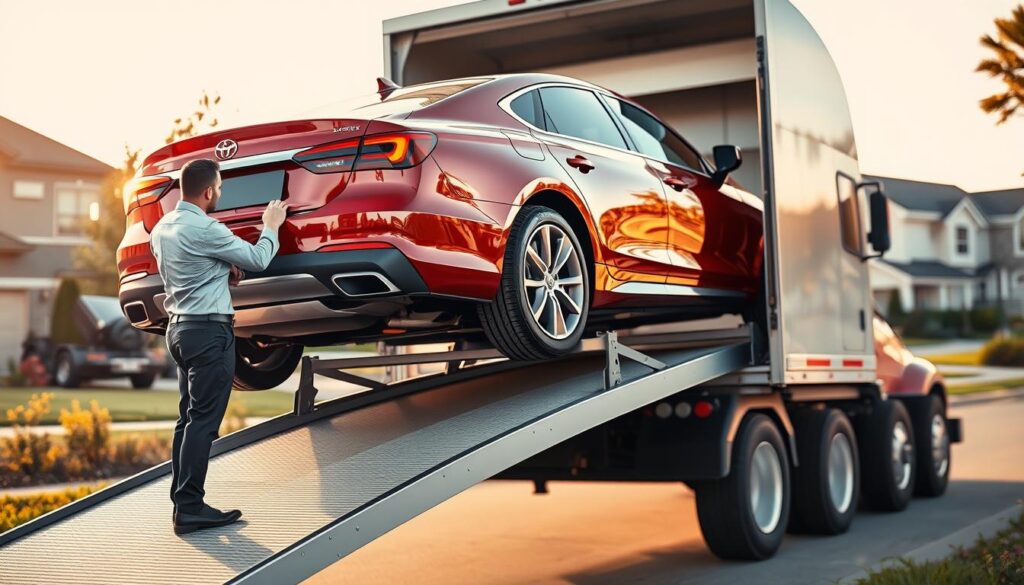
Efficient vehicle relocation relies on a transparent quote, timely carrier assignment, and careful condition checks before transit.
Initial Quote and Booking
A1 Auto Transport leverages over 25 years of experience to simplify booking for every client needing reliable auto transport.
Customers get a clear quote via an online calculator or by speaking with a shipping expert. The estimate shows price, expected days for transit, and any added costs.
Carrier Assignment and Pickup
After quote approval, a certified carrier is assigned. The company confirms a convenient pickup window and final location.
Before loading, the driver inspects the vehicle and documents condition with photos and a written report. You will review and sign the Bill of Lading to protect the shipment and verify terms.
- Experienced team: reduces delays and minimizes wear on vehicles.
- Documented checks: photos and reports create a clear delivery record.
- Structured process: this transport work keeps risks low and satisfaction high.
Key Benefits of Choosing Direct Vehicle Delivery
A direct delivery plan keeps your vehicle moving with a single carrier, cutting time and wear.
Less mileage preserves value. Direct pickup removes long drives that add wear and tear. That lowers risk and long-term costs for owners.
This transport service saves time for busy people. Instead of driving across states, owners can focus on other move tasks or work.
Licensed and insured carriers handle each shipment. That gives peace of mind and professional oversight from pickup to delivery.
- Reduced wear: fewer miles logged during transit.
- Time savings: no long drives or added travel days.
- Security: minimal hub transfers and fewer handling events.
| Benefit | Direct Delivery | Typical Result |
|---|---|---|
| Handling steps | Single carrier pickup and drop-off | Lower chance of damage and fewer delays |
| Time | Point-to-point transit | Shorter shipment windows and predictable days |
| Cost drivers | Less mileage, no terminal fees | Lower indirect costs and clearer price |
| Security | Vehicle stays with assigned driver | Improved tracking and accountability |
For a quick estimate based on distance and vehicle size, use the vehicle shipping calculator. This helps compare price and transit days with confidence.
Comparing Door-to-Door and Terminal-to-Terminal Services
Choosing pickup type shapes how a shipment runs and what customers must do. This section compares convenience, price, and security so owners can pick a fit-for-purpose option.
Convenience Factors
Pickup at residence saves time and personal travel. A professional driver collects the vehicle at an agreed location and completes delivery near the final address.
Terminal pickup may require driving to a hub. That can add time and gas costs, or require coordination with a carrier’s schedule.
Cost Considerations
Surface price won’t always show full cost. Terminal-to-terminal may list a lower rate, but added travel time and fuel often close that gap.
Open car transport remains the most common, balancing price and reliable delivery for standard vehicles.
Security Differences
Pickup-at-address services reduce time a vehicle spends in public storage. That lowers risk of theft or incidental damage.
Terminals can increase handling steps and exposure. For higher-value vehicles, consider enclosed options or trusted carriers.
“Match service type to schedule and risk tolerance. A clear quote and carrier verification protect owners and vehicles.”
For a list of vetted haulers and carrier comparisons, see this resource on auto hauler companies.
| Aspect | Pickup-at-Address | Terminal Pickup |
|---|---|---|
| Owner effort | Low — driver collects | High — owner drops off and picks up |
| Typical price | Moderate — includes pickup fee | Lower upfront, possible hidden costs |
| Security | Higher — less public handling | Moderate — more handling and storage |
| Best for | Busy owners, high-value vehicles | Flexible schedules, tight budgets |
Factors That Influence Your Shipping Costs
Fuel swings and peak season demand often shape what customers pay for vehicle transport. This section explains the core variables that set a final quote and affect transit windows.
Distance remains the primary driver. Longer hauls usually reduce price per mile, while short runs can cost more per mile due to fixed pickup fees.
Seasonal Demand and Fuel Prices
High-season moves—summer and winter migration—tighten carrier availability. That pushes prices up and can lengthen days for delivery.
Diesel and market fuel volatility also affect carrier bids. When fuel rises, carriers add surcharges that change the total cost.
- Vehicle type: larger trucks or SUVs need special equipment and raise rates.
- Pickup access: remote or tight locations require extra coordination from the driver.
- Real-time quotes: online tools reflect current market conditions for a more accurate estimate.
| Cost Driver | Why It Matters | Typical Impact |
|---|---|---|
| Distance | Longer runs spread fixed fees | Lower price per mile |
| Fuel & Season | Market spikes and peak demand | Higher total price, possible surcharges |
| Vehicle & Access | Size, special gear, and location difficulty | Added equipment or coordination fees |
| Market Quotes | Real-time data from carriers | More accurate estimates |
For an up-to-date estimate based on distance and vehicle type, request an auto shipping quote.
Selecting the Right Carrier for Your Vehicle
Selecting a vetted carrier sets the tone for a smooth vehicle move across the united states.
A1 Auto Transport partners with over 15,000 certified carriers across the united states. Each carrier undergoes strict vetting for safety, driving record, equipment, and customer reviews.
This process ensures a professional driver and clear communication from pickup to delivery. Dispatch teams match a carrier to your vehicle type, whether a standard sedan, luxury model, or inoperable unit.
Licensed and insured carriers provide full protection for your shipment. The company prioritizes drivers with timely delivery records and strong service history.
“Trust accredited carriers with proven records; it reduces risk and improves on-time delivery.”
- Network size: broad coverage across many routes in the united states.
- Vetting: safety checks, equipment standards, and reputation review.
- Matchmaking: carriers chosen for specific vehicle needs and access constraints.
| Selection Factor | What to Expect | Customer Benefit |
|---|---|---|
| Licensing & insurance | FMCSA registration and active coverage | Financial protection during transit |
| Driver record | Accident and performance history checked | Lower risk and reliable delivery days |
| Equipment & service | Open or enclosed trailers, lifting gear for inoperable vehicles | Proper handling and reduced damage risk |
For a local example and carrier options specific to your location, request a quick quote via Charlotte Michigan car shipping.
Preparing Your Car for Safe Transit
A few targeted checks at pickup can prevent mechanical surprises while a vehicle is transported. Follow a clear prep routine to protect value and help the carrier complete a smooth pickup and delivery.
Mechanical and Fluid Checks
Verify battery health and secure battery terminals. A weak battery can stall a vehicle during handling.
Check tire pressure and look for visible damage. Proper inflation eases loading and reduces wear tear.
Confirm fluid levels—oil, coolant, brake fluid—and top off if needed. Avoid overfilling.
Note: Keep fuel at or below one quarter of a tank to lower weight and meet safety rules for auto transport.
Removing Personal Belongings
Remove all personal items, including GPS units, garage openers, and parking permits. Loose items can shift or be lost during transit.
Fold mirrors, remove non-retractable antennas, and take off spoilers if possible. These steps reduce damage risk during loading and delivery.
Photograph existing dents and scratches before the driver arrives. Documenting condition supports any follow-up with the carrier or company.
| Prep Item | Action | Why It Matters | Recommended By |
|---|---|---|---|
| Battery | Test and secure terminals | Prevents stalls and electrical issues | Carrier / company |
| Tires & Fluids | Check pressure; top fluids; ≤1/4 fuel | Safer loading; reduced wear tear | Auto transport teams |
| Personal Items | Remove all loose belongings | Prevents loss and claimed damage | Driver / owner |
| Damage Record | Photograph and note defects | Clear proof for delivery claims | Owner |
Contact BestCarShippingInc for final questions or to note mechanical quirks before pickup: (307) 288-5972 or info@bestcarshippinginc.com.
Navigating Residential Access and Delivery Challenges
Large delivery vehicles often struggle with narrow streets, overhanging branches, and tight turns near residential addresses.
If a driver cannot safely reach your address, they will suggest a nearby large parking lot or commercial drop point for loading and unloading. This preserves safety for your vehicle and for neighbors.
Professional drivers train to handle access limits. They prioritize safe handling and clear communication during every auto transport move.
Owners should report HOA rules, low clearance signs, or restricted access ahead of time. That helps the carrier plan a workable route and avoids last-minute changes.
Clear directions and a confirmed meeting point speed up delivery and reduce wait time for both owner and driver.
“Planning access details ahead of pickup prevents delays and protects vehicles during handoff.”
| Access Issue | Carrier Response | Customer Action |
|---|---|---|
| Low-hanging branches | Driver selects alternate route or meet point | Note obstructions when requesting quote |
| Narrow streets / tight turns | Arrange nearby lot for safe loading | Agree on a public meeting spot with driver |
| HOA / gated communities | Verify gate access rules; schedule window | Provide permits or gate codes before pickup |
For questions about specific locations or to note delivery constraints, contact BestCarShippingInc at (307) 288-5972 or info@bestcarshippinginc.com.
Understanding Insurance and Protection During Transport
Insurance details and carrier protocols define how protected your vehicle remains during transit.
Nexus Auto Transport holds an A+ rating with the Better Business Bureau. This reflects a clear focus on safe handling and customer protection.
Every shipment carries full insurance coverage. That ensures owners have financial protection if an unexpected incident occurs.
Certified carriers follow strict safety steps. Drivers secure each vehicle on the trailer and run checks to reduce risk.
- Frequent in-transit updates keep owners informed about status and location.
- Claims and questions are handled promptly by a dedicated support team.
- Choosing a reputable company offers added peace of mind for high-value vehicles.
“Entrusting a vehicle to a vetted carrier means protection is part of the service, from pickup to delivery.”
| Protection Area | What It Means | Customer Benefit |
|---|---|---|
| Insurance | Full coverage per shipment | Financial security for damage or loss |
| Carrier Standards | Certified drivers and secure loading | Lower risk during transit |
| Communication | Regular status and location updates | Transparency and reduced anxiety |
| Claims Support | Dedicated team for issues | Faster resolution and customer care |
For questions or to request a detailed quote, contact BestCarShippingInc at (307) 288-5972 or info@bestcarshippinginc.com.
Managing Your Expectations for Delivery Timelines
Transit windows depend on route patterns, driver schedules, and seasonal road conditions. Most cross-country shipments take about 5 to 8 days from pickup to final delivery.
Shorter vehicle transport orders often finish in 1 to 3 days. Distance and the specific route a driver selects determine that span.
Shipping windows cannot be guaranteed. Delays may come from weather, road closures, or driver availability. Customers should remain flexible.
- Frequent, transparent updates keep owners informed as a vehicle moves toward delivery.
- The company aims to deliver quickly without compromising safety or quality of service.
- Allow buffer days when planning schedules or coordinating local pickups.
Clear communication is critical. A timely quote helps set realistic expectations. Contact customer service for updates or questions during transit.
“Our team works diligently to ensure that vehicles arrive as quickly and safely as possible.”
For status checks or to discuss a specific route, call (307) 288-5972 or email info@bestcarshippinginc.com.
Specialized Shipping Options for Unique Vehicles
When a vehicle needs more protection, enclosed transport offers controlled, private transit.
Enclosed transport is ideal for luxury, exotic, and classic models that require extra shielding from weather and debris. This service keeps a vehicle out of public view and reduces exposure to road hazards during long routes.
Enclosed Transport for Luxury and Classic Cars
Special handling and equipment matter for high-value units.
- Protection: Enclosed trailers guard against debris, salt, and rain during transit.
- Experienced drivers: Hand-selected drivers with proven expertise handle loading and securement.
- Specialized gear: Winches, soft-tie straps, and custom ramps prevent movement and surface damage.
- Value threshold: For vehicles over $70,000, enclosed service delivers added peace of mind compared with open car options.
| Feature | Enclosed Transport | Open Car Transport |
|---|---|---|
| Exposure | Minimal — fully covered | High — exposed to elements |
| Driver expertise | Specialized, vetted drivers | Standard driver assignments |
| Best for | Luxury, classic, exotic vehicles | Everyday sedans and SUVs |
For tailored guidance, contact the company to arrange equipment and driver selection. Consultants can design a premium plan for vintage Mustangs, modern sedans, or any unique vehicle that needs careful transport.
Tips for Securing the Best Shipping Rates
Flexible timing and clear communication often produce the best quotes for auto transport.
Small schedule shifts let carriers bundle loads and optimize routes. That reduces empty miles and lowers cost.
Combine vehicles when possible. A multi-vehicle load can deliver meaningful discounts for a household or dealer move.
Ask about discounts for seniors, military, and students. Many companies offer lower rates for those groups.
- Avoid very low bids. Extremely cheap quotes may skip proper insurance or reliable drivers.
- Use an online car shipping cost calculator to compare current rates fairly.
- Request a written breakdown of fees and expected delivery windows before you book.
Need help finding value? BestCarShippingInc advisors review route options and cost-saving tactics by phone or email.
Contact support at (307) 288-5972 or info@bestcarshippinginc.com for a tailored quote and tips to ship car with confidence.
Conclusion
A clear process, reliable updates, and a trained driver make vehicle relocation predictable and secure.
This guide shows how professional auto transport reduces risk and saves time. Following simple prep steps protects value and speeds delivery.
With over 95% of customers satisfied, the provider emphasizes transparent communication, fair pricing, and attentive support for every shipment. Owners gain confidence by choosing vetted teams and documented inspections.
Request a free, no‑obligation quote or learn about route options via Upton auto transport. Contact support at (307) 288-5972 or info@bestcarshippinginc.com for prompt assistance.
Your satisfaction is a priority. Expect dependable service and secure delivery across the united states.