
Definition and expectations. In the United States, an auction is a fast-paced public sale where bidders compete for vehicles sold most often as-is. Time, limited data, and fewer protections change how value and total cost unfold.
Auctions often offer an opportunity to pay less than retail. That potential price upside attracts experienced buyers, mechanics, rebuilders, and fleet purchasers.
Yet risks matter. Buyers face title and history gaps, no test drive, and post-sale liability. For those needing reliable daily transport without spare funds, caution is wise.
This guide helps U.S. buyers compare purchase options, weigh fees and bidding strategy, and plan inspections, transport, and title checks. It focuses on protecting time, money, and vehicle value during the purchase process.
Key Takeaways
- Auctions move fast and carry more uncertainty than dealerships.
- Experienced bidders and mechanics often gain the most value.
- Major risks include limited inspection, title issues, and as-is sales.
- Potential savings must be balanced against repair costs and fees.
- This guide outlines fees, bidding, inspection strategy, and transport planning.
How a Car Auction Works in the U.S. (and What “As-Is” Really Means)
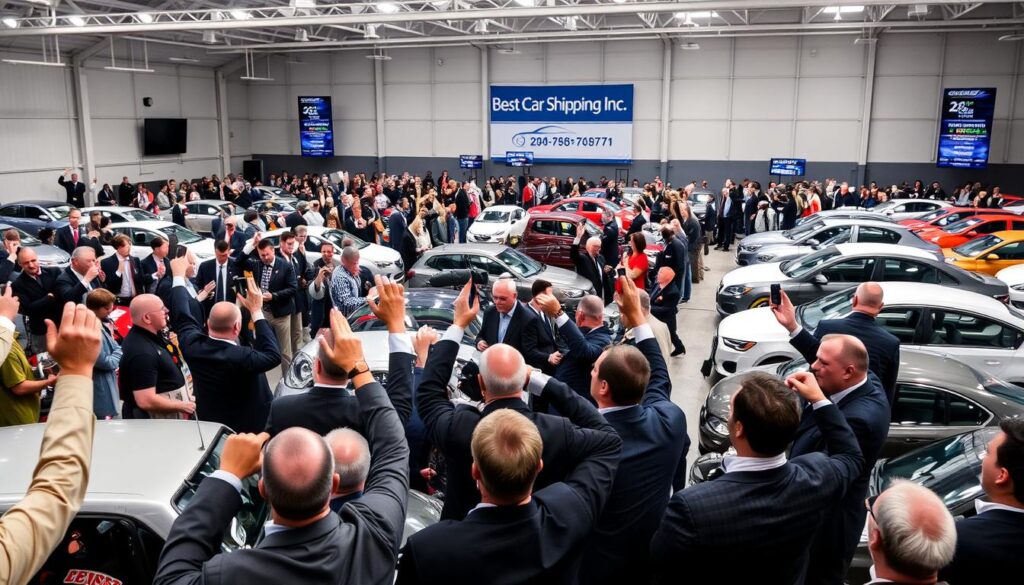
The auction process moves quickly; knowing each step protects time and cash.
Basic steps: Register before entry, use the preview window to inspect, follow posted bidding rules, and pay within the deadline after the gavel. Buyers may start most vehicles on site, but road tests are rarely allowed.
Public, dealer, and insurance differences
- Public auctions offer access to many buyers but limited disclosures and minimal buyer protections.
- Dealer-only sales restrict access to licensed dealers and often include more documentation.
- Insurance sales include total-loss and salvage titles; condition varies widely.
What “as‑is” means
As‑is means no warranty, no returns, and limited recourse once the sale closes. Buyers assume repair costs and legal risks.
“Runs” can be misleading; starting on the lot does not guarantee safe operation under load.
Why vehicles arrive here
- Repossession and fleet rotation
- Insurance totals and estate sales
- Problem vehicles sold to avoid retail repair
Bottom line: Treat listings as incomplete. Plan for missing information and budget for potential issues. The auction model favors fast sales, not long inspections.
is buying a car from auction a good idea for your budget and risk tolerance?

An auction purchase fits some buyers, but only when finances and skills align with uncertainty.
When auctions can be a smart opportunity for buyers
Prepared buyers gain value. Those with cash reserves and a mechanic’s eye can spot salvageable deals. They budget for immediate maintenance and accept downtime. They can perform basic diagnostics and walk away if information is incomplete. This approach treats every purchase as a managed risk, not a guaranteed bargain.
Auctions are poor for anyone needing reliable daily transport right away. Limited funds, no repair options, or tight schedules increase exposure to costly surprises. Towing, title issues, and quick payment deadlines can erase any apparent savings.
“Set a firm all‑in cap before you bid—fees, transport, registration, and a repair reserve.”
Practical step: calculate an all‑in maximum and a repair buffer. If that number strains your budget or timeline, consider CPO or dealer options instead.
Pros of Buying Cars at Auctions: Value, Variety, and Speed
Many buyers find auction lanes deliver lower published prices because speed and liquidation often trump full retail markup. That creates an opportunity for disciplined bidders to pay less than dealer retail and avoid reconditioning premiums.
Potential to pay less than retail
Auctions favor fast turnover. Sellers prioritize rapid sale over maximizing price. That dynamic can yield real savings.
Research cited in The Journal of Industrial Economics (Dec. 2015) found that buyers who used a trade-in paid about $990 more on average. This shows auctions can sidestep typical trade-in premiums and dealer margin layers.
Access to unique inventory
Buyers see fleet rotations, repossessions, and insurance lots not found on local lots. That variety helps find specific models, hard-to-find trims, or project cars.
Fast purchase timeline
An auction can compress selection to sale in one day. For buyers with logistics planned, this speed saves time and can reduce holding costs.
Note: Speed helps only when transport, insurance binding, and registration are arranged in advance. Otherwise, storage fees or delays can erase gains.
| Advantage | Why it helps | Buyer action |
|---|---|---|
| Lower entry price | Liquidation focus reduces markup | Set strict max bid and stick to it |
| Inventory variety | Fleet, repo, and insurer vehicles appear | Monitor specific runs and preview lists |
| Quick timeline | Selection to purchase in hours | Prearrange transport and funds |
Best practice: Bid with discipline, know true market price, and be ready to move quickly. For logistics, consider professional vehicle transport via trusted providers like vehicle transport services to protect value after sale.
Cons and Risks: What Can Go Wrong With an Auction Car
Short preview windows at auctions raise the chance that critical condition problems go unnoticed. Quick decisions and limited information shift risk to the buyer.
Limited time to inspect
Buyers often get minutes to walk a lot. That pressure hides worn components, fluid leaks, and structural damage.
No real test drive
Many venues forbid road testing. Runs on the stand do not prove safe operation under load.
“A Porsche Cayenne started at auction but failed under road use; diagnostics showed severe engine bore scoring.”
Hidden mechanical issues and costs
- Common failures: engine, transmission, and cooling system faults that appear after sale.
- Repair risk: post-sale work can erase apparent savings on a car.
- Documentation gaps: limited records or missing history increase uncertainty about prior maintenance and insurance totals.
Practical advice: set a firm all‑in cap and a repair reserve. For most buyers, reducing exposure or choosing inspected options prevents expensive surprises when buying car at an auction.
Vehicle History and Disclosure Gaps to Watch For
Title files and service records often trail behind the hammer, leaving buyers with less clarity than expected.
Why history reports may be missing or incomplete
Many vehicles arrive with fragmented records. Sellers may not supply full maintenance logs, previous owner data, or loss details. That shortage limits the information a buyer can verify before sale.
Reports can be omitted when an insurer handled the claim, when a vehicle changed hands multiple times, or when mileage disputes exist. Treat missing files as a red flag that should lower your maximum bid.
Titles, liens, and legal risks
Confirm title status. Check for salvage branding, lien holds, or inconsistent owner names. These issues can delay registration or block resale.
- Liens: unpaid loans may transfer risk to the buyer.
- Branding: salvage or rebuilt titles affect insurance and resale.
- Stolen vehicle risk: uncommon but severe—can lead to seizure and loss.
“Incomplete paperwork can turn a low purchase price into a costly legal problem.”
Protective steps: run independent history checks when possible. Verify title details at the lot. Walk away if documents contradict the listing. Compared with dealership sales, auctions often lack standardized disclosure and buyer support, so conservative bidding and extra checks protect value.
True Cost of Buying a Car at Auction: Fees, Repairs, and Insurance
Hidden charges and immediate repairs often turn a low bid into a costly purchase.
Buyer’s fees typically add a percentage or flat charge to the winning bid. These fees raise the total purchase price beyond the hammer number. Expect administrative surcharges, lot handling, and buyer premiums.
Auction-day payment and transport timing
Auctions enforce fast payment deadlines. Know accepted payment methods and fund availability before the day. Late payment can incur penalties or loss of deposit.
Plan transport immediately. If the vehicle’s condition is uncertain, hire professional movers rather than driving it home. Secure shipping protects the vehicle and reduces roadside risk. For logistics, consider trusted transport services.
Repair and maintenance reserve
Set aside money for baseline service: fluids, battery, tires, brakes, and diagnostics. As‑is vehicles often need immediate attention. A conservative repair reserve avoids surprises and preserves resale value.
Insurance and title impacts
Title branding or incomplete records can raise insurance premiums or limit coverage. Verify how prior damage affects rates. Factor increased insurance into your total ownership cost.
Planning takeaway: calculate an all‑in cost—including fees, transport, payment timing, repairs, and insurance—before you bid. If funds fall short, walk away; that protects money and time.
Competitive Bidding: How to Avoid Overpaying
Competitive lanes reward discipline; the loudest bidder often pays the most.
Start by calculating a true all‑in cap. Add the hammer estimate to fees, transport, expected repairs, and insurance. That final number is your maximum bid.
Setting a maximum bid based on market value
Use recent sale data for comparable models. Subtract likely repair costs and buyer fees. Lock that figure before the sale and treat it as non‑negotiable.
How competitive pressure creates the winner’s curse
The rush to win can drive price past real value. Emotions and rapid bidding feed the effect. Walk away when the number crosses your limit.
“A disciplined cap protects capital. There will always be another lot.”
Spotting momentum and when to walk away
Watch for quick jumps, many active bidders, or fast auctioneer cadence. Those signs show momentum. If bids move in unnatural leaps, step back.
| Signal | What it means | Action |
|---|---|---|
| Rapid bid jumps | Emotional bidding, rising price | Hold to maximum bid |
| Multiple bidders | High demand; winner’s curse risk | Reassess all‑in value |
| Fast auctioneer pace | Pressure to decide | Pause, or exit the lot |
Final rule: treat each bid like procurement. Protect cash first. A disciplined buyer wins more often than one who chases every car auction victory.
Inspection Strategy When You Can’t Test Drive
When road testing is off the table, a rapid, checklist-driven inspection becomes the buyer’s best defense. Focus on high-signal checks that take little time but expose major risks.
Quick visual checks that reveal big red flags in minutes
Scan panel gaps and paint for uneven lines or overspray. That may indicate collision repair.
Look for fluid pools, wet stains, or crusted residue under the engine. These suggest leaks that increase repair costs.
Check tires and wheel mismatch. Mismatched tires or uneven wear can point to alignment or suspension issues.
Listening for warning signs and verifying “runs and drives” claims
On cold start, note ticking, knocking, or belt squeal. These sounds raise the vehicle’s risk rating and lower your bid ceiling.
When permitted, watch the car engage into gear on the lot. Hesitation or grinding during engagement undermines any “runs” claim.
“Runs” on the stand does not guarantee drivability under load.
What to do when there’s little information about condition
If documentation is thin, treat unknowns as liabilities. Reduce your maximum bid and add a repair reserve.
Make sure every bid rests on what can be verified, not hope. Prioritize cars with clearer records or visible maintenance cues.
| Check | What to watch for | Action |
|---|---|---|
| Body & paint | Uneven gaps, overspray | Flag for structural repair; lower bid |
| Fluids | Leaks or foul odor | Estimate repair cost; adjust reserve |
| Start & idle | Ticks, knocks, rough idle | Increase risk score; walk away if severe |
| Drive engagement | Slip or hesitation | Assume transmission issues; avoid high bids |
Alternatives to Auctions for Most Buyers
For reliable daily transport, buyers usually favor vetted inventory and a documented history.
Certified Pre-Owned: inspection and warranty coverage
Certified Pre‑Owned programs pair multi‑point inspections with limited warranty coverage. That reduces uncertainty versus rapid liquidation sales.
Buyers get factory or dealer-backed checks, and often better insurance options when prior damage is clear in records. CPO models can feel like a near‑new purchase, sometimes rivaling a new car in predictability.
Dealership used inventory: protections and trade-offs
Buying from a dealership adds paperwork, financing options, and post-sale support. A dealer will usually handle title work and offer return windows or limited warranties.
Trade-off: pay more up front for those protections. For someone who values service and clear process, the extra price can be worth it.
Private party sales: transparency and inspection options
Private party sales let the buyer ask the seller direct questions and request service records. Many private sellers permit a short drive and an independent pre‑purchase inspection before the vehicle goes home.
This route often delivers clearer history and lower purchase price than dealer lots. It sits between auctions and dealership sales in both cost and predictability.
“The best channel matches needs: predictable ownership beats a bargain that creates downtime.”
When considerng buying car auction options, compare total cost: fees, repairs, and time. If reliability matters more than low upfront price, CPO, dealer, or private paths usually deliver better outcomes for the buyer going home with confidence.
Conclusion
Not every low hammer price equals long-term savings. True value depends on clear planning, strict caps, and realistic repair reserves. Treat each purchase as an all‑in decision that covers fees, transport, insurance, and likely fixes.
If predictable reliability matters, or funds for repairs are limited, auctions often do not fit. Time on the lot carries real cost through compressed inspections and fast payment rules.
Practical protections: set a maximum bid, calculate total costs before the sale, and arrange secure transport and insurance in advance. Assume as‑is means responsibility for problems after purchase.
For secure shipping coordination after any win, contact Best Car Shipping Inc.: info@bestcarshippinginc.com · (307) 288-5972.