
Car shipping is a professional service that moves a vehicle from one place to another. This page explains how to send my car safely using expert auto transport instead of guessing or risky DIY towing.
Best Car Shipping Inc. is a reliability-first company in the United States. It focuses on clear communication, careful handling, and strong customer care. The team offers transparent timelines, honest quotes, and documented procedures to protect valuable vehicles.
This introduction previews practical details readers will find below: transport options, transit times, how quotes work, cost drivers, insurance basics, and prep steps. It also flags common concerns like price accuracy, pickup and delivery reliability, and vehicle condition protection.
Ready for fast help? Call (307) 288-5972 or email info@bestcarshippinginc.com for a quote and scheduling guidance. Learn more about regional options like car shipping in Texas for state-specific details.
Key Takeaways
- Car shipping is a professional, documented transport service for moving vehicles across the United States.
- Best Car Shipping Inc. emphasizes transparency, careful handling, and customer support.
- Expect clear quotes, timeline estimates, and insurance information up front.
- Follow simple preparation steps to protect vehicle condition and reduce risk.
- Contact the company by phone or email for fast assistance and booking.
Reliable Auto Transport Services Across the United States

Reliable nationwide auto transport removes the headache of moving vehicles across state lines. This service fits owners who cannot drive a vehicle after a move, an online purchase, or when relocating to another state.
Who car shipping is best for
Typical customers include people relocating, military personnel on orders, students, snowbirds, buyers of used vehicles online, and businesses moving fleet units. Anyone managing multi-state logistics finds these services useful.
What to expect from a professional vehicle shipping service
Reliable means consistent pickup and delivery windows, clear documentation, and timely updates during transit. Confirm whether a broker coordinates the move or a direct carrier handles the truck. Ask for carrier details, insurance limits, and the booking flow before paying.
- Evaluate companies by reading reviews and patterns in customer experience.
- Look for timeliness, communication quality, and price accuracy between quote and final bill.
- Expect door-to-door options, route-based carrier availability, and a simple booking process.
Shipping across the United States varies by state routes and driver capacity. A transparent provider explains tradeoffs early so customers can choose the best transport option for their needs.
How Car Shipping Works From Pickup to Delivery
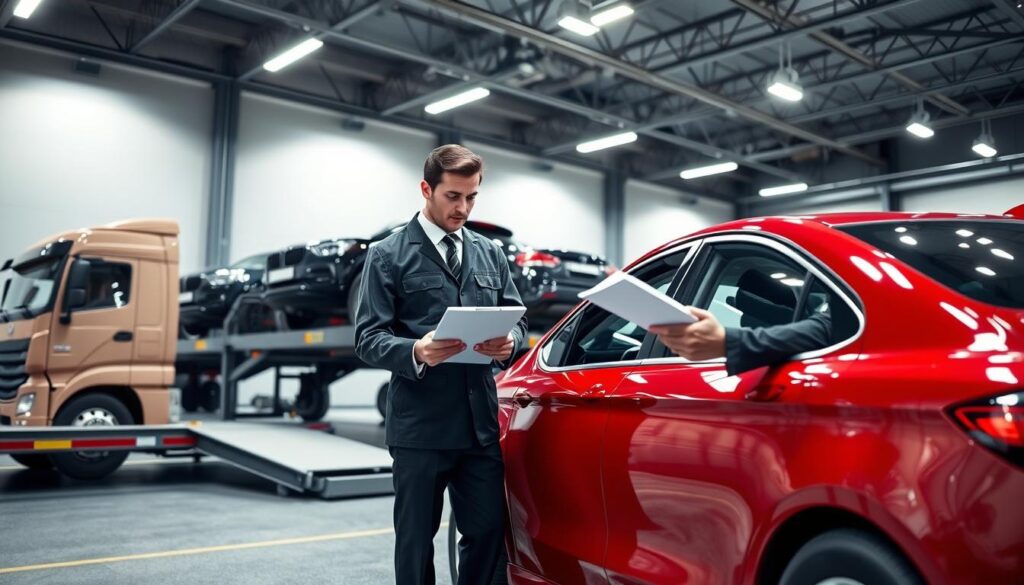
A transparent pickup-to-delivery workflow keeps customers informed and minimizes disputes.
Vehicle inspection and paperwork at pickup
At pickup, the carrier documents the vehicle condition. The driver notes visible dents, scratches, and operability. Photos and a signed condition report form the initial record.
Transit, communication, and delivery scheduling
During transit, carriers provide periodic updates and an estimated arrival time as the shipment nears the destination. Customers should request tracking information and contact details for the driver.
Final walkaround inspection and the bill of lading at delivery
On delivery, the driver completes a final walkaround inspection. The bill of lading serves as the condition record and receipt. Sign only after confirming the vehicle condition matches the pickup report.
| Stage | What is checked | Why it matters |
|---|---|---|
| Pickup | Photos, damage notes, operability | Creates baseline for any future claim |
| Transit | ETA updates, route info, driver contact | Keeps expectations clear and reduces delays |
| Delivery | Final inspection, bill of lading signature | Confirms condition and completes the transport |
Accurate inspections and clear documentation reduce disputes and speed any insurance resolution if damage occurs. Follow these steps to protect the vehicle and the shipment end-to-end.
Send My Car Anywhere in the US With Door-to-Door Pickup & Delivery
For most customers, the easiest option is having a carrier collect and deliver the vehicle at the address itself. This door-to-door approach minimizes handling and simplifies the logistics for long-distance shipping.
Door-to-door vs. terminal-to-terminal delivery
Door-to-door is the most convenient auto transport service. Carriers will plan routes to handle narrow streets, gated communities, and limited access. If access is unsafe, drivers meet at a nearby lot as close as safely possible.
Terminal-to-terminal uses company hubs. It is often cheaper when customers can drop off and pick up at a regional location.
Urban vs. rural pickup and drop-off considerations
Major metro areas have more driver availability and shorter wait times. Rural locations may require route deviations and extra mileage, which can raise price and lead time.
Always confirm the exact pickup point, best contact number, and any site restrictions before dispatch. Transparency about location and timing keeps cost and schedule expectations realistic.
“Clear pickup instructions and honest timing reduce surprises and protect the vehicle during transport.”
For a vetted list of partners, see best shippers in the US.
Choose the Right Car Transport Option for Your Vehicle
Choosing the right transport option affects price, protection, and scheduling for any vehicle shipment. This short guide breaks down common carrier types and practical tradeoffs so owners can decide with confidence.
Open carrier auto transport
Open carriers are the industry standard and the best value for most daily drivers. They carry multiple vehicles and lower the overall cost by consolidating loads.
Open trailers expose vehicles to weather and road debris. For routine vehicles this risk is acceptable given the savings.
Enclosed carrier vehicle shipping
Enclosed carriers provide extra protection and are ideal for high-value, classic, or exotic vehicles.
They cost more but offer better shielding from elements and road hazards. Choose this type when appearance and condition matter most.
Multi-car transporter vs. single-car trailer
Multi-car transporters lower cost through consolidation. They may add handling points but suit standard moves.
Single-car trailers prioritize care and limit vehicle handling. They cost more but reduce risk for sensitive vehicles.
- Equipment differences: liftgates, low-clearance ramps, and modified-vehicle needs affect loading.
- Disclose mods: lowered suspension or oversized tires changes the chosen equipment and route.
- Decision framework: match vehicle value and condition sensitivity to route and budget to pick the best way.
“Match transport type to the vehicle’s value and the owner’s tolerance for exposure; that choice defines cost and protection.”
Driver Delivery vs. Trailer Shipping: Which Is the Better Fit?
Two common ways to relocate a vehicle—having a driver deliver it or loading it on a trailer—offer distinct tradeoffs. Each method affects time, cost, and risk in practical ways.
When having someone drive the vehicle makes sense
Driver delivery can be faster and cheaper for short hauls. It suits flexible timing and routine trips where added mileage is acceptable.
Use this way when deadlines are tight and the vehicle’s value or condition tolerates extra miles.
Why trailer transport reduces wear and damage risk
Trailer shipping limits mileage and exposure to road incidents. It reduces mechanical wear and lowers overall damage risk.
| Method | Best for | Drawbacks |
|---|---|---|
| Driver delivery | Short distance, fast pickup, lower price | Added mileage, higher depreciation, roadside exposure |
| Trailer transport | High-value vehicles, long distance, reduced wear | Route-based timing, sometimes higher price |
“Disclose vehicle condition, route, and delivery deadline to get the best-fit option.”
For practical guidance and booking tips, review these top tips for stress-free vehicle transport.
Car Shipping Cost: What You Should Expect to Pay Today
Current market data shows clear per-mile tiers that affect overall transport fees.
Average cost sits near $650 for a typical shipment. Per-mile rates in January 2026 range roughly from $0.40 to $2.00, depending on distance, carrier type, location, vehicle, season, and delivery speed.
Benchmarks by distance and carrier type
| Distance | Open (avg) | Enclosed (avg) | Per-mile example |
|---|---|---|---|
| <500 miles | $630 | $930 | $2.92 (short haul) |
| 500–2500 miles | $1,135 | $1,550 | $0.93 (mid range) |
| >2500 miles | $1,350 | $1,830 | $0.78 (long haul) |
Pricing by vehicle type
Smaller vehicles cost less. Larger vehicles and trucks use more space and weight allowance. Typical examples:
Sedan: $425 / $725 / $925. Compact SUV: $455 / $775 / $1,025. Truck: $575 / $925 / $1,275.
“Longer trips often lower the per-mile rate but raise the total price; accuracy in vehicle details yields the best quote.”
Quotes are route-specific and change by state with supply and demand. For a detailed per-mile breakdown, consult the average cost per mile guide.
What Impacts Your Vehicle Shipping Quote
Several practical factors determine why two identical routes can return very different transport quotes. A clear quote breaks out each driver so customers understand the difference.
Distance and route conditions
Longer distance raises fuel and labor cost, but per-mile rates may fall on long hauls. Heavy traffic, roadwork, and narrow roads increase time and operational expense. Carriers price those risks into the final figure.
Pickup and delivery location
Metro pickup and delivery generally lower price due to carrier density and shorter detours. Rural or restricted-access points require added mileage or special stops, which raises cost and coordination time.
Size, weight, and accessories
Vehicle weight and dimensions affect available trailer space. Roof racks, bike mounts, or oversized tires must be disclosed. Missing details can cause day-of pickup delays or extra fees.
Operable condition, seasonality, and expedited needs
Inoperable vehicles need winches or lifts and extra labor, so carriers charge more. Peak seasons and limited driver availability push prices up. Expedited or exact-date shipping reduces routing flexibility and increases the quote.
“A transparent breakdown of factors helps owners compare true apples-to-apples quotes.”
For a quick, accurate estimate, request a detailed vehicle transport quote that lists each factor and any anticipated equipment needs.
How Long Does It Take to Ship a Car?
Transit time depends on route density, carrier schedules, and seasonal demand. Typical shipping times range from a few days for short, in-state moves to one or more weeks for cross-country transport. Distance matters, but routing and fleet capacity shape actual times.
Scheduling windows vs. exact pickup dates
A flexible pickup window gives dispatchers room to match loads and lowers cost. Carriers often offer a multi-day window that balances routing and driver availability.
An exact pickup date requires prioritized routing or expedited service. That option shortens lead time but usually raises the price.
Weather, traffic, and roadwork delays
Winter weather such as snow and ice can add hours or days to transit. Heavy traffic and major roadwork cause localized slowdowns and detours.
Reputable transport providers monitor conditions and update customers. Clear communication from the driver and dispatcher reduces surprises.
| Typical Move | Expected Time | Common Variability |
|---|---|---|
| Short, in-state | 1–3 days | Traffic, pickup window flexibility |
| Regional (several states) | 3–7 days | Route stops, weather, roadwork |
| Cross-country | 7–14+ days | Carrier routing, seasonal demand |
Plan ahead: book earlier during peak months, confirm reachable contact numbers, and keep the pickup area accessible. These steps improve matching and cut the chance of missed deliveries.
“Consistent driver communication and proactive scheduling reduce stress and prevent missed deliveries.”
Questions about timing or to request an expedited option? Contact (307) 288-5972 or email info@bestcarshippinginc.com for clear, reliable estimates.
Open vs. Enclosed Auto Transport: Price vs. Protection
Choosing between open and enclosed transport hinges on how much exposure a vehicle can tolerate. The choice affects price, scheduling, and the level of protection during shipping.
When open transport is the best value
Open auto transport offers the lowest cost for most everyday vehicles. It is ideal for standard sedans, routine moves, and budget-focused shipping where minimal extra protection is acceptable.
Open carriers carry more units per load, which lowers the price and often improves availability and speed for many routes. Expect exposure to weather and road debris; this is the tradeoff for savings.
When enclosed transport is worth the premium
Enclosed transport is commonly chosen for luxury, classic, exotic, and freshly painted vehicles. The higher cost buys extra shielding and reduces the risk of cosmetic damage.
Choose enclosed when appearance, resale value, or collector status makes protection a priority. Carrier availability may be limited and prices higher, so book early.
“Match transport type to vehicle value and your tolerance for exposure; price should reflect the protection you need.”
For detailed options on protected moves, review enclosed transport and compare quotes before deciding.
Auto Transport Insurance and Damage Prevention
Insurance clarity is the single best defense against costly disputes after vehicle transit. All licensed transport companies must carry basic liability. That coverage addresses clear operator faults during transit.
What carrier liability typically covers
Carrier liability usually pays for damage caused by driver error or improper loading. Customers should request policy limits, exclusions, and the carrier name before booking.
When to add cargo coverage for high-value vehicles
Standard limits may not fully protect high-value vehicles. Consider supplemental cargo insurance for classics, exotics, or freshly restored vehicles shipped in enclosed trailers.
How inspections prevent disputes
Thorough pickup and delivery inspections create a clear record of condition. The bill of lading plus time-stamped photos form the core evidence for any claim.
“Preventing problems is the priority; insurance is the backup plan.”
Questions to ask companies before booking:
- What are coverage limits and deductibles?
- Are specific exclusions listed for weather or personal items?
- What is the claim timeline and required documentation?
- Who is the named carrier and what is their policy number?
Customer responsibilities: fully disclose existing condition, remove loose items, and note aftermarket modifications to keep coverage valid.
How to Get the Best Price on Car Shipping Without Cutting Corners
Smart timing and careful comparison cut transport expense without sacrificing reliability. The goal is the best price, not the lowest sticker number. A disciplined approach keeps service quality and protection intact.
Why flexible dates can lower your cost
Allowing a flexible pickup window helps carriers bundle loads. That improves route efficiency and lowers the final cost.
Flexible timing gives dispatchers room to match your vehicle to existing routes. This often reduces the quoted price and shortens lead time.
Seasonal tips for cheaper auto transport
Rates shift with demand and weather. Winter weather can slow transit and raise risk, while slower months—often late winter—offer lower cost.
Book early for peak seasons. Use slower times to get better quotes without sacrificing insurance or inspection standards.
Spotting “too good to be true” quotes
Compare scope, insurance, pickup window, and communication, not just totals. Low quotes that lack details often hide fees.
- Check carrier identity, policy limits, and documented pickup assumptions.
- Watch for vague terms, high-pressure tactics, or poor reviews of companies.
- Prefer written confirmation that shows exactly what the quote includes.
| What to Check | Good Signal | Warning Sign |
|---|---|---|
| Price Breakdown | Itemized fees, insurance listed | Single low total, no details |
| Pickup Window | Flexible options, clear ETA | Demand for upfront full payment for exact date |
| Company Credibility | Positive reviews, named carrier | Multiple negative reviews, anonymous carrier |
“Best price comes from flexibility, clear assumptions, and written confirmation.”
Get a Fast, Accurate Quote to Ship Your Car
An accurate estimate removes guesswork and helps owners compare real options for shipping a vehicle. This section explains what to provide and how online tools compute pricing so customers get a reliable quote quickly.
Information you’ll need for a precise estimate
Provide exact pickup and delivery ZIP codes, vehicle make, model, and year. Note whether the vehicle is operable and the preferred trailer type (open or enclosed).
Also state target timing and whether expedited service is needed. List any special requirements such as lowered suspension, oversized accessories, or nonstandard equipment.
How online quote tools calculate pricing
Quote tools combine distance, location density (metro vs rural), carrier type, seasonal demand, and delivery speed to estimate pricing. They factor route efficiency and available truck capacity.
Free calculators often give fast estimates before booking. Remember that an online estimate is an initial number. The final dispatch price can change if the carrier finds undisclosed details at pickup.
- Exact inputs: pickup/delivery ZIPs, vehicle details, operable status, trailer preference, desired timing.
- Pricing variables: distance, metro density, carrier type, seasonality, expedited needs.
- Tip: disclose modifications up front so the quote reflects reality and avoids day-of surcharges.
“A clear, itemized quote reduces surprises and speeds booking.”
Request a fast quote to ship car by phone at (307) 288-5972 or email info@bestcarshippinginc.com. The team will confirm assumptions and outline next steps for booking and pickup.
Prepare Your Car for Shipping the Right Way
A short pre-shipment checklist prevents delays and protects the vehicle’s condition. These steps make pickup smooth and create clear documentation for delivery.
Remove personal items and organize paperwork
Remove all personal belongings. Loose items can be lost or damaged, and insurers typically exclude personal effects. Clearing the interior also avoids added weight that can affect transport pricing.
Keep registration, title, and a copy of the bill of lading handy for the driver and dispatcher.
Clean and document the condition
Wash the vehicle and take time-stamped photos from multiple angles. Photos are the best evidence if a dispute arises.
Basic mechanical checks and fuel level
Check fluids, battery charge, and tire pressure. Ensure brakes, steering, and roll function for loading.
Keep about a quarter tank of gas—enough to move the vehicle for loading without carrying excess weight.
Disable alarms and note special equipment
Turn off alarms and remove toll tags. Disclose any low clearance, nonoperable status, or oversized tires before pickup so the carrier brings proper equipment.
“Clear preparation reduces risk and speeds claims resolution.”
How to Choose a Car Shipping Company You Can Trust
Choosing a reputable company starts with verifying facts, not trusting flashy marketing. Focus on verification, clarity, and accountability when evaluating options.
What to look for in reviews and customer experience
Read reviews across multiple platforms. Look for consistent comments about on-time pickup, accurate quotes, and clear communication.
Give extra weight to reviews that describe inspections, scheduled handoffs, and signing the bill of lading. These details show reliable process and good customer experience.
Questions to ask about carriers, equipment, and communication
- Who is the named carrier? Confirm carrier identity and insurance limits.
- How will the driver contact you? Ask for driver phone or tracking details and the pickup window.
- What documentation is required? Verify inspection steps, the bill of lading process, and claim procedures.
Confirm process details in writing. Ask how issues are resolved and what escalation path exists. Proactive updates and reachable support reduce risk.
“Quotes that match final price and fast coordination are the clearest signal of a trustworthy company.”
Ready to verify options? Review booking tips and top tips for stress-free vehicle transport, or call (307) 288-5972 to discuss service and schedule with a reliable team.
Conclusion
Final confidence in car shipping comes from inspection records, carrier transparency, and accurate timing.
Choose the right way: door-to-door or terminal pickup, open or enclosed trailers, and driver delivery versus trailer transport based on budget, risk tolerance, and vehicle value.
Price and cost reflect distance, route challenges, metro versus rural access, vehicle size and condition, season, and any expedited timing.
Protective controls include documented inspections at pickup and delivery, clear communication during transit, and an accurate bill of lading that supports any claim.
Next steps: request a quote, confirm your pickup window, and prepare the vehicle with the checklist. For nationwide shipping across any state, call (307) 288-5972 or email info@bestcarshippinginc.com to schedule reliable auto transport with transparent pricing and timing.