
Shipping vehicle cost means what a buyer actually pays for moving a car: equipment, driver time, route efficiency, dispatch and risk management. This definition helps shoppers see past low quotes and focus on predictable service and clear communication.
Move.org benchmarks give context: average U.S. moves run about $1,128 and roughly $2.35 per mile. Open carriers average near $914 while enclosed runs about $1,342, roughly 50% higher. Use those numbers as a reality check, not a firm quote.
For Canadian routes, pricing logic is similar. Distance, lane popularity, vehicle size, timing and protection level shape final numbers. Cross-border moves add paperwork and timing factors to expect.
Reliable service shows up as clear pickup windows, honest updates, documented inspections and written policies. Open carriers suit routine cars; enclosed carriers protect high-value cars. The rest of this guide walks benchmarks → cost factors → transport options → quote mechanics → company comparison → savings → insurance/prep → timing → conclusion.
Plan budgets, interpret quotes and choose firms that deliver on schedule with fewer surprises. For a detailed per-mile benchmark, see average cost per mile.
Key Takeaways
- Understand what you pay for: equipment, labor, routing and risk management.
- Use Move.org averages as context, not a guaranteed quote.
- Canada and cross-border moves follow the same pricing logic with added steps.
- Measure reliability by windows, updates, inspections and written terms.
- Choose open transport for standard cars; choose enclosed for higher protection.
- This guide helps compare quotes and pick providers that meet schedules.
What you can expect to pay for car shipping in Canada right now

Current market rates for moving cars in Canada show clear patterns by miles and carrier type. These ranges are directional and should be confirmed with details about route and vehicle.
Typical per-mile benchmarks and distance logic
Per-mile rates generally run from about $0.40 to $2.00 depending on length and demand. Longer routes usually lower the per mile rate because fixed expenses spread across more miles, even though the total price climbs with distance.
Open vs enclosed averages by route length
| Route Length | Open (approx) | Enclosed (approx) | Notes |
|---|---|---|---|
| <500 miles | $630 | $930 | Short runs show higher per-mile charges. |
| 500–2500 miles | $1,135 | $1,550 | Typical long-haul pricing balance. |
| >2500 miles | $1,350 | $1,830 | Per-mile drops; total rises. |
Overseas totals from Canada
Expect overall ranges near CAD $1,300–$5,300. RoRo runs CAD $1,300–$4,100; containers CAD $2,500–$5,300. Add insurance (~$500–$600) and port/handling (~$400–$750). Japan often sits at the high end versus Western Europe.
- Confirm open vs enclosed, door-to-door vs terminal, operable status, pickup window, and insurance when comparing quotes.
- Watch non-transport fees—documentation and port charges can change the final total.
Use these benchmarks to spot outliers and protect timelines and service quality.
Shipping vehicle cost factors that change your final quote
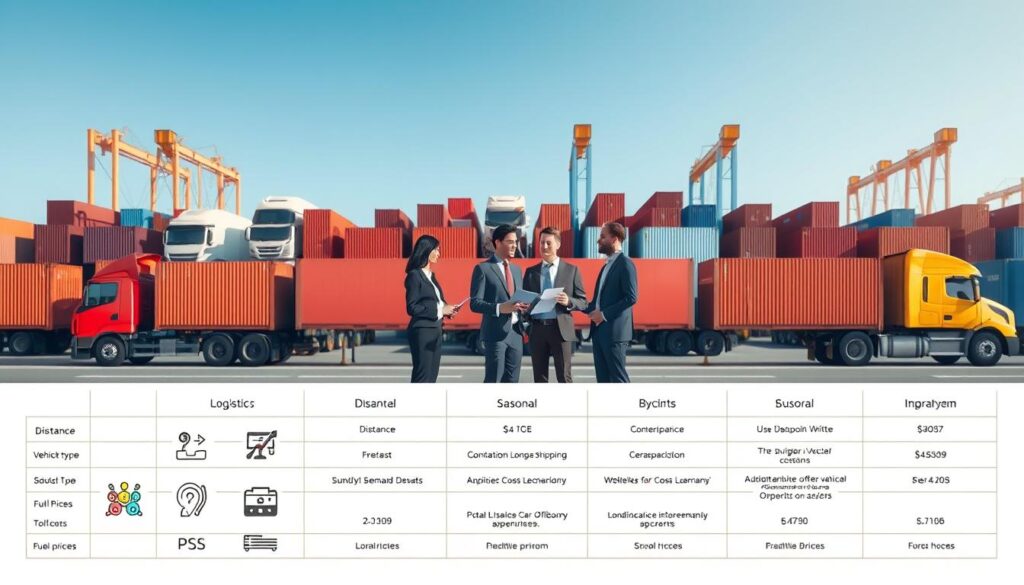
Carriers price each shipment after weighing a small set of operational variables. These factors shape the quote you receive and explain why prices vary between carriers and routes.
Total distance and lane efficiency
Longer runs raise the invoice but often lower the per mile rate. Carriers optimize lanes; a long haul lets fixed costs spread over many miles, so costs vary by distance and lane demand.
Pickup and delivery location
Metro-to-metro moves attract more carriers and usually produce better bids. Rural pickups add detours and time, which raises the final price and delivery time.
Vehicle size, condition and timing
Vehicle size matters: sedans generally cost less than SUVs or trucks because they use less trailer space. Inoperable cars need winch work and often add about $100–$300.
Expedited requests narrow dispatch windows and can raise price, but they reduce schedule risk for time-sensitive moves. Seasonal demand follows clear patterns: February is softer; summer peaks; winter brings delays.
- Quote accuracy checklist: confirm dimensions, operable status, exact addresses, pickup window, and whether personal items are allowed.
Transport options that affect price and protection
Different ways to move a car trade off price, protection, and delivery speed. Choose by matching asset value, timeline, and risk tolerance.
Open carrier basics
Open carrier is the standard, budget-friendly way for most daily drivers. It uses multi-car trailers and lowers fees by sharing space.
Expect exposure to weather and road debris. Practical safeguards are inspection reports, carrier insurance, and written pickup and delivery notes.
When enclosed makes sense
Enclosed transport suits classic, luxury, or low-clearance cars. It often runs about 50% higher than open for the same lane.
The premium buys more protection and careful handling. Use enclosed when the car’s value or rarity justifies the added care.
Overseas: RoRo vs container
RoRo is usually the least expensive overseas way and loads fast. Containers add security. Choose LCL to share space and lower fees, or FCL for dedicated space and simpler chain-of-custody.
“Match vehicle value + risk tolerance + timeline + route to the transport method that delivers the best value.”
| Method | Typical Use | Protection | When to pick |
|---|---|---|---|
| Open carrier | Everyday cars | Standard (inspection + insurance) | Budget-focused, flexible dates |
| Enclosed | Classic/luxury | High | High-value or low-clearance cars |
| RoRo | International roll-on | Moderate | Cost-sensitive overseas moves |
| Container (LCL/FCL) | Overseas secure moves | High | Shared savings (LCL) or full control (FCL) |
Decision tip: reputable shipping companies explain options, document the selected services, and provide written terms. For budget quotes and alternatives, see cheap car shipping.
How auto transport quotes are calculated (and why prices can change)
A firm offer begins when a carrier sees a fully detailed load. Brokers and shipping companies convert route data, vehicle specs, operable status, dates, and carrier type into a marketable shipment. That market request then goes to carriers for bids.
What companies need to price your shipment accurately
Essential inputs are pickup and delivery ZIPs, exact addresses, make/model, dimensions, current condition, and desired pickup window. Accurate details cut surprises and reduce re-pricing.
How carrier bidding moves a quote to a booked order
Carriers accept loads that fit their route and capacity. Market demand and driver availability can raise or lower prices between an instant quote and booking.
Guaranteed pricing: what to look for in writing
Insist on written guarantees that state validity period, inclusions, exclusions, and conditions for changes. Examples in the market include Montway’s 30-day guarantee, AmeriFreight’s optional locked quote, and Sherpa’s gap coverage up to $300. Trustworthy providers explain fees before payment and put guarantees in writing.
| Item | Buyer action | What to expect |
|---|---|---|
| Estimate | Request online or by phone | Ballpark based on limited inputs |
| Quote | Provide full details | Rate the carrier can accept if unchanged |
| Booked order | Confirm terms and pay deposit (if required) | Carrier assignment and firm delivery window |
How to compare shipping companies and choose the best value
Smart buyers judge companies by documented terms, communication, and past delivery records.
Start with clear comparisons. Ask for itemized quotes that list inclusions and exclusions. Verify cancellation and rebooking terms. Watch for vague line items or unusually low numbers.
Signs of transparent pricing
Transparent pricing shows itemized fees, specified pickup windows, and what triggers a rate change. Written guarantees and sample contracts signal honesty.
What reliability looks like
Reliability means realistic pickup windows, proactive updates, and a clear escalation path if problems arise. Delivery expectations should be in writing, not casual promises.
Vetting carrier quality
Check consistent reviews, documented safety checks, and experience with your vehicle type. Confirm insurance and claims procedures before you book.
Service tiers and buyer checklist
| Tier | Typical use | What you pay for | Delivery expectation |
|---|---|---|---|
| Standard | Everyday cars | Best price, shared loads | Flexible window |
| Expedited | Faster dispatch | Priority placement | Tighter window |
| Premium/Enclosed | High-value cars | Maximum protection | Documented handling |
Get multiple quotes and compare on reliability, not just price. For a local option, see car shipping and auto transport in.
Ready to get a documented quote? Call (307) 288-5972 or email info@bestcarshippinginc.com for a written plan and dispatch details.
How to save money on car shipping costs without sacrificing reliability
A reliable savings plan prioritizes carrier acceptance over bargain hunting. Small choices can lower fees while keeping documented service and predictable windows. Focus on moves that attract more bids and reduce rerouting.
Choose open transport when it fits your situation
Open transport is the most affordable option for standard daily cars. Use it for sedans and common SUVs that do not need extra protection.
Avoid open carrier for classics, rare models, or when weather risk is unacceptable.
Be flexible with dates and meet in a metro
Wider pickup windows increase carrier interest and lower final price. Flexible dates let carriers consolidate loads without frantic dispatching.
Offering a major-city pickup or delivery often removes rural access premiums. Metro meet-ups shorten detours and improve schedule reliability.
Book early and compare multiple quotes
Reserve space before peak months (late spring through early fall). Early booking prevents last-minute premiums and tight availability.
Request several quotes using identical details to see a fair market band. Choose the firm that documents terms and shows clear pickup and delivery windows. Remember: the cheapest offer is not always the best value.
| Action | Why it helps | Expected effect |
|---|---|---|
| Use open transport | Lower trailer rates, shared space | Significant savings for routine cars |
| Flexible pickup dates | More carrier bids, easier routing | Moderate savings, better windows |
| Metro meet-up | Eliminates rural detours | Lower fees and more reliable delivery |
| Book early | Avoids peak premiums | Better availability and stable price |
For a quick benchmark on how much to ship a car, check detailed per-mile guidance at how much to ship a car. Follow these steps to save money while keeping service quality high.
Insurance, damage prevention, and shipment prep that protect your budget
Clear insurance terms and a short pre-shipment checklist reduce surprises at pickup and delivery. Buyers should confirm what cargo insurance the carrier includes and its limits before booking.
Insurance expectations and when extra coverage matters
Standard cargo insurance is commonly part of a quote, but coverage varies by declared value and route. For overseas moves from Canada, buyers can expect extra insurance around CAD $500–$600, plus port and handling fees near CAD $400–$750.
When to add coverage: high-value cars, enclosed transport, overseas destinations, or when a buyer wants lower out‑of‑pocket exposure.
Pre-shipment inspection and photo documentation
Do a walkaround before pickup. Take dated photos of each side, the odometer, and any blemishes.
Confirm condition on the Bill of Lading at pickup and again at delivery. Accurate records speed damage claims and keep disputes small.
Cleaning and removing personal items
Clean the car so blemishes are easy to see. Remove all personal items—many companies restrict or charge for them.
Undisclosed belongings can cause delays, added fees, or refusal at pickup.
Canada overseas document checklist
- Proof of ownership
- Vehicle registration
- Government ID
- B13A export declaration
“Reputable companies make inspection and documentation routine, not optional, because it protects both parties.”
Reliability tip: ask for written coverage limits and deductible amounts before you pay. For help or a written plan, call (307) 288-5972 or email info@bestcarshippinginc.com.
How timing and destination affect delivery time and total cost
Dispatch calendars and lane popularity directly influence how long transport takes and what buyers pay. Car shipping demand changes by month and by endpoint, and that alters both delivery windows and market prices.
Season notes: Winter brings weather delays. December needs 3–4 weeks lead time. January often spikes. February can offer lower prices if dates are flexible.
Spring starts quiet in March, then picks up in April and May. Summer is peak season with tight capacity and higher bids. Fall is milder; September may lift demand near student moves while October and November often ease market pressure.
Planning actions that matter
- Book early for December and summer peak months.
- Provide accurate pickup details so carriers bid correctly and the initial quote holds.
- Expect ranges, not exact times, unless a premium tier is purchased and confirmed in writing.
- Prefer metro endpoints—major corridors move faster and usually lower per‑mile prices than remote lanes.
“Reliable providers communicate schedule changes proactively and explain re-pricing when weather or lane constraints force adjustments.”
For a firm written plan or to request a quote, contact (307) 288-5972 or info@bestcarshippinginc.com.
Conclusion
A clear route and realistic pickup window simplify quotes and improve service odds. Start with route and timing, then pick open carrier or enclosed based on the car’s value and risk tolerance.
Validate every offer: confirm the written quote, inspection terms, and included insurance. Transparent pricing, realistic pickup/delivery windows, and timely communication deliver the best value—not the lowest number.
Before booking, gather addresses, confirm operable status, remove personal items, take dated photos, and request written confirmation of insurance and pricing conditions. Canada and overseas moves can be predictable when quotes are built from accurate inputs and documented terms.
Compare companies but beware offers that seem too good to be true. Request a formal plan and quote by email at info@bestcarshippinginc.com or call (307) 288-5972. For a benchmark, see car shipping cost.