
Moving a vehicle cross-country calls for clear planning and a trusted partner. New york city drivers rely on professional auto transport to protect their cars during long trips. RoadRunner Auto Transport moves over 450,000 vehicles each year, showing scale and consistency.
The route between new york and california spans roughly 2,760–2,800 miles. That distance makes carrier choice, insurance coverage, and transit times vital. Reliable companies offer door-to-door options, tracking updates, and accurate quotes.
Choosing the right service reduces stress and cuts hidden costs. Whether someone needs open carrier pricing or enclosed protection for a classic, professional transport firms handle pickup, transit, and delivery with care.
Key Takeaways
- Professional auto transport ensures safe long-distance delivery of vehicles.
- Distance and shipping method drive pricing and transit days.
- Get an accurate quote early — it guides pickup and scheduling.
- Tracking and insurance protect condition during shipment.
- Learn more about cross-country options at California to New York car shipping.
Understanding the Process to Ship a Car From Brooklyn to Los Angeles
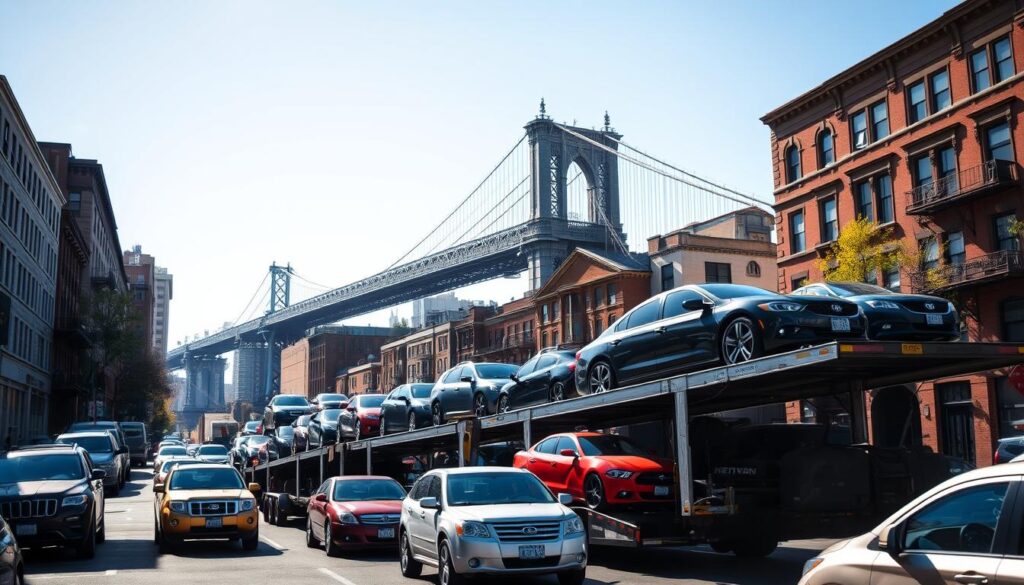
Cross-country vehicle transport relies on planned routes and licensed carriers to move vehicles efficiently. Customers in new york city work with carriers that coordinate pickup, provide a clear quote, and confirm insurance before departure. This approach reduces surprises and sets expectations for price and timing.
How the Cross-Country Route Works
Most shipments travel on major interstates like I-40 or I-80. Using these corridors helps carriers keep consistent transit times and lower costs. Professional auto transport companies in new york manage paperwork, pickup, and updates as the vehicle moves through states toward los angeles.
Key Transit Timelines
- Estimated delivery window: 4–9 days for this coast-to-coast route.
- Door-to-door option: Simplifies logistics for york city customers.
- Insurance and condition updates: Carriers provide status reports and confirm coverage before loading.
Plan ahead to avoid seasonal delays and to secure the best rates. For more detail on choosing a reliable company and service options, see our best car shipping company guide.
Choosing Between Open and Enclosed Transport
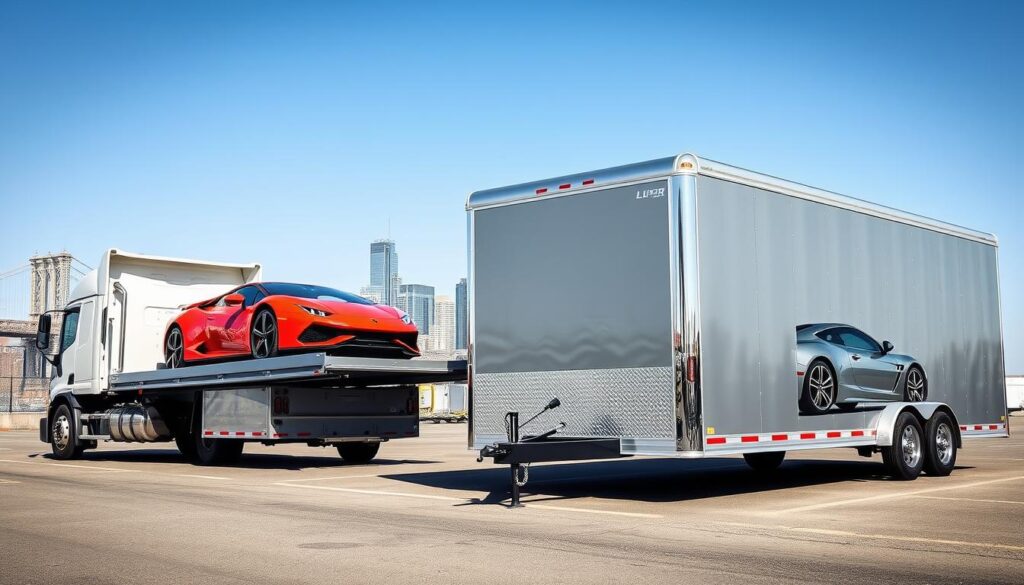
The choice of open versus enclosed trailers determines the balance of price and vehicle safety. Open transport is the most cost-effective method for standard vehicles. This option suits most daily drivers and reduces overall shipping costs.
Enclosed transport provides extra protection for luxury or classic vehicles. Enclosed trailers shield against debris and weather, but they cost more. Expect enclosed rates to run about 40–60% higher than open options.
- Open auto transport: Affordable, widely available, ideal for typical cars and short delivery windows.
- Enclosed transport: Premium protection for high-value vehicles and show cars.
- Carrier guidance: Companies in New York City will recommend based on value, timeline, and insurance coverage.
Compare pricing, transit days, and insurance when you request a quote. The right selection helps control costs and ensures safe delivery to Los Angeles. Contact the company for a tailored recommendation and clear pricing details.
Estimating Your Total Shipping Costs
Estimating final costs starts with clear data about vehicle size, route distance, and current market rates. This gives customers in new york city a realistic baseline for planning.
Factors Influencing Final Pricing
Typical range: Shipping from new york to california usually falls between $1,300 and $2,753 depending on service and vehicle type.
Key cost drivers include fuel prices, vehicle weight, and seasonal demand in new york. Distance affects driver hours and fuel consumption, which raises prices on long routes to los angeles.
- Provide accurate vehicle details when you request a quote to avoid surprise charges.
- Choose open or enclosed transport based on value and pricing trade-offs.
- Compare quotes from multiple companies to find the best rates and service options.
- Insurance and pickup flexibility affect final cost and coverage for your vehicle.
Pro tip: Book off-peak times, and share precise pickup and delivery info to lower prices and secure reliable auto transport or car shipping service.
Preparing Your Vehicle for Long Distance Transit
Simple preparation steps make the pickup process faster and reduce the risk of damage during long transit.
Cleaning and Inspection
Thoroughly clean the exterior and interior before the carrier arrives. This helps the driver and customer document scratches, dents, or other condition issues clearly.
Take dated photos from multiple angles. Save them for insurance and delivery records.
Remove Personal Items
Remove all belongings from the cabin and trunk. Transport companies are not insured for household goods or valuables.
Keep small items with you and note any loose items that could shift during the trip.
Disable Alarms and Final Checks
Turn off any active alarms and give the driver a working key for loading and unloading. Check battery charge and tire pressure before pickup.
Leave about a quarter tank of gas to reduce weight and fuel costs. These steps streamline pickup and support timely delivery.
For trusted carriers and detailed service options, consider contacting our recommended team of top-rated Irvine car shipping experts.
Navigating Seasonal Demand and Timing
Timing your transport request impacts cost, delivery windows, and carrier scheduling.
“Book early during peak months to lock better rates and avoid last-minute delays.”
Peak seasons include summer and winter holidays. During these periods, new york city carriers and auto transport companies often reach full capacity.
Plan at least two weeks ahead to secure reliable car shipping and confirm pickup dates. Flexibility with delivery and pickup dates can lower prices and open more route options.
- Expect higher pricing and longer transit times when demand spikes.
- Weather in new york can delay loading and extend days on the road.
- Request a clear quote early to compare rates and insurance options.
For guidance on optimal booking windows or to reserve service, contact the company at (307) 288-5972 or email info@bestcarshippinginc.com. Customer support helps match vehicles with carriers and routes for timely delivery.
Selecting a Reliable Auto Transport Company
Start vetting providers by confirming USDOT registration and recent customer ratings. This step proves legitimacy and reduces risk during long shipping runs.
Look for high ratings. Sherpa Auto Transport, for example, holds a 4.86-star score from over 9,690 reviews. That kind of record shows consistency and reliability.
Ask for transparent pricing and a written quote before you commit. A clear fee structure and a price-lock promise help avoid surprise costs at delivery.
- Verify licensure, insurance, and trade association memberships.
- Read recent reviews to learn about on-time pickup, transit days, and condition on arrival.
- Confirm that the carrier performs detailed inspections at pickup and delivery.
“A reputable company communicates clearly and documents vehicle condition at every step.”
For dependable local options and quotes in new york city, consider our recommended team at car shipping in New York. Contact info: (307) 288-5972 or info@bestcarshippinginc.com.
Managing Pickup and Delivery Logistics
Clear pickup plans and local permits often determine whether a large carrier can reach your front door.
Door-to-door service is the most convenient option for new york city customers. Car shipping teams coordinate with you to pick a safe, accessible spot for loading.
In dense neighborhoods, large trucks may need to meet at a nearby lot. New york enforces strict commercial truck rules, including a three-hour limit in some loading zones.
Door to Door Service Considerations
The driver will confirm the exact pickup time and location ahead of transit. Being present lets the customer sign the Bill of Lading and verify condition before shipment.
- Coordinate with the carrier early to avoid fines or delays.
- Discuss alternate meeting points if curb access is restricted.
- Plan realistic pickup windows to reduce loading time and days on the road.
- Keep your insurance and quote details handy at pickup.
“Proper coordination between driver and customer is the key to timely delivery.”
The company’s logistics team plans efficient routes to protect vehicles and control cost. Clear communication keeps the transport process smooth for moves between new york and los angeles.
Insurance Coverage and Protection Plans
A clear protection plan is central to any long-distance auto transport agreement.
Insurance coverage protects your vehicle during shipping between new york city and los angeles. Reputable companies require each carrier to carry at least $1,000,000 liability and $100,000 cargo.
Before pickup, confirm the carrier’s policy is active. Ask for proof and policy limits. The Bill of Lading documents the vehicle condition at handoff. Keep dated photos for claims.
- Verify active insurance with the carrier before the vehicle leaves new york.
- Understand differences between your personal policy and the carrier’s cargo coverage.
- Note state rules: new york is a no-fault state and affects registration requirements.
“Confirming coverage and keeping a signed Bill of Lading simplifies any future claim.”
| Coverage Type | Typical Limit | Who Files | Key Action |
|---|---|---|---|
| Liability | $1,000,000 | Carrier | Request policy number |
| Cargo | $100,000 | Carrier | Verify deductible |
| Personal Auto | Varies | Owner | Check if it covers shipment |
For clarity or to review your protection options, contact the company at (307) 288-5972 or email info@bestcarshippinginc.com.
Comparing Professional Shipping to Driving Yourself
Long-distance driving can add thousands of miles, extra costs, and fatigue that few expect.
Driving from new york to los angeles covers about 2,789 miles. That route adds wear, fuel expenses, and multiple nights on the road. Travelers should factor in food, lodging, and possible repairs when estimating total cost.
Professional auto transport reduces wear and keeps vehicle mileage low. It saves time and relieves the stress of long driving shifts. Companies handle logistics, pickup, and delivery so customers can focus on their move.
- Safer and more convenient: experienced carriers secure vehicles for long transit.
- Cost clarity: get a quote that includes transit days and insurance details.
- Condition protection: shipping avoids extra miles and harsh driving conditions.
“Shipping is often the most efficient way to move a vehicle across the country.”
For a reliable alternative to driving, request a detailed quote for this route at car shipping fromPhiladelphia to Los Angeles.
Essential Documentation for Your Shipment
An organized file of titles, proof of insurance, and the Bill of Lading speeds both pickup and delivery. The Bill of Lading functions as the most important record. It acts as a receipt and a detailed inspection report of condition at handoff.
Customers in new york city must sign the Bill of Lading at pickup and again at delivery. Keep dated photos and the signed document with your records. This protects interests if a claim arises.
- What to have: title, proof of insurance, odometer reading, and the signed Bill of Lading.
- Keep copies: retain your shipping contract and the quote for reference during the process.
- Registration note: new york requires vehicle registration within 30 days of residency; bring title and insurance when registering.
Preparing correct paperwork helps the driver and carrier complete pickup without delays. The company will guide each customer through required forms and confirm insurance before transit.
“Accuracy in documentation speeds delivery and protects your vehicle throughout transport.”
Handling Vehicle Regulations and Inspections
Understanding state inspection rules prevents surprises at delivery and ensures legal operation after relocation.
California enforces strict CARB emissions standards. Vehicles must meet these rules before registration. New residents should verify compliance early.
New York requires a biennial inspection that checks safety and emissions. Confirm the vehicle passes that check before scheduling shipping. This step reduces delays at the destination.
When moving between states, remember you have 10 days to obtain a California driver’s license after arrival. Missing that deadline can cause fines and registration issues.
- Check mechanical condition, brakes, and antifreeze before pickup.
- Verify whether lifted trucks meet local height and lighting rules.
- Ask your carrier about required documentation and proof of compliance.
Professional car shipping companies know these rules and can guide customers through the process. Our team provides clear steps and helps avoid inspection problems.
Need guidance? Get a quick best car shipping Los Angeles quote or contact support at (307) 288-5972 or info@bestcarshippinginc.com.
Tips for Reducing Your Overall Transport Price
Small scheduling changes can lower your final transport bill without cutting service quality. Choosing a five-day pickup and delivery window gives carriers more routing options and often reduces cost. Be flexible with dates whenever possible.
Request multiple quotes to compare pricing and services. Getting three estimates reveals true market rates and highlights hidden fees.
- Consider terminal-to-terminal delivery instead of door service if a nearby hub is convenient. This can cut fees.
- Book well in advance and avoid peak months. Off-season transport usually costs less.
- Meet drivers outside of major city centers like New York to avoid urban surcharges and curb restrictions.
- Keep the fuel tank low and remove loose items. Lighter weight can help lower the final price for each car.
Request a clear quote that lists pickup, transit days, and delivery options. Transparency helps you choose the best value.
“Flexibility and early planning are the easiest ways to reduce transport costs.”
For help finding competitive car shipping rates and a detailed quote, contact the team at (307) 288-5972 or info@bestcarshippinginc.com.
Managing Personal Belongings During Transit
Keep all personal items out of the vehicle before pickup to avoid denied claims and delays.
Transport companies are not licensed to carry household goods inside vehicles. Customers must remove everything from the trunk and cabin prior to the carrier’s arrival in New York.
Leaving items inside can lead to damage or loss. Those items are not covered by the carrier’s insurance policy.
Take valuables, electronics, and important documents with you when you move west. Secure loose parts and remove accessories that might shift during loading.
- Empty the trunk and glovebox before pickup.
- Keep receipts and photos of vehicle condition for records.
- Confirm the carrier inspects and documents the vehicle at handoff.
Proper management of belongings lets the carrier focus on safe transport and reduces risk of disputes at delivery. Follow these steps for a smooth, compliant shipment.
“Removing personal effects protects your property and supports a clear, documented handoff.”
Conclusion
Completing a cross-country move is simple with a clear checklist and trusted professionals.
Understanding cost drivers, transit windows, and state rules helps customers plan with confidence.
Prepare the vehicle by documenting condition, removing belongings, and confirming insurance before pickup. Book early and select open or enclosed transport based on value and schedule.
Firm communication with the carrier reduces surprises. For local service options and quick quotes, visit service locations or call (307) 288-5972.
Committed support, clear pricing, and careful handling ensure vehicles arrive safely at new residences in California. Email questions to info@bestcarshippinginc.com.