
Preparing vehicle transport for a long move can feel overwhelming. This section explains how professional teams cut risk and save time on a 905-mile route. Readers learn core facts, typical timelines, and what to expect from licensed carriers.
Standard transit usually takes 2 to 4 days. The average cost between Colorado and Arizona is around $604.00. Trusted companies use large carrier networks — some partner with over 25,000 drivers — to keep schedules reliable.
Customer stories show the difference. Robert K. reported a smooth move of his Nissan Altima and praised clear communication at pickup and delivery. That kind of feedback highlights careful inspection, insurance options, and door-to-door service.
Choose providers that offer transparent quotes, licensed carriers, and clear timelines. This reduces stress and protects your vehicle during the route. Contact the team for pricing details or to request a tailored quote.
Key Takeaways
- Typical transit time is 2–4 days for the 905-mile distance.
- Average cost from Colorado to Arizona is about $604.00.
- Large carrier networks improve reliability and scheduling.
- Door-to-door pickup and delivery simplify moves.
- Inspecting and choosing insurance reduces transit risk.
Why Ship a Car From Denver to Phoenix
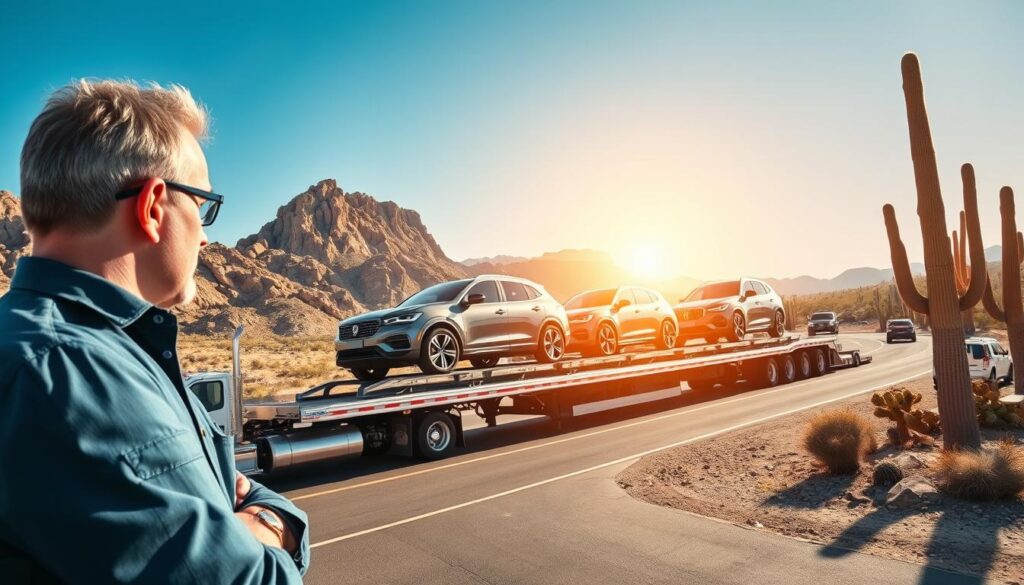
For snowbirds and retirees, seasonal moves between Colorado and Arizona create steady demand for professional car shipping. Using an experienced auto transport team saves time and reduces wear on vehicles.
RoadRunner Auto Transport manages thousands of shipments along this route each year. That volume shows reliability and deep knowledge of the road network, including the I-25 corridor.
Choosing a dedicated transport service protects vehicle value and avoids long drives. Customers benefit from transparent quotes, insurance options, and scheduled delivery windows.
“My son’s vehicle arrived on schedule with clear updates,” noted Douglas H. of Chandler, AZ. Positive experiences like this reflect strong communication and dependable carrier partners.
- Multiple shipping options: open and enclosed carriers to fit different needs.
- Timely delivery: networked carriers reduce delays during peak seasons.
- Professional handling: inspection, insurance, and door service protect vehicles.
Understanding the Cost to Ship a Car

Budget planning for vehicle moves starts by checking typical market rates and seasonal trends. Knowing current ranges helps owners set realistic expectations and avoid surprises.
Average market rates for this regional route generally fall between $471.00 and $736.00. Some analysts report a higher band of $943 to $1,483 for peak demand or special services.
Average Market Rates
Fuel costs and seasonal demand are the main drivers of price variation. During migration months, prices often rise due to carrier shortages and higher road traffic.
Budgeting for Your Move
Plan a buffer for fuel surcharges and limited carrier availability. Request an instant quote early to lock pricing and secure desired delivery windows.
- Compare options: open vs. enclosed carriers affect protection and price.
- Transparent pricing: request line‑item estimates to avoid hidden fees.
- Ask questions: vehicle size, weight, and route influence the final cost.
“Getting quotes early helped one customer avoid last‑minute rate spikes during peak season.”
For a tailored estimate and reliable scheduling, visit instant pricing and quotes and discuss options with the support team.
Factors Influencing Your Auto Transport Price
Vehicle dimensions, route accessibility, and timing are key elements that shape final quotes. Larger SUVs and trucks take more space on a carrier than compact cars, which raises the price. The make and model directly affect load planning and rates.
Pickup and delivery locations matter. Narrow streets or gated communities may require smaller trucks or off-site dropoffs, adding fees. Rural or tight urban access increases handling time.
Transport method changes pricing. Open carriers cost less. Enclosed transport adds protection and a higher price, often chosen for luxury or classic vehicles.
Seasonal demand and fuel costs also shape final numbers. Peak months raise prices. Expedited shipping shortens transit time but comes at a premium.
- Distance and route determine base cost and transit days.
- Carrier availability affects pricing during busy periods.
- Insurance and options add security and influence the total cost.
Consult the team for an accurate quote and tailored options based on your vehicle and timeline.
Estimated Transit Times for Your Vehicle
Delivery estimates depend on carrier schedules, daily mileage norms, and seasonal factors. Most carriers average about 500 miles per day, which helps set realistic arrival windows for an 863‑mile run.
Typical transit spans range from 2 to 7 days. Routes, weather, and traffic cause most variance.
Heavy snow in mountain passes or extreme heat in the desert can slow progress. Road work and city congestion add short delays near major metros.
- Real‑time tracking: customers get updates during transit.
- Expedited options: available when delivery time is critical.
- Booking advice: reserve transport 2–3 weeks ahead to secure windows.
Factors Affecting Delivery Speed
Weather, route, and scheduling drive most delays. The logistics team coordinates with carriers to reduce hold ups.
“Our carriers plan daily mileage and routing to meet delivery commitments whenever possible.”
| Metric | Baseline | Typical Range | Notes |
|---|---|---|---|
| Daily mileage | ~500 miles | 400–600 miles | Affects days on road and ETA |
| Transit time | 3–4 days | 2–7 days | Depends on weather, traffic, carrier |
| Expedited delivery | Optional | Faster guaranteed slots | Additional price for priority service |
If customers need a firm ETA or a custom quote, contact the company at (307) 288-5972 or email info@bestcarshippinginc.com. The team will outline pricing, insurance, and the full shipping process.
How to Ship a Car From Denver to Phoenix
Begin the process with an online instant quote or a quick phone call to our transport team. That quote lets customers select pickup dates and view pricing.
Booking Your Reservation
Booking is simple online or by phone. After payment and confirmation, the client receives a unique booking number for 24/7 tracking.
The Pickup Process
On pickup day the driver performs a full inspection. Photos document the vehicle condition and any existing damage.
An adult over 18 must be present to hand keys and sign inspection forms. This protects both parties and speeds loading.
Final Delivery Inspection
At delivery a final inspection verifies the vehicle matches the initial report. The customer signs off when satisfied.
“Every step is logged and photographed to ensure transparency during transit.”
| Step | What Happens | Customer Action |
|---|---|---|
| Quote | Instant online or by phone | Choose date and confirm pricing |
| Booking | Receive booking number and tracking | Save reference and monitor status |
| Inspection | Driver documents condition with photos | Be present and provide keys |
| Delivery | Final inspection and sign-off | Verify condition and sign forms |
For help or to get a quote, call (307) 288-5972 or email info@bestcarshippinginc.com. The company maintains professional handling and clear communication at every step.
Choosing the Right Auto Transport Company
Selecting a trusted provider is the single best step to ensure on-time delivery and clear pricing. Licensed and insured carriers protect your vehicle across state lines. Reviews matter: SGT Auto Transport has over 15,031 customer reviews that reflect consistent service quality.
Look for real-time GPS tracking and a price-lock promise. Both features reduce uncertainty about time and cost. Ratings on Trustpilot and the BBB provide reliable insight into company performance.
- Verify licensing and insurance before you book.
- Check recent customer ratings on trusted review sites.
- Confirm tracking, guaranteed rate terms, and clear communication.
| Feature | Why It Matters | What to Expect |
|---|---|---|
| Licensing & Insurance | Legal protection during transit | Validated carrier paperwork |
| Customer Reviews | Real performance data | High review counts = reliable service |
| GPS Tracking | Visibility of location | Real-time updates during shipping |
RoadRunner Auto Transport emphasizes transparent quotes and attentive support. For direct help, call (307) 288-5972 or email info@bestcarshippinginc.com.
Comparing Open and Enclosed Carrier Options
Choosing the right trailer type affects protection, price, and scheduling for any long-distance vehicle move.
Open carriers are the most economical choice. They handle most standard passenger vehicles and offer faster scheduling and lower cost.
Enclosed carriers provide extra protection from road debris, dust, and weather. They are recommended for luxury or classic vehicles that need pristine delivery.
Top-loaded transport is another specialized option. Discuss it with a shipping advisor when extra elevation or spacing matters for the vehicle.
“For high-value vehicles, enclosed transport minimizes exposure and helps ensure showroom condition on arrival.”
- Open: cost-effective, widely available, efficient for most models.
- Enclosed: higher price, superior protection for premium vehicles.
- Top-loaded: specialist handling; ask an advisor for suitability.
| Option | Protection | Typical Cost | Best For |
|---|---|---|---|
| Open carrier | Standard protection | Lower | Most passenger vehicles, SUVs |
| Enclosed carrier | High protection | Higher | Luxury, classic, high-value vehicles |
| Top-loaded | Elevated protection | Premium | Rare or high-clearance vehicles |
For a tailored quote and guidance on the best service, visit our car shipping page or call (307) 288-5972. The team helps match protection, time, and price to your vehicle’s needs.
Preparing Your Vehicle for Pickup
Proper prep at pickup helps drivers document condition and speeds the loading process. Cleaning and securing the interior makes inspection accurate. That reduces hold-ups and protects the vehicle during transport.
Cleaning Your Car
Wash the exterior so the driver can spot dents, scratches, or rust. Remove mud and salt from wheel wells and undercarriage when possible.
Clear the windshield and lights for safety checks. Remove external covers, roof racks, and toll tags before pickup.
Removing Personal Items
Customers may keep up to 100 pounds of personal items in the trunk or back seat. Store items below the window line to prevent shifting during shipping.
Note: Personal belongings are not covered by insurance if reported missing or damaged. Avoid leaving valuables in the vehicle.
- Prepare a short checklist provided by the service team before pickup.
- Document current condition with photos at handoff.
- Contact (307) 288-5972 or email info@bestcarshippinginc.com for a quote or questions about auto transport time and price.
Navigating Vehicle Regulations in Colorado and Arizona
Moving between Colorado and Arizona brings specific vehicle rules that owners must follow to stay compliant. Understanding these rules helps avoid fines and delays after delivery.
In Colorado, new residents must title and register their vehicle within 90 days. That process requires proof of insurance and valid ID. Follow the state checklist to complete the transfer on time.
Arizona enforces emissions testing every two years in the Phoenix and Tucson metro areas. Safety inspections are not required statewide, but emissions compliance is strict where it applies.
Insurance minimums differ. Colorado requires 25/50/10 for liability coverage. Arizona requires 15/30/10 for bodily injury and property damage. Verify your policy meets the new state’s limits before pickup.
New Arizona residents must update their driver’s license in person within 10 days at Motor Vehicle Services. Also, check local parking permit rules in your new neighborhood.
- Title and registration: Colorado — 90 days.
- Emissions: Arizona metro areas — every two years.
- Insurance: CO 25/50/10; AZ 15/30/10.
- Driver’s license: AZ — in person within 10 days.
Need help? The team provides guidance on these requirements and can coordinate timing with your car shipping and auto transport delivery. Call (307) 288-5972 or email info@bestcarshippinginc.com for a quote and compliance support.
Understanding Insurance Coverage During Transit
Clear insurance terms give confidence when placing a vehicle in a carrier’s care.
Basic liability coverage is included with every booking. This protects the vehicle for damage while in custody of professional drivers.
Comprehensive options are available for owners who want higher limits or broader protection. Customers choose coverage during the booking process.
Personal items left inside the vehicle are generally not covered. Owners should remove valuables before pickup to avoid loss or dispute.
- Every shipment includes basic liability for vehicle protection.
- Upgrades offer wider coverage for high‑value vehicles.
- Questions about limits and claims are handled by customer support.
“Policy choices are explained at booking so customers can match coverage to value and risk.”
| Coverage Type | What It Covers | When to Choose |
|---|---|---|
| Basic liability | Carrier liability for transit damage | Standard moves and everyday vehicles |
| Comprehensive option | Higher limits, broader loss scenarios | Luxury, classic, or high‑value cars |
| Customer liability notes | Personal items excluded; document condition | Remove valuables before pickup |
For policy details or a personalized quote, contact the team at (307) 288-5972 or info@bestcarshippinginc.com. For related routing help, see Arizona to Colorado auto transport.
Managing Personal Belongings in Your Vehicle
Storing items properly reduces risk and speeds the pickup process.
Allowed items: Customers may keep up to 100 pounds of personal belongings inside the trunk or back seat. All items must sit below the window line so the driver has clear visibility and balanced weight.
Important: Personal items are not covered by the carrier’s insurance. Do not leave expensive or irreplaceable goods inside the vehicle.
The driver may inspect the load before loading to confirm weight limits and secure placement. Proper packing prevents interior damage during transport and helps ensure on-time delivery.
- Pack items low in the trunk or back seat to maintain balance.
- Secure loose objects so they cannot shift during transit.
- Ask for packing guidance when you request a quote or book the service.
For questions about what can travel safely in your vehicle or for planning help, contact customer support at (307) 288-5972 or info@bestcarshippinginc.com. See this Georgia to Colorado auto transport guide for related packing tips and timing advice.
Seasonal Considerations for Your Route
Seasonal weather patterns directly affect timing and handling for long-distance vehicle transport.
Summer in Phoenix often exceeds 100° F. Schedule pickups or deliveries early or late to reduce heat stress on the car and during loading.
Winter near the Rocky Mountains brings snow and ice. Drivers use winter routes and extra caution to keep schedules safe.
Snowbird migration increases demand each season. Book well ahead to secure space during peak windows.
- Spring and fall are the most stable months for shipping and timely delivery.
- Wildfire season can trigger temporary closures and minor delays.
- The team monitors weather and adjusts routes to protect your vehicle.
“Proactive planning and flexible pickup windows reduce most seasonal disruptions.”
| Season | Primary Risk | Recommended Action |
|---|---|---|
| Summer | Extreme heat | Schedule early/late; avoid peak daytime loading |
| Winter | Snow and ice | Allow extra transit days; use experienced drivers |
| Spring/Fall | Mild weather | Optimal timing; highest reliability |
For planning help or an instant quote, consult the cost guide or contact support at (307) 288-5972.
Benefits of Professional Door to Door Service
Professional door‑to‑door car shipping places convenience first. Customers avoid driving to a terminal and save hours during a move.
Drivers will approach as close to the home as safety and local rules allow. That reduces walking and coordination at pickup and at delivery.
“This service removes the hassle of terminal drop‑offs and lets owners focus on other moving tasks.”
Our team handles routing, permits, and timing. The provider manages logistics so busy professionals and families get a reliable auto transport experience.
- Unmatched convenience: full pickup and door delivery.
- Trained drivers: residential access and safe handling.
- Time saved: no long drives or extra planning for the owner.
- Full logistics: paperwork, scheduling, and tracking are managed.
- Caregiver approach: vehicles are treated with extra attention and care.
| Feature | Benefit | When to Choose |
|---|---|---|
| Door pickup | Saves time and travel | Busy schedules, limited mobility |
| Driver access | Safe residential handling | Tight streets or gated locations |
| End-to-end logistics | Simplified booking and delivery | Full‑service moves and tight timelines |
Request a quote or discuss options at (307) 288-5972 or info@bestcarshippinginc.com. The team will match service and vehicle transport needs to your schedule.
Alternatives to Traditional Auto Transport
Each nonstandard option presents trade-offs in cost, time, and security.
Driving yourself can be appealing for freedom and control. It adds significant mileage and wear. Consider fuel, lodging, and time when comparing costs.
Hiring a professional driver lowers your travel time. Vet credentials, references, and insurance carefully before handing over keys. This option demands trust and clear terms.
Rail shipping is often the most economical choice. It usually lacks door‑to‑door pickup and delivery, so plan for terminal dropoffs.
Interstate movers sometimes offer vehicle handling as part of a full move. That can be convenient but may limit carrier choice and pricing flexibility.
“Compare cost, speed, and protection to find the best fit for your timeline and budget.”
- Drive yourself: flexible, adds mileage and time.
- Professional driver: convenient, requires thorough vetting.
- Train: cost-effective, less flexible for pickup.
- Interstate movers: bundled service, fewer provider options.
| Option | Cost | Flexibility | Security |
|---|---|---|---|
| Drive yourself | Variable (fuel, lodging) | High | Owner-controlled |
| Professional driver | Moderate | Moderate | Depends on vetting |
| Train shipping | Low | Low (terminal-based) | High for rail handling |
| Interstate mover | Moderate–High | Moderate (bundled) | Provider-dependent |
Request a quote to compare options and determine which path best fits your needs. For help, call (307) 288-5972 or email info@bestcarshippinginc.com.
Getting Your Instant Shipping Quote
Get a precise transport estimate fast by entering pickup, delivery, and vehicle details into the online calculator. The form returns an accurate rate in minutes and shows cost ship car data clearly.
Call the support team at (307) 288-5972 for a personalized quote from an experienced auto transport specialist. They will ask for origin and destination, vehicle type, and preferred shipping date to finalize your estimate.
No-obligation quotes let owners compare options without pressure. Once satisfied, customers can book the auto transport service online or by phone to reserve the transport date and secure pricing.
“Transparent pricing and a simple calculator make planning cost ship and delivery straightforward.”
- Fast online calculator for instant quotes.
- Phone support for tailored pricing and questions.
- Only basic details required: pickup, delivery, vehicle, date.
- No-obligation estimates and easy online booking.
For a quick start, request an instant quote or call (307) 288-5972. The team guides each step from pickup to final delivery, making car shipping simple and reliable.
Conclusion
Car shipping can be simple when you choose a reputable, professional provider. This guide gives clear steps on costs, prep, and timelines so owners can decide with confidence.
Safety, transparency, and care remain the priorities. The team ensures your vehicle is inspected, documented, and handled by vetted drivers for reliable delivery.
Whether you select open or enclosed service, the company focuses on timely handling and fair pricing. Use the online calculator or call for an instant quote.
For help with booking or questions about shipping your car, call (307) 288-5972 or email info@bestcarshippinginc.com. The support team stands ready to manage the entire shipping process and keep your move stress‑free.