
Planning to move your vehicle across long distance requires a professional plan. This guide explains the car shipping process, pricing factors, and transit options in clear steps. It helps customers get an accurate quote and manage costs with confidence.
BestCarShippingInc brings years of experience in auto transport. Their team works with top carriers to protect each car during pickup and delivery. Customers see transparent pricing and full insurance coverage for every shipment.
Choose enclosed or open transport based on budget and condition. Fuel, distance, and timing affect final price. The company documents vehicle condition before transit to ensure protection and trust.
Contact the team for a quick quote and clear timelines. Call (307) 288-5972 or email info@bestcarshippinginc.com for straightforward support and reliable service.
Key Takeaways
- Professional car shipping ensures safe, insured transport across long distances.
- Get a detailed quote to understand pricing, fuel, and transit times.
- Top carriers and documented condition protect customer vehicles during shipment.
- Choose enclosed or open options to match budget and protection needs.
- Contact the team for transparent pricing and reliable pickup and delivery.
Understanding the Cost to Ship a Car From Phoenix to Chicago
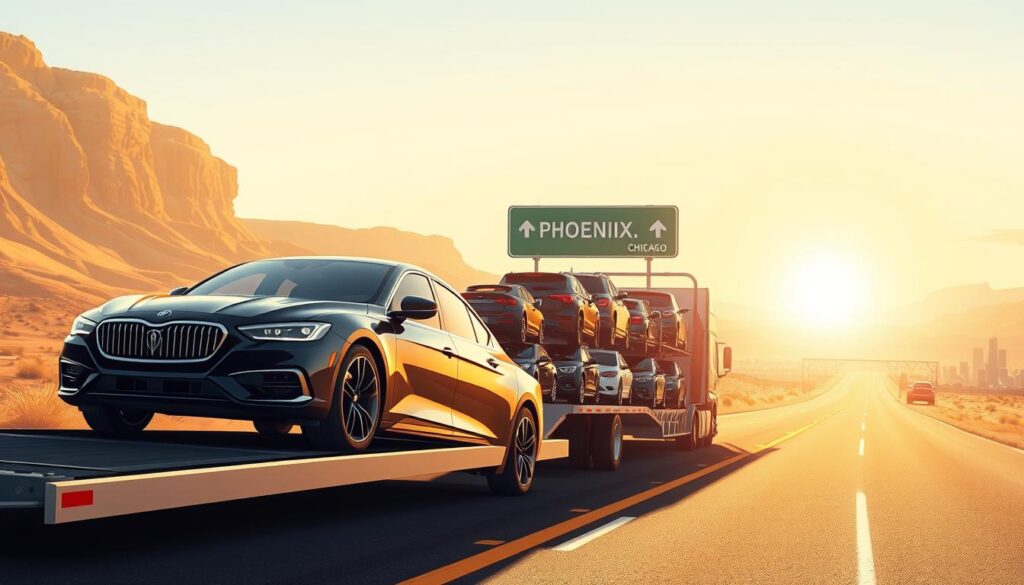
Transparent cost estimates let owners compare options and book with confidence.
The average price for auto transport between Arizona and Illinois is about $1,119.00. This baseline helps set expectations for car shipping quotes. Market demand and seasonal shifts can raise or lower that number.
The route covers roughly 1,793 miles. Long distances increase fuel and labor costs, which carriers must factor into final pricing. Typical transit spans 4–6 days for standard service windows.
Average Pricing Estimates
Customers should expect clear line items in any quote. Items often include base transport, fuel surcharges, and insurance. Size and weight of the vehicle can change the price.
Route Distance and Fuel Impact
Fuel costs remain one of the largest variables on long hauls. Rising diesel prices directly affect shipping costs and can alter delivery timelines.
| Metric | Value | Notes |
|---|---|---|
| Average Cost | $1,119.00 | Subject to market demand and vehicle size |
| Distance | 1,793 miles | Major corridor for long-distance transport |
| Transit Time | 4–6 days | Depends on route, weather, and carrier schedule |
| Key Variable | Fuel | Directly impacts final pricing |
Practical tip: For a tailored estimate and transparent pricing, request a quote online or by phone. BestCarShippingInc analyzes distance and fuel variables to give competitive rates and avoid surprises during delivery. Visit car shipping quotes for details.
Factors Influencing Your Auto Transport Quote
Multiple factors shape what you’ll pay for professional auto transport over interstate routes.
Vehicle size and weight matter. Larger models like SUVs and trucks occupy more trailer space and typically cost more. That increases the cost ship car for long hauls.
Seasonal demand also affects pricing. High seasons, such as spring migration periods, reduce carrier availability and raise rates. Flexible dates often lead to better pricing.
The long distance between pickup and delivery increases fuel and labor costs. For this corridor, carriers plan for several days of transit and added fuel expenses.
Accessibility at both locations can add time. Rural driveways or tight streets may require extra handling and labor, which shows up in the final quote.
- Comprehensive quotes include fuel surcharges, insurance, and carrier fees.
- Insurance protects the vehicle throughout transportation.
- Reliable carriers ensure safe delivery and adherence to schedules.
Clear, itemized quotes help customers plan budgets and avoid surprises. For tailored assistance, contact BestCarShippingInc at (307) 288-5972 or info@bestcarshippinginc.com.
Comparing Open and Enclosed Carrier Options
Different trailer types offer distinct trade-offs in price, protection, and availability for interstate shipping. This section explains practical differences so customers can choose the best option for their vehicle.
Benefits of Open Trailers
Open trailers are the most common and cost-effective option for standard vehicles. They move more units per run, which lowers the overall shipping cost.
Key advantages: faster pickup windows, wider carrier availability, and lower price compared with enclosed auto transport.
When to Choose Enclosed Transport
Enclosed auto transport is recommended for high-value, classic, or modified cars. It shields vehicles from road debris, weather, and salt.
Enclosed service usually costs more because of specialized equipment and limited carrier capacity. Customers should weigh vehicle value against the added cost before booking.
- Our network supports both open and enclosed options so owners can match choice to budgets and needs.
- Transparent pricing clarifies the cost difference before finalizing any car transport booking.
- Trusted carriers handle loading, securement, and safe delivery to the final address.
Preparing Your Vehicle for Transit
Preparing your vehicle before pickup reduces delays and lowers risk during long-distance transport.
Cleaning Your Vehicle
Clean the exterior and interior so the inspection can record the true condition. Remove debris and loose items that hide dings or scratches.
Documenting Condition
Take clear photos from multiple angles. Note existing dents, scratches, and interior marks. Keep timestamps with the images for your records.
Mechanical Checks
Check battery charge, tire pressure, and fluid levels. Leave only a quarter tank of gas to reduce weight and allow safe loading.
- Remove personal items — carriers cannot transport household goods inside the vehicle.
- Confirm keys and paperwork are ready for pickup to save time on the day of collection.
- Follow a checklist from the carrier to ensure everything is ready for a smooth transit.
Proper preparation minimizes risk and helps the vehicle arrive in the same condition it left. For guidance, contact BestCarShippingInc at (307) 288-5972 or info@bestcarshippinginc.com.
Essential Steps for a Smooth Shipping Experience
Begin the process with a documented estimate so every charge and timeline is clear before pickup.
Next, confirm the booking and set the pickup window. The team arranges door-to-door service and coordinates timing with the driver to minimize delays.
Before transit, document condition with photos. This protects the owner and speeds claims if issues arise. Keep copies of the estimate and inspection report.
- Get an accurate quote: request an itemized price and expected days in transit.
- Coordinate pickup: schedule door pickup and verify access at both locations.
- Track the shipment: receive real-time updates during shipping and estimated delivery time.
- Final inspection: the driver completes a condition check at delivery to confirm the vehicle matches the report.
Choose a reliable partner to reduce risk and ensure timely delivery. For vetted options, see trusted auto transport companies and contact the team at (307) 288-5972 or info@bestcarshippinginc.com.
Navigating Seasonal Price Fluctuations
Seasonal shifts often change rates and availability in long-distance vehicle transport.
High demand months—summer moves and winter snowbird periods—drive up shipping volumes. That raises prices and reduces carrier options for many owners.
Planning during off-season windows helps secure better pricing. Flexible pickup and delivery times let carriers bundle loads and cut costs.
BestCarShippingInc monitors market factors and adjusts quotes to stay competitive. Customers who book early can often lock in a favorable rate and avoid spikes.
- Be flexible on dates to reduce transit time and overall cost.
- Book in advance to avoid peak-season premiums.
- Ask for timing advice; specialists can suggest lower-cost times for transport.
Transparent pricing helps owners understand what influences final costs. Contact the team at (307) 288-5972 or info@bestcarshippinginc.com for guidance on the best times to ship car and save.
Selecting a Reliable Auto Transport Company
Choosing the right company matters for safe, timely transportation of your vehicle.
Begin by checking carrier credentials and licensing. Verify USDOT and MC numbers, and confirm each driver carries proper endorsements. This step reduces risk and ensures compliance with federal rules.
Look for transparent quotes and clear pricing. A trustworthy provider explains line items, including fuel surcharges and insurance. Ask for estimated days in transit and expected pickup windows before you book.
Best practices include reading reviews and confirming insurance limits. Work with companies that vet their network thoroughly. RoadRunner Auto Transport, for example, uses over 25,000 carriers to maintain capacity and reliability.
Confirm the company verifies driver experience and vehicle handling procedures. Reliable teams perform pre-shipment inspections and document condition with photos.
- Verify licensing: USDOT/MC numbers and insurance certificates.
- Request an itemized quote: know the pricing and estimated time.
- Ask about carrier vetting: driver background and fleet size.
Choosing a vetted, experienced company gives customers confidence that their cars move under professional care. Contact the team at (307) 288-5972 or info@bestcarshippinginc.com for help with quotes and options.
Understanding Insurance Coverage During Transit
Before any vehicle leaves the yard, insurance verification protects owners and carriers equally.
Every shipment includes basic liability insurance as standard. This gives owners a first layer of protection while the vehicle moves on trailers.
For high-value or classic vehicles, comprehensive options are available. Customers can choose elevated coverage that covers more damage scenarios and offers higher limits.
BestCarShippingInc verifies the carrier’s policy before pickup. The team confirms the insurer is active and in good standing to protect the client’s interests.
- Understand your coverage: know what is and is not covered before transit begins.
- Basic liability included: standard protection for every shipment.
- Optional comprehensive plans: for high-value vehicles and added peace of mind.
- Carrier verification: policies checked before pickup and maintained through delivery.
“Proper insurance coverage is a hallmark of a professional vehicle transport service.”
Questions about limits, deductibles, or claim steps are welcome. Contact BestCarShippingInc at (307) 288-5972 or info@bestcarshippinginc.com for a clear explanation of insurance and coverage before your vehicle moves.
Managing Your Vehicle Pickup and Delivery
A reliable pickup plan turns a complex transport into a simple, trackable process. The team coordinates each step so the owner knows who handles the vehicle and when delivery will occur.
The company offers convenient door-to-door service. The driver collects the vehicle at the agreed location in Arizona and delivers it to the destination in Illinois.
On pickup, the driver performs a detailed inspection and documents the condition. This protects the owner and speeds any claim process if needed.
Customers receive regular status updates during transit. Clear communications include estimated days in transit and expected delivery time.
- Coordinated scheduling ensures prompt pickup and on-time delivery.
- Access handling: drivers find a nearby safe spot if door access is limited.
- Transparent updates: you can track the shipment and contact dispatch anytime.
For reliable coordination and straightforward pricing, contact the team to schedule pickup. Learn more about related routes at Pennsylvania to Illinois auto shipping or call (307) 288-5972 or email info@bestcarshippinginc.com.
Key Differences Between Terminal and Door-to-Door Service
Choosing between terminal pickup and door-to-door delivery affects convenience, cost, and timing for long-distance moves.
Terminal service requires dropping off and picking up your vehicle at a facility. It can be less convenient for tight schedules. It may lower cost in some cases but adds travel time for the owner.
Door-to-door service sends a driver to the residence for pickup and delivery. This option reduces handling and limits transfers. It is the most convenient way for busy owners who prefer minimal coordination.
BestCarShippingInc specializes in door-to-door auto transport. The team manages logistics, secures the vehicle, and aims to deliver as close to your location as possible.
- Terminal: facility drop-off and pickup, possible savings, more owner effort.
- Door-to-door: direct pickup, reduced handling, greater convenience.
Choosing door-to-door is often the best way to save time and avoid extra trips. Contact the team at (307) 288-5972 or info@bestcarshippinginc.com to learn how this service protects your car and eases delivery.
“Door-to-door service provides a secure, personalized experience for every vehicle moved.”
Regulatory Requirements for Moving Vehicles to Illinois
Residents moving into Illinois must follow specific state rules for vehicle registration and emissions.
Illinois Emissions Testing
Certain areas require emissions testing for eligible vehicles. The Chicago and East St. Louis metropolitan regions enforce checks to meet state air-quality standards.
Prepare for testing by gathering recent maintenance records and emissions-related receipts. This helps speed inspection and avoid delays during car shipping transitions.
Registration Deadlines
Illinois requires new residents to register their vehicle within 30 days of establishing residency.
Owners should bring the title, current registration, proof of identity, and odometer reading when they visit the Secretary of State office.
- Register within 30 days to avoid penalties and ensure legal operation.
- Check insurance — Illinois minimum limits differ from other states; update your policy before registration.
- Keep documents handy for smooth processing after delivery.
| Requirement | Where It Applies | Timing | Action |
|---|---|---|---|
| Emissions Testing | Chicago & East St. Louis areas | Upon arrival if vehicle is eligible | Schedule test; keep maintenance records |
| Registration | Statewide | Within 30 days of residency | Submit title, ID, proof of insurance |
| Insurance Verification | Statewide | Before registration | Confirm policy meets Illinois limits |
“Proper documentation and timely compliance prevent fines and keep vehicles road-ready in Illinois.”
BestCarShippingInc assists customers with regulatory steps during car shipping and delivery. The team reviews required paperwork, explains insurance and coverage differences, and points owners to the Illinois Secretary of State for the latest rules.
For help preparing documents and meeting deadlines, contact BestCarShippingInc at (307) 288-5972 or info@bestcarshippinginc.com.
Handling Personal Belongings in Your Car
Limiting what remains in your vehicle helps protect belongings and ensures safe loading and unloading.
Weight and placement rules: Personal items must not exceed 100 pounds. Keep all items stored securely in the trunk or back seat. Items must sit below the window line for safety.
Note: Personal items are not insured by the carrier. Remove valuables before loading to avoid loss or damage.
- When you ship car, follow the 100-pound limit and secure everything below the windows.
- Check with the carrier about specific prohibited items before pickup.
- Keep documentation of any permitted items in case questions arise at delivery.
The team provides clear guidelines on what may remain in the vehicle. Following these rules prevents overloading and keeps drivers and vehicles safe.
“Removing valuables and limiting weight simplifies pickup and reduces claim risk.”
| Rule | Requirement | Why it matters |
|---|---|---|
| Maximum Weight | 100 lbs | Prevents excess load on trailers and ensures balanced transport |
| Storage Location | Trunk or back seat, below window line | Reduces movement and secures items during transit |
| Insurance Coverage | Personal items not covered | Owners should remove valuables prior to pickup |
Questions? Contact BestCarShippingInc for clarification or for advice on preparing your vehicle. Call (307) 288-5972 or email info@bestcarshippinginc.com.
Tips for Securing the Best Shipping Rates
Securing competitive rates depends on planning, flexibility, and transparent quotes. Book at least two weeks ahead to lock prices and avoid last-minute premiums.
Be flexible with pickup and delivery dates. Carriers can bundle loads and optimize routes when dates vary. That often lowers the final price and shortens transit days.
Compare quotes from reputable companies. Look for clear line items so customers can see fuel, insurance, and carrier fees. Request an itemized quote before committing.
- Choose open trailers for cost savings when enclosed protection is unnecessary.
- Work with vetted carriers to balance price and professional service.
- Plan ahead and stay flexible to manage fuel-driven costs.
“Transparent pricing and early booking give customers the best chance to save.”
Contact the team for a free quote and expert guidance on the process, pickup windows, and options that fit each vehicle and timeline.
Evaluating Transit Times and Delivery Expectations
Transit estimates help owners plan moving logistics and set realistic pickup and delivery expectations.
Most carriers average about 500 miles per day on long hauls. Given the roughly 1,500–1,800 mile distance, customers should expect delivery within 3–9 days.
BestCarShippingInc provides realistic timelines and regular updates so customers know where their vehicle stands during transit.
Real-time tracking is available for peace of mind. The company also offers expedited options for faster delivery when time is tight.
Factors such as weather, routing, and pickup access can affect days in transit. Discuss timing with an expert when requesting a quote to understand any potential delays and price impacts.
- Transparent updates keep customers informed throughout the shipment.
- Expedited service reduces transit time for an added cost.
- Accurate quotes reflect distance, expected days, and any rush fees.
“Clear communication and realistic timelines reduce stress and help owners plan for delivery.”
Contact BestCarShippingInc at (307) 288-5972 or info@bestcarshippinginc.com for a precise quote and timeline tailored to your vehicle shipping needs.
Common Challenges During Long-Distance Transport
Unexpected storms, road work, and heavy congestion often change delivery windows on long routes.
Weather and road conditions can add days to transit. Snow, wind, and flooding force route changes and slower speeds.
Traffic and construction create delays near urban hubs. This affects pickup and door delivery times and may alter the final quote.
Experienced drivers and vetted carriers reduce risk. The team monitors traffic patterns and updates routes to keep the shipment on track.
- Clear communication keeps customers informed of timing or routing changes.
- Mechanical checks before pickup prevent roadside issues during long runs.
- Insurance coverage offers protection when unexpected events occur.
“Proactive monitoring and trained drivers make the difference in long-distance vehicle transport.”
| Challenge | Impact | Mitigation |
|---|---|---|
| Weather | Extended days in transit | Alternate routing; driver protocols |
| Traffic/Construction | Delayed delivery | Real-time traffic monitoring |
| Mechanical Issues | On-road repairs or tow | Pre-shipment checks; roadside assistance |
BestCarShippingInc works proactively to manage price, time, and condition risks. Contact the team at (307) 288-5972 or info@bestcarshippinginc.com for guidance and a reliable service plan.
Conclusion
Reliable logistics and open communication are the two pillars of successful long-haul vehicle moves.
BestCarShippingInc offers clear pricing, proven handling, and expert support to keep your transit on track. Customers get transparent estimates and straightforward timelines for every job.
Follow the checklist in this guide to prepare the vehicle, confirm insurance, and reduce costs. Proper prep helps ensure the vehicle arrives in the expected condition and on schedule.
Request a free quote to compare options and choose the service that fits your needs. Call (307) 288-5972 or email info@bestcarshippinginc.com for prompt, professional car shipping and shipping support.