
Best Car Shipping Inc. is a U.S.-focused provider that puts reliability first. The company offers clear expectations, licensed and insured carriers, and documented inspections. This makes moving a valuable vehicle simple and secure.
The guide explains the end-to-end process. Readers learn what information is needed for a quote, how pickup and delivery work, and how to protect a vehicle’s condition. It also previews major choices: open vs enclosed, standard vs expedited, and door-to-door vs terminal options.
How it works: request a quote, lock a shipment, and get a reputable licensed carrier assigned. Best Car Shipping Inc. provides frequent, transparent updates during shipping so timelines stay clear.
This guide helps relocations, job moves, students, snowbirds, and logistics coordinators. For immediate assistance or a quote, contact the team at info@bestcarshippinginc.com or call (307) 288-5972. Learn more about regional options like car shipping in Texas.
Key Takeaways
- Licensed, insured carriers protect your vehicle.
- Quotes require simple details: dates, locations, and vehicle info.
- Choose open or enclosed and standard or expedited based on risk and timing.
- Door-to-door adds convenience; terminal options can save money.
- Frequent updates ensure a hassle-free experience.
Why Ship a Car to Another State Instead of Driving?
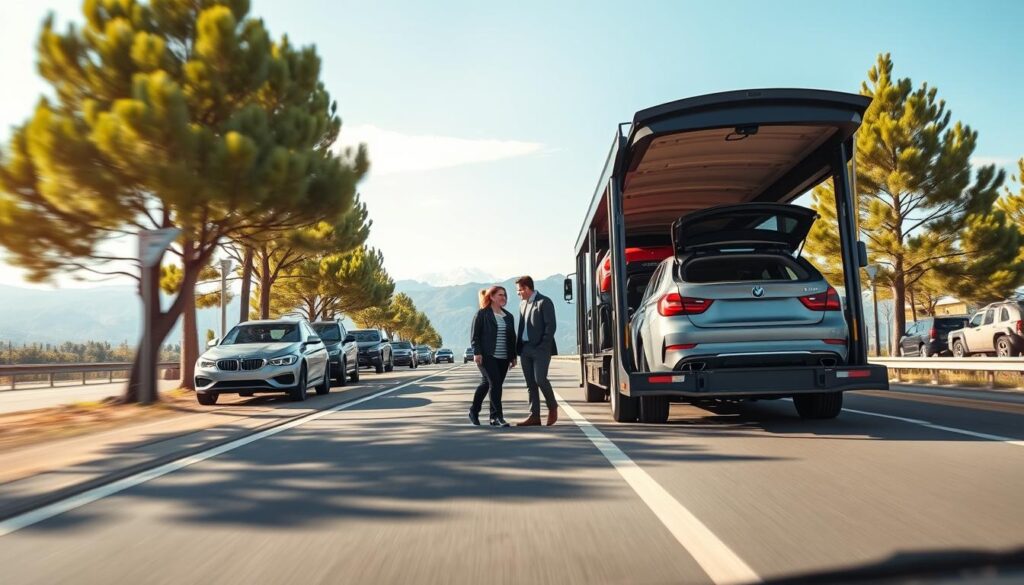
When time is tight, shipping a vehicle removes days of driving from a busy schedule. Best Car Shipping Inc. positions professional service as a way to meet flight times, closing dates, and job start deadlines without delay.
Save time on long-distance moves
Shipping frees owners from multi-day road trips. It lets people fly and focus on logistics while the vehicle moves under a fixed schedule.
Reduce wear and unexpected maintenance
Avoiding long drives preserves mileage and lowers the chance of breakdowns. That protects value and reduces post-move repair costs.
Real-world cost comparison
Factor fuel, lodging, meals, tolls, and lost work hours against a single quoted price. Often the total price for driving exceeds a professional service fee.
Safety and peace of mind
“Licensed carriers and documented inspections make shipping a secure choice for high-value vehicles.”
Professional services reduce exposure to road hazards and fatigue. For a prompt quote, use the link to ship your vehicle.
| Factor | Driving | Professional Shipping |
|---|---|---|
| Time | Days on road | Hours of coordination |
| Wear & Maintenance | High | Minimal |
| Out-of-pocket Costs | Fuel, lodging, meals | Single quoted price |
| Risk | Fatigue & breakdowns | Licensed, insured carriers |
How to Transport My Car to Another State: Overview of the Car Shipping Process
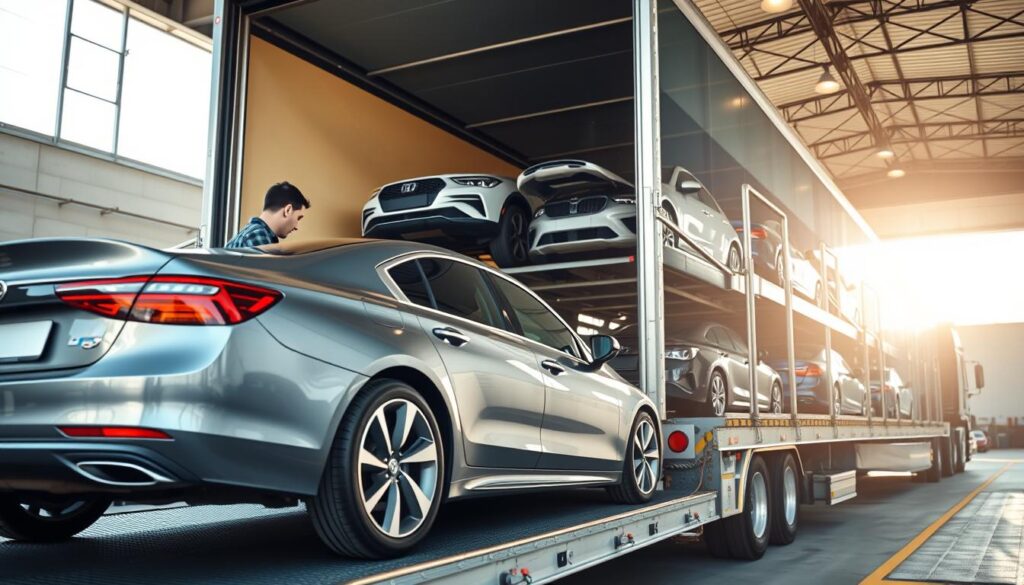
This section walks through each step of a professional vehicle move so customers know what to expect.
Request a quote and choose your options
First, the provider collects route details, dates, and vehicle specs. Customers choose open or enclosed and standard or expedited service.
Quotes are transparent and show fees for chosen options. This helps owners compare price and protection quickly.
Book the shipment and lock scheduling
Booking confirms a pickup window and expected delivery range. Locking in details means the carrier assigns a route and secures space on a trailer.
Confirmed booking reduces surprises and lets customers plan arrival logistics with confidence.
Pickup day and in-transit updates
On pickup, the driver completes a condition report and secures the vehicle for interstate transport.
Carriers provide realistic, proactive updates: location checks, ETA revisions, and any delay notices. This level of communication improves the overall experience.
Delivery, inspection, and final confirmation
At delivery, perform a final inspection and compare condition notes. Signing off confirms the vehicle arrives as agreed.
“Licensed carriers and documented inspections create a secure path from pickup through delivery.”
| Step | What Happens | Customer Action |
|---|---|---|
| Quote | Route, dates, vehicle options collected | Review and select service level |
| Booking | Schedule confirmed; carrier assigned | Agree pickup/delivery windows |
| Pickup & Transit | Condition report; secure loading; updates | Document condition; monitor updates |
| Delivery | Final inspection and release | Verify condition; sign confirmation |
Get a Car Shipping Quote: What Information You’ll Need
Accurate quotes start with precise pickup and delivery points plus basic vehicle facts. Providing clear information up front helps carriers estimate distance, required equipment, and scheduling. Collecting these inputs reduces surprises and gives a realistic price range.
Pickup and delivery locations, zip codes, and route distance
Provide exact pickup and delivery zip codes. Carriers use those codes to calculate route distances and available lanes.
Longer distances often lower cost-per-mile but increase total costs and estimated days in transit.
Vehicle details: year, make, model, size, and running condition
List the vehicle’s year, make, and model. Note size class (compact, sedan, SUV, truck) and whether the vehicle runs.
Operable vehicles use standard loading. Inoperable vehicles may require winches or flatbed equipment, which raises costs and affects carrier options.
Preferred timeframe, flexibility, and service level
State preferred pickup dates and how flexible the window is. Wider windows improve availability and often lower costs.
Choose a service level: standard schedules shipments on regular lanes; expedited offers priority scheduling and faster pickup/delivery but does not change handling standards.
For a prompt, reliable estimate and regional options, request a quote via our page for car shipping in Upton. Clear inputs yield better quotes and smoother service when moving a vehicle across distances.
Choose the Right Auto Transport Service and Carrier Option
Choosing the right service and carrier starts with matching priorities: budget, protection level, and timeline. Clear choices simplify planning and reduce surprise fees.
Open transport for everyday cars and budget-friendly shipping
Open transport is the most common and economical way for standard vehicles. It keeps costs low and works well for routine moves.
Use open trailers for sedans and SUVs when basic protection is acceptable. This option balances price and reliable cross-country delivery.
Enclosed transport for luxury, classic, exotic, or high-value vehicles
Enclosed transport offers full coverage from road debris and weather. It is the recommended option for classic, luxury, or collector vehicles.
Enclosed trailers reduce exposure and preserve value. Choose this when protection outweighs additional prices.
Expedited car transport when time matters most
Expedited service gives priority scheduling and faster pickup. Expect higher fees versus standard service, but the time savings are significant for tight deadlines.
How carrier availability and route popularity affect pricing and scheduling
Carrier options vary by lane and season. Popular routes often have more carriers, which can lower prices and improve pickup windows.
Reputable companies focus on secure loading, proper insurance, and steady communication no matter which option a customer selects.
- Match needs: budget → open; value → enclosed; urgent → expedited.
- Check lanes: busy routes can mean better pricing and more carriers.
- Verify: insurance and condition reports before signing.
Pickup Delivery Options: Door-to-Door vs Terminal Shipping
Choosing where a vehicle is picked up and dropped off shapes convenience, cost, and scheduling. Best Car Shipping Inc. offers two common ways to handle pickup delivery so customers can match the plan to their needs.
Door-to-door pickup and delivery for maximum convenience
Door-to-door means the carrier meets the customer at the closest safe, legal access point for loading or unloading. Drivers will coordinate a time window and complete a condition report on site.
This option favors busy families and professionals. It reduces local travel and saves time during a move. It is the convenience-first way when schedule and ease matter most.
Terminal drop-off and pickup for potential cost savings
Terminal shipping requires dropping the vehicle at a centralized location and picking it up at the destination terminal. Companies often price this option lower because it fits scheduled lanes.
Terminal makes sense in dense cities, where truck access is limited, or when a customer wants more control over price and timing. Both ways follow the same inspection, documentation, and secure loading standards.
- Choose door-to-door for time savings and ease.
- Choose terminal to reduce costs and increase scheduling options.
What Affects Car Shipping Costs Across States?
Several practical factors determine what a long-distance vehicle move will cost and why quotes can vary. This section breaks down those drivers so customers can compare options with confidence.
Distance and cost-per-mile dynamics
Longer routes raise the total cost but often lower the cost-per-mile. Carriers run established lanes and fill trailers more efficiently on busy routes. That efficiency can reduce the per-mile rate on cross-country moves.
Vehicle type and size
Larger vehicles need more space and may weigh more. SUVs, trucks, and oversized models typically cost more than sedans. Weight and dimensions affect loading, handling, and available carrier options.
Open vs enclosed method
Open transport is the most economical. Enclosed transport adds a premium for protection from weather and debris. The added cost reflects limited trailer space and specialized equipment.
Season, fuel, and market conditions
Peak moving seasons and severe weather raise prices and reduce available dates. Rising fuel costs also push fees higher. Route popularity in the United States affects carrier supply and scheduling windows.
“Transparent pricing helps customers budget and choose the right level of protection.”
| Factor | How it affects price | Decision tip |
|---|---|---|
| Distance | Total up; cost-per-mile may drop on long lanes | Book early on popular routes |
| Vehicle size | More space/weight = higher price | Measure and declare accurately |
| Method | Enclosed costs more than open | Choose enclosed for high-value vehicles |
| Season & fuel | Demand and fuel hikes increase quotes | Flexible dates can lower costs |
Example: For a mid-sized sedan from Texas to California, expect open pricing around $950–$1,150; enclosed $1,400–$1,650; expedited $1,700–$2,100. Actual quotes vary by dates, lane demand, and carrier availability.
For a clear, tailored estimate, contact Best Car Shipping Inc. at info@bestcarshippinginc.com or (307) 288-5972.
Prepare Your Vehicle for Shipping Day
A short pre-shipment checklist saves time on pickup day and protects the vehicle’s value.
Remove personal items
Remove all personal belongings. Loose items can cause damage, add weight, and create liability questions. Emptying the cabin and trunk prevents delay and possible fees during inspection.
Basic maintenance checks
Confirm tire pressure, battery charge, and fluid levels. Fix visible leaks before handoff.
These small checks reduce loading risks and speed the inspection process.
Fuel level guidance
Keep fuel under one quarter of a tank. This lowers weight and eases safe handling while leaving enough fuel for minimal movement if needed.
Clean and document condition
Wash the exterior so scratches and dents are clear. Take timestamped photos from multiple angles in good light.
Photographs support the inspection report and reduce disputes after delivery.
- Checklist: remove items, check tires/battery/fluids, confirm no leaks.
- Fuel: under 1/4 tank.
- Documentation: clear photos for condition verification.
For regional guidance, see the Florida–North Dakota car shipping page.
Insurance, Inspection, and Communication During Transport
Clear insurance details and a precise condition report protect owners when a vehicle leaves and when it arrives.
Understanding carrier insurance and verifying limits
Carrier insurance often covers damage during movement, but limits vary. Verify coverage amounts and what is excluded before pickup.
Ask for written policy details. Confirm the claims process and typical timelines for resolution.
Pre-shipment inspection and the condition report at pickup
Drivers complete a condition report at pickup. Owners should match the report to timestamped photos.
Note dings, scratches, and existing damage in writing. Accurate records ease any later review.
Tracking, updates, and what top-notch communication looks like
Top-notch communication means proactive status updates, timely ETA changes, and a responsive team for questions.
Request regular location checks and a single point of contact from the carrier or company.
Delivery inspection: what to check before you sign
Before signing, inspect exterior panels, glass, tires, and interior for new damage. Compare notes with the pickup condition report.
If damage exists, document it, refuse to sign final release until noted, and follow the carrier’s claims steps.
| Topic | What to Verify | Action |
|---|---|---|
| Insurance | Coverage amount & exclusions | Get policy details in writing |
| Condition report | Accurate, photo-backed notes | Match photos and sign only if correct |
| Communication | Proactive updates & single contact | Request regular ETAs and status checks |
Reputable companies prioritize clear insurance, precise inspection reports, and steady communication. For complete guidance on the full process, see our detailed guide on car transportation services from state to or contact the team at info@bestcarshippinginc.com / (307) 288-5972.
Conclusion
This final summary clarifies the simple steps that secure a safe, documented vehicle move. Request a clear quote, choose the right service option, then book with exact pickup and delivery details. The carrier completes an inspection at pickup and again at delivery.
Remember the main decision points: open vs enclosed for protection, standard vs expedited for timing, and door-to-door vs terminal for convenience. These choices affect costs and scheduling.
Best Car Shipping Inc. delivers time savings, less wear, and predictable logistics handled by licensed, insured carriers. Plan early for better lanes and price options.
For a documented quote and managed experience, contact the team at (307) 288-5972 or info@bestcarshippinginc.com. Expect transparent updates from booking through delivery.