
This buyer’s guide helps owners and logistics coordinators pick a car transport partner that protects the vehicle, schedule, and budget.
The guide sets clear decision criteria: safety record, insurance clarity, equipment match (open or enclosed), communication, and transparent quotes. Readers will learn what safe transport looks like in practice — documented inspections, secure loading, proper tie-downs, and a clean chain of custody.
This resource serves both individual owners and business teams who move inventory or customer cars regularly. It previews real-world cost ranges and realistic timelines so buyers get predictable outcomes, not vague promises.
Need help comparing options? Contact info@bestcarshippinginc.com or call (307) 288-5972. For practical moving tips, see our guide on stress-free vehicle transport.
Key Takeaways
- Prioritize safety record, clear insurance, and the right carrier type for your car.
- Look for documented inspections and secure loading to ensure safe transport.
- Expect transparent quotes and clear timelines from any reputable company.
- This guide fits both individual owners and business logistics teams.
- Contact the team at info@bestcarshippinginc.com or (307) 288-5972 for comparison help.
What car shipping is and when it makes sense in the United States

Car shipping is a professional service that moves a vehicle from one address to another. It is also called auto transport or vehicle transport in the U.S. market. Providers pick up cars, document condition, and deliver them to the destination.
Common scenarios include household moves, college or seasonal relocation, online purchases or sales across a state line, dealership transfers, and cross-country relocations where driving is inefficient.
Compare options before deciding. Driving yourself may cost less up front but adds mileage, wear on tires and brakes, and requires more time off work plus hotel and fuel expenses. For longer distances, those costs and risks add up.
Car transport makes sense when timelines are tight, multiple vehicles move together, a new or classic car needs protection, or the owner cannot travel. Two main approaches exist: hire a driver to deliver the car (driveaway) or use trailer-based transport.
Pricing is quote-based and depends on distance, dates, vehicle type, pickup and delivery details, and service level. Reputable car shipping companies will explain tradeoffs clearly and document the vehicle’s condition before transit.
How automotive shipping companies work from pickup to delivery
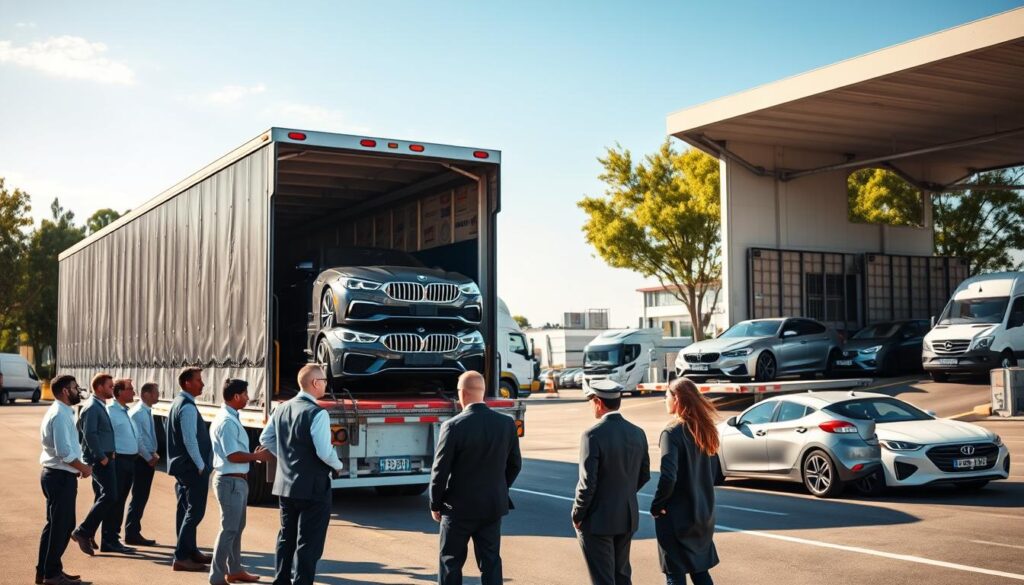
Knowing each step between pickup and drop-off makes the transport experience predictable for car owners and logistics teams. Accurate quotes start with a few core details. Provide the vehicle make and model, operable status, pickup and delivery ZIP or city, and desired pickup and delivery windows.
What information you’ll need for an accurate quote
Carriers and platforms use that data to return reliable quotes. A clear quote lists service type, estimated transit time, and any extra fees.
Typical shipment stages
- Dispatch: Load matching pairs a car with a route. Flexible dates broaden options and often lower costs.
- Pickup inspection: A visual walkaround records pre-existing damage and includes photos for the bill of lading.
- Transit: Expect periodic status updates, route adjustments, and weather-related delays as possible factors.
- Drop-off: Final inspection and sign-off complete the delivery. Report issues immediately to start a claim.
Transparent transport companies explain who is responsible at each stage and supply documentation proactively. That clarity protects both the customer and the shipping company and reduces dispute risk.
Pickup and delivery options that affect price and convenience
Pickup and delivery choices directly change price, timing, and convenience for each move. Clear expectations help customers pick the best option for their schedule and budget.
Door-to-door service: why it’s the most popular for vehicle transport
Door-to-door means a carrier comes to the pickup address and delivers to the destination address. This is the most requested option because it removes the hassle of reaching a terminal without the vehicle.
Note: door-to-door often means curbside on a safe, legal street. Large trailers sometimes require a nearby meeting point if access is restricted.
Terminal-to-terminal delivery: when lower cost is worth the tradeoff
Terminal pickup and delivery can reduce price when a route already passes through carrier hubs. Customers drop off and collect at fixed locations to save on fees.
Choose this option when the savings justify extra travel time to the terminal. If convenience is critical, door-to-door usually outweighs a modest cost reduction.
Urban vs rural pickup delivery: access constraints and route deviations
Urban pickups can face narrow streets, HOA rules, and limited turnaround zones. Rural delivery often requires route deviations and added mileage, which raises cost.
Route deviations, deadhead miles, and tight access increase quotes from shipping companies. Share gates, low bridges, or narrow roads up front to avoid delays and extra fees.
- Tip: Provide clear access notes and photos when booking.
- Tip: Ask for a written pickup and delivery window to limit surprises.
Auto transport service types: driveaway vs trailer shipping
Different service types balance speed, cost, and protection in distinct ways. Picking between a driveaway and trailer-based option defines how the car travels and what to expect on arrival.
Hiring a driver to move your car: speed and lower costs
Driveaway means hiring a qualified driver to operate the car from pickup to delivery on its own wheels.
This approach often lowers shipping costs because it avoids trailer equipment and fuel overhead. It works well for short moves or flexible timelines.
Tradeoffs include added mileage, normal wear-and-tear, and higher exposure to road hazards compared with trailer transport.
Trailer shipping: reduced mileage and added protection for the vehicle
Trailer shipping is the standard professional method for most car shipping needs. It keeps miles off the odometer and offers greater protection.
Trailer service is preferred for newer cars, long-distance moves, and sales where condition at arrival matters to resale value.
The type of service affects scheduling, inspection rigor, and how insurance applies during transit. If preserving mileage and resale value is a priority, trailer shipping usually wins.
- Decision checkpoint: minimize miles and protect condition → choose trailer shipping.
- When driveaway fits: short routes, tight budgets, and flexible delivery windows.
Open carrier car shipping vs enclosed transport
Selecting open or enclosed transport changes protection levels and total cost more than most customers expect. Choose deliberately based on the vehicle’s value and condition sensitivity.
Open carrier: the most common, typically lowest-cost option
Open carrier is the standard method for everyday car shipping. Carriers carry multiple vehicles on a single trailer to cut prices and increase routing efficiency.
That model keeps costs low by using multi-car capacity and tight route planning. Vehicles are secured with professional tie-downs and routine inspections.
Enclosed transport: protection from weather, dust, and road debris
Enclosed transport shelters a vehicle from rain, dust, and stones. Owners of collectible or near-showroom cars often choose it to avoid cosmetic risk.
This option costs more but reduces exposure on long runs and during bad weather.
Single-vehicle solutions and containers for high-value or rare vehicles
For maximum isolation, single-vehicle enclosed trailers or containers provide the best protection. These premium choices suit rare vehicles and high-stakes moves.
Practical recommendation: If condition sensitivity is high, favor enclosed transport for the best total value. For routine cars where cost matters most, open carrier often meets needs with acceptable risk.
Shipping costs in the US: real-world ranges by distance and carrier type
A simple pricing framework explains why per-mile rates drop as distance increases. Short hauls include higher fixed pickup and handling fees spread over fewer miles. Long hauls dilute those fixed costs, so the per-mile rate falls.
Below are per-mile benchmarks to help sanity-check auto transport quotes.
Per-mile benchmarks
- Under 200 miles: ~$2.92 per mile
- 200–500 miles: ~$0.93 per mile
- 1,000+ miles: ~$0.78 per mile
Typical total prices and transit times
| Distance band | Open carrier (typical) | Enclosed transport (typical) | Transit time |
|---|---|---|---|
| Under 500 miles | $500–$900 | $700–$1,200 | 1–3 days |
| 500–1,000 miles | $800–$1,000 | $1,100–$1,500 | 2–4 days |
| 1,000–1,500 miles | $900–$1,200 | $1,300–$1,800 | 4–6 days |
| 1,500–2,000 miles | $1,100–$1,400 | $1,600–$2,000 | 5–8 days |
| 2,000+ (cross-country) | $1,300–$1,600 | $1,800–$2,500 | 7–10 days |
“Open carriers generally offer the lowest prices; enclosed options cost more for extra protection.”
Interpretation tips: Per-mile rates fall with distance because fixed fees spread over more miles. Open carrier is typically the lowest-cost option. Enclosed transport carries a premium for weather and debris protection.
Budgeting advice: Collect multiple quotes and compare the same service level and timing. For a quick per-mile sanity check, see an expanded benchmark guide at average cost to ship a car per.
Factors that change your car transport quote
Timing, route, and vehicle specifics are the real levers that move a transport quote. Knowing which items you can control helps lower cost and avoid surprises.
Controllable factors include pickup windows, service level, and where you meet a carrier. Flexibility on dates lets carriers bundle loads and reduce price.
Distance and route complexity
Longer distance usually lowers per-mile cost. Heavy corridors like Los Angeles or I-95 add time and fees for congestion or detours.
Dates and expedited service
Expedited delivery shortens lead time but raises the quote. Shoulder seasons often give better availability and lower rates.
Vehicle size, condition, and add-ons
Larger SUVs, roof racks, or inoperable cars need special handling. Winches, lifts, or extra labor add to the total.
Service level and access
Open, enclosed, or single-car services increase protection and cost in that order. Hard-to-access addresses or rural deviations also raise quotes.
| Factor | Controllable? | Typical cost impact |
|---|---|---|
| Pickup window flexibility | Yes | Can lower quote by 5–15% |
| Route congestion / detours | No | Can add fixed fees or 10–25% in labor |
| Vehicle size / add-ons | Partly | $50–$300 depending on fit |
| Operable vs inoperable | No (but disclosure is required) | Winch/lift fees $75–$400 |
“Clear, early disclosure of vehicle condition and access is the best way to get an accurate quote.”
For a quick estimate that reflects these variables, try the car shipping cost calculator. Small choices up front can cut the final price and reduce delays.
Insurance, liability, and peace of mind: what to verify before booking
Before booking, verify who stands behind your vehicle if damage occurs in transit. That quick check prevents surprises and speeds claims when problems arise.
Carrier liability vs cargo coverage
Carrier liability covers third-party liability and basic loss tied to the carrier’s operations. Cargo insurance covers actual damage to the vehicle. Coverage levels vary by carrier and by lane.
Verification checklist for customers
- Policy limits and effective dates — confirm amounts in writing.
- Deductible size — know what you pay out of pocket.
- Exclusions — confirm aftermarket parts and personal items are covered or excluded.
- Claim process — who files and expected timelines.
- Match policy names to the company actually hauling the load, not just the broker.
Common gaps and operational peace of mind
Gaps often include personal items, non-factory accessories, and certain weather or confinement damage. Make sure these are explicit in policy language.
Peace of mind means clear documentation at pickup and delivery, prompt communication, and a named escalation contact. A written plan beats the lowest bid when it comes to protecting a car and the customer.
Need a vetted partner? Compare options with our recommended best car shipping company list or contact info@bestcarshippinginc.com for guidance.
How to evaluate car shipping companies using reviews, experience, and transparency
Start by treating reviews like operational logs—look for repeatable patterns, not single complaints. Focus on communication, claims outcomes, and timeliness across platforms.
Read reviews for patterns: Check volume, recency, and consistent themes. A few one-off issues are normal. Repeated notes about late pickups or unresolved damage indicate a systemic problem.
Spot real experience signals: Prefer a company that lists specialization—enclosed loads, classics, EVs, inoperable moves, or routes for longer distances. That shows practical know-how and route coverage.
Documentation and red flags
Confirm written quotes, pickup/delivery inspection steps, insurance certificates, and dispatch confirmations. If a carrier resists showing proof or gives vague pricing, walk away.
- Look for inspection photos and a signed bill of lading.
- Verify who actually hauls the car—carrier, broker, or marketplace partner.
- Avoid providers with shifting fees or unclear insurance terms.
“Transparency before payment reduces risk and speeds resolution.”
Make sure the chosen company answers these points clearly. When in doubt, contact info@bestcarshippinginc.com or (307) 288-5972 for help vetting options.
Carrier vs broker vs marketplace: choosing the right booking model
Choosing the right booking model affects who answers for the car from pickup to delivery. Each model shifts responsibility, visibility, and the tools available to the buyer.
Direct carrier: when a single operator is best
Direct carrier means one shipping company owns the truck and handles the load end to end. This suits consistent lanes and customers who want a single accountable operator.
Brokered loads: capacity with tradeoffs
Brokers offer broad access to capacity and better rate options. The tradeoff: control can be less direct unless paperwork names the hauling carrier and insurance holder.
Self-managed marketplaces: power of choice
Marketplaces give dispatch tools, dashboards, and partner ratings tied to verified transactions. They work well for businesses that want control over partner selection and scheduling.
| Model | Primary benefit | Main risk |
|---|---|---|
| Direct carrier | Clear chain of custody | Fewer routing options |
| Broker | More capacity access | Layered responsibility |
| Marketplace | Choice + digital tools | Requires active management |
“Confirm who signs the bill of lading and who carries the insurance before pickup.”
- Confirm who handles the car: legal business name, insurance holder, dispatch contact, and driver details.
- Match the model to desired service level, timing, and documentation expectations.
Questions? Email info@bestcarshippinginc.com or call (307) 288-5972 for help choosing the best option.
Premium enclosed auto transport: what “best-in-class” service can include
When value or timing cannot be compromised, premium enclosed service gives predictable protection and accountable performance. Providers position this as a full operational package, not just a covered trailer.
What defines premium service:
- High-limit coverage — up to $5 million per load for fleets moving high-value vehicles.
- Purpose-built equipment — climate-controlled and specialized trailers for sensitive or temperature‑dependent cars.
- In-house handling — company crews and purpose-made rigs, avoiding broker handoffs that add risk.
- GPS satellite tracking — real-time visibility, proactive ETA updates, and stronger accountability.
Why chain-of-custody matters
In-house operations reduce handoffs and simplify responsibility if an incident occurs. That lowers claim friction and speeds resolution.
Specialty use cases
Premium service suits prototypes, concours entries, auction moves, OEM events, and engineering test vehicles. Use it when condition control and strict timelines matter more than lowest cost.
“Premium enclosed transport pairs risk controls, equipment, and operational discipline for complete peace of mind.”
How to get and compare quotes from transport companies
A reliable quote turns uncertainty about price and timing into a plan. Request multiple written quotes so you can compare the same service levels and timelines.
What a solid quote should include
- Carrier type and hauling model (direct carrier, broker, or marketplace partner).
- Pickup window, delivery estimate, and estimated transit days.
- Total price, payment terms, and any access or inoperable-vehicle fees.
- Inspection process, insurance proof, and cancellation terms.
Compare apples-to-apples
Match service level: open vs enclosed and door-to-door vs terminal. Ensure each quote lists the same assumptions so price and costs are comparable.
Pre-booking questions to reduce risk
- Is the price firm or an estimate and what can change it?
- Who carries cargo insurance and where is the certificate?
- What equipment and tie-down methods will be used?
- How are pickup and delivery communications handled?
| Checklist item | Why it matters | Action |
|---|---|---|
| Carrier type | Determines accountability | Confirm legal name and insurer |
| Pickup & delivery windows | Affects scheduling and cost | Get written windows and contacts |
| Total price & fees | Shows true costs | Compare same service assumptions |
“Request multiple quotes, verify documentation, then book the provider that delivers the best total value.”
Next step: Request at least three written quotes, review paperwork, then book the provider that balances reliable timing, claims handling, and total price. For assistance, contact info@bestcarshippinginc.com or call (307) 288-5972.
Using shipping platforms to find automotive shipping companies faster
Platforms match shipment details to available routes, turning a single request into several competitive offers.
When a platform makes sense: choose one when the buyer needs speed, visibility, and multiple bids without calling several providers. Marketplaces reduce phone time and surface carriers that already run the route.
Request forms collect consistent details once—vehicle specs, access notes, dates, and pickup points. The platform distributes that packet to qualified partners so quotes arrive fast and comparable.
How multiple bids lower costs
More bids let carriers fill unused trailer space and optimize routes. That competition often drives down prices while keeping service options broad.
Ratings and verified transactions
Rating systems tie feedback to real moves. Multi-category scores and written reviews make it easier to spot reliable partners and avoid repeat problems.
Operational benefits for businesses
Dashboards and digital dispatch tools show listed vehicles, current jobs, and live updates. Businesses gain control and cut manual follow-ups.
| Feature | Benefit | Why it matters |
|---|---|---|
| Request forms | Consistent quotes | Faster, apples-to-apples comparisons |
| Multiple bids | Lower average cost | Carriers fill capacity and optimize routes |
| Ratings & verified moves | Decision support | Identifies reliable partners from past performance |
| Dashboards & digital dispatch | Operational control | Reduces manual work and improves tracking |
Scale and credibility: Central Dispatch reports 20,000+ carriers and 10,000,000+ vehicles posted yearly, showing deep capacity and choice for busy buyers.
“Platforms speed sourcing and give buyers the control to compare rates, routes, and carriers before booking.”
Remember: platforms are tools. Customers must still verify insurance, confirm who hauls the load, and review pickup documentation before booking. For help evaluating options, contact info@bestcarshippinginc.com or call (307) 288-5972.
Preparing your car for shipping day
Proper pre-transport steps make the pickup and delivery process smooth and verifiable. Small actions reduce disputes and help the chosen service meet schedules.
Clean-out and condition documentation
Remove personal items and valuables. This lowers loss risk and avoids claim confusion. Clean the vehicle so inspection photos show true condition.
Take high-quality photos of all sides, wheels, windshield, and key interior areas. Note scratches, dents, and pre-existing wear in writing.
Paperwork readiness
Have the title, keys, and signed paperwork ready. Confirm contact names and phone numbers for both pickup and delivery points.
For sales or dealer moves, prepare transfer documents and any power-of-attorney forms in advance. See a concise car transport checklist to avoid missing items.
Running condition basics
Ensure the battery holds a charge, tires are inflated, and fluids are at normal levels. Keep fuel low—about a quarter tank—for safe loading.
Report any quirks up front: low clearance, modified suspension, alarms, or brakes that need special handling. Clear communication helps the driver load the vehicle safely and keep the job on time.
- Day-of checklist: keys, photos, 1/4 tank fuel, no personal items, and contact numbers.
- Why it matters: Good prep protects the customer and speeds handoffs for reliable delivery.
Conclusion
A final checklist helps buyers match service type to a vehicle’s value, timing needs, and acceptable risk.
Choose the right auto transport by weighing protection, schedule, and cost. Align the service to the car’s value and how much exposure is acceptable.
Compare door-to-door vs terminal, driveaway vs trailer, and open vs enclosed to see clear tradeoffs in cost and protection. Each option changes timelines and handling procedures.
Before booking, confirm a written quote, realistic delivery windows, and insurance details with clear claim steps. Keep pickup and drop-off inspection photos for records.
Use reviews and experience signals to pick companies that communicate and document every handoff. For business users, consistent digital processes—dashboards, ratings, and dispatch—cut exceptions and cycle time.
Need help selecting the best option? Contact a coordinator at info@bestcarshippinginc.com or call (307) 288-5972 for lane- and vehicle-specific guidance.