
Moving a vehicle long distance can feel complex. Car Talk experts recommend careful planning and clear research into reputable transport providers. This guide helps readers compare pricing, services, and insurance so they make an informed choice.
Many owners prefer car shipping to avoid extra miles and wear during a big move. Whether a truck haul or container delivery is needed, understanding options reduces surprises. Professional auto transport companies offer door delivery, tracking, and damage protection.
Evaluate companies on factors like insurance, delivery time, and total cost. Request quotes and read reviews to balance price with experience. Our team focuses on clear communication and customer protection so vehicles arrive in expected condition.
Key Takeaways
- Compare quotes and reviews to find reliable car shipping services.
- Check insurance, delivery time, and door delivery options.
- Choose transport type—open truck or enclosed container—based on protection needs.
- Plan early to manage costs, fees, and pickup or drop-off timing.
- Inspect the vehicle at delivery and keep records for protection.
Understanding Cross Country Vehicle Shipping
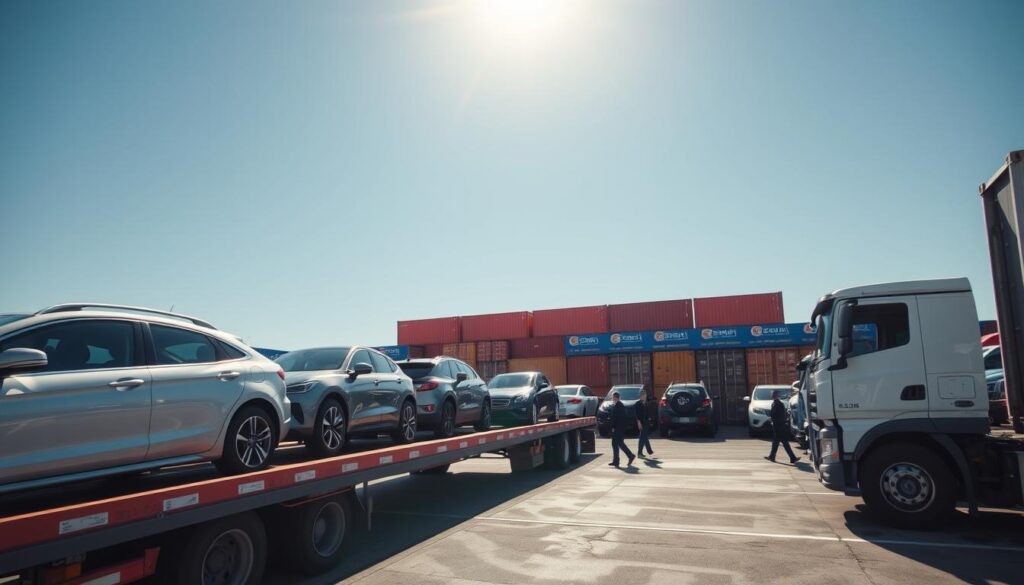
Professional transport firms handle the entire pickup, loading, and delivery process for long-distance moves. This service, often called auto transport, lets owners relocate a car without driving it themselves.
Drivers pick up your vehicle and secure it on either an open trailer or an enclosed container. Open carriers are common and cost-effective. Enclosed trailers add protection for high-value cars.
- Simple process: the company collects, secures, and delivers the vehicle.
- Common use: many people choose car shipping when moving coast-to-coast or between states.
- Equipment: carriers handle sedans, SUVs, and larger vehicles with proper gear.
- Benefit: shipping car services prevent extra miles and limit wear on your car.
Choosing a reputable company ensures careful handling and clear tracking during transit. Reliable auto transport reduces stress and gives owners confidence that their vehicle will arrive in expected condition.
The Best Way to Ship a Car Across the Country

A clear point of contact makes all the difference when moving a vehicle long distance. Start by confirming who will manage pickup, updates, and delivery before you book a transport.
Selecting a Reliable Broker
Choose a reputable broker or carrier. Brokers often have leverage with carriers and can secure fair pricing and timely updates, as Jeff Dominas from Sherpa Auto Transport notes.
A professional broker acts as an intermediary and handles customer service, scheduling, and claim coordination if damage occurs. Always check reviews, experience, and licenses.
Verifying Insurance Coverage
Verify insurance limits and the claims process before you sign. Request a detailed quote that lists coverage, deductibles, and any extra fees for door delivery or special handling.
“Brokers provide the necessary leverage to secure fair pricing and accurate updates.”
Final step: confirm the driver and carrier details, and keep written confirmation of insurance and delivery times. For a deeper planning resource, see our car transportation guide.
Evaluating Different Transport Methods
Not every shipping option fits every car; weigh protection needs against price and time. Choosing the right method affects cost, delivery, and how well the vehicle is protected during transit.
Open Trailer Transport
Open transport is the most common and less expensive choice for standard vehicles. It offers wide availability and often lower price and faster delivery.
Pros: lower cost and frequent departures. Cons: exposure to weather and road debris, so inspect insurance limits before you book.
Enclosed Carrier Protection
Enclosed carriers provide superior protection for luxury and classic cars. They shield vehicles from elements and reduce the risk of dings or chips.
This option raises the price but increases protection. For valuable autos, the added insurance and security can be worth the extra cost.
Rail and Boat Options
Rail can be a safer, less hands-on solution, though it is less common and may add handling time. Boat transport is the practical option for shipping car assets to Hawaii or Puerto Rico.
Each carrier and company offers different services, so confirm door delivery, insurance, and transit time to match your needs.
- Tip: Compare the pros cons of open transport versus enclosed carriers to balance cost and protection.
Essential Factors Influencing Your Shipping Costs
Pricing for vehicle transport changes with distance, size, and service level.
uShip reports per-mile rates from about $0.78 for long moves up to $2.92 for short hauls. That range shows how miles and route type drive much of the price.
Other cost drivers include vehicle size, chosen auto transport option, and destination access. Door delivery usually costs more than terminal pickup. Expedited transit and insurance upgrades add fees.
- Total miles: longer routes often lower per-mile rates but raise the overall cost.
- Vehicle size: SUVs and trucks typically cost more than compact cars.
- Service type: enclosed carriers and door service increase price and protection.
- Timing and season: peak demand raises pricing; flexible dates can reduce costs.
- Remote delivery: hard-to-reach locations may incur extra fees.
Compare multiple quotes and confirm all costs, taxes, and insurance limits before booking. For a full planning checklist and sample pricing, review our ultimate shipping guide.
Researching Reputable Auto Transport Companies
Begin your search by confirming that each prospect holds active licensing and strong customer feedback. This step protects your vehicle and reduces risk during transit.
Read reviews and ratings. Look for consistent positive feedback on Google and Trustpilot. Pay attention to mentions of communication, on-time delivery, and careful handling by the driver.
Reading Customer Reviews and Ratings
Customer reviews reveal real experience. Check recent comments for delivery accuracy and any damage claims. Verify the company’s USDOT number and insurance details before you request a quote.
- Network size: large carriers, like RoadRunner Auto Transport with over 15,000 certified carriers, often improve scheduling and route options.
- Licensing: confirm the shipping company is registered and insured.
- Compare: get multiple quotes to balance price, service, and reputation.
“Transparent quotes and clear communication are the hallmarks of a reliable auto transport partner.”
Choosing companies with strong reviews reduces surprises. A professional car shipping company will prioritize safety from pickup through final delivery.
Preparing Your Vehicle for Safe Transit
A short pre-shipment checklist prevents surprises and helps carriers load and secure your vehicle quickly. Before the carrier arrives, remove all personal belongings and any loose aftermarket parts. Disable alarms and fold mirrors as your transport company requests.
Document the car’s condition carefully. Take high-resolution photos from multiple angles and note existing dings, scratches, and interior wear. This evidence supports insurance if there is a claim after delivery.
- Check battery, fluid levels, and tire pressure so loading is safe.
- Keep the gas tank at the level the carrier specifies (often under half).
- Communicate any special requirements to the transport company before pickup.
“Proper preparation speeds inspection and adds protection throughout transit.”
| Task | Why It Matters | Action |
|---|---|---|
| Remove personal items | Prevents loss and insurance issues | Clear trunk and cabin; store valuables separately |
| Document condition | Proof for claims and delivery checks | Photos, written notes, and timestamps |
| Mechanical check | Reduces loading problems and delays | Test battery, fill fluids, adjust tire pressure |
Following these steps reduces cost and time risks and improves protection for your vehicle. For help or special instructions, contact the company at (307) 288-5972 or email info@bestcarshippinginc.com.
Navigating Seasonal Demand and Scheduling
Seasonal shifts change availability and pricing for vehicle transport, so plan dates carefully.
Peak car shipping occurs from April through September. During this period, carriers run fuller routes and prices often climb.
Book your shipment well in advance. Request a detailed quote and compare carriers early to lock in better pricing and flexible delivery dates.
Consider winter months for lower demand. Cooler months frequently offer lower prices and easier scheduling with fewer fees and faster carrier responses.
- Be flexible with pickup and delivery windows to reduce costs and avoid rush fees.
- Communicate changes promptly with your company representative to manage delays or volume shifts.
- Ask carriers about seasonal transit times and insurance impacts before you commit.
“Booking early and staying flexible are the most effective ways to control price and timing for auto transport.”
Final tip: get multiple quotes, confirm insurance limits, and choose the option that balances cost, time, and protection for your vehicle. For questions, contact (307) 288-5972 or info@bestcarshippinginc.com.
Comparing Door to Door and Terminal Services
Deciding between door and terminal delivery affects price, time, and convenience for long-distance auto transport. Door service picks up and drops off at specific addresses, reducing trips for the owner.
Terminal-to-terminal options often lower the quote and the overall cost. They require you to drop off and pick up your vehicle at a hub, which can add travel time and planning.
Some locations restrict large carriers from residential streets. When that happens, the shipping company will arrange a nearby meeting spot and confirm details in writing.
“Choose the option that matches your schedule and budget, and confirm pickup and delivery points before you sign.”
- Door service: higher convenience, possible extra fee, fewer miles for your vehicle.
- Terminal service: lower price, more coordination, ideal if time is flexible.
- Always verify carrier policies, delivery windows, and any access restrictions.
Final advice: weigh the pros and cons of each option and confirm clear communication from the shipping company before finalizing the contract.
Managing International Shipping Requirements
International auto transport requires clear documentation, vetted carriers, and an awareness of destination rules.
Plan for added fees. International shipping often adds destination charges, agent fees, taxes, and import duties. Typical fees range from $1,000 to $2,000 per vehicle, depending on port and agent costs.
Maritime shipping needs specialized handling to protect vehicles during long ocean transit. Confirm that the shipping company provides roll-on/roll-off or container options and adequate insurance.
- Verify customs documentation and country-specific safety laws before departure.
- Request a detailed quote that lists all fees, taxes, and expected delivery time.
- Choose a company with proven international routes to reduce regulatory risk.
“Proper insurance and clear paperwork are essential for smooth customs clearance and protection.”
| Requirement | Why it matters | Action |
|---|---|---|
| Customs paperwork | Clears vehicle for entry | Prepare title, bill of sale, and power of attorney |
| Destination fees | Can add significant cost | Ask agent for itemized charges in quote |
| Insurance | Protects during ocean transit | Purchase international coverage and confirm limits |
For guidance on domestic transitions or to compare options before international moves, consider our resource on ship your car to another state. Contact (307) 288-5972 or email info@bestcarshippinginc.com for assistance.
Weighing the Pros and Cons of Driving Yourself
Compare the full trip cost against professional transport quotes before deciding.
Driving 2,800 miles from California to Connecticut can cost nearly $500 in gas for a fuel-efficient car. Add hotels, meals, and possible repairs. Those hidden expenses can push the total above many shipping quotes.
DIY travel offers control and a road trip experience. It also adds wear, risk of breakdown, and lost time from work. For high-value or classic vehicles, many owners prefer a shipping company for protection and fewer added miles.
“Count every expense — fuel, lodging, meals, and depreciation — before choosing one option.”
| Factor | Driving Yourself | Professional Shipping |
|---|---|---|
| Cost | Fuel + lodging + food; often higher than projected | Single quote; includes pickup and delivery options |
| Time & fatigue | Long hours, multiple days on road | Minimal owner time; carrier handles transit |
| Vehicle wear | Thousands of added miles reduce resale value | Keeps mileage low; better for resale |
| Risk | Higher accident and mechanical risk | Professional handling and insurance coverage |
Compare total costs with a reliable quote from reputable shipping companies. That makes the pros cons clear and helps protect your vehicle and wallet.
Inspecting Your Vehicle Upon Delivery
Inspecting your vehicle at delivery is the final and most important step. Walk around the car with the driver and look for new dents, scratches, or fluid leaks. Compare the current condition with your pre-shipping photos.
If you find any issues, document them immediately. Take time-stamped photos from multiple angles and record each discrepancy on the delivery form before you sign.
“Do not sign final paperwork until you are satisfied with the vehicle’s condition.”
Report damage to the shipping company right away so the claims and insurance process can begin. A reputable company will provide a clear procedure and timeline for claims.
| Action | Why it matters | What to do |
|---|---|---|
| Walk-around inspection | Confirms no new damage at destination | Check exterior, tires, and glass; compare photos |
| Document findings | Needed for any insurance claim | Write notes on delivery form; take photos |
| Contact company | Starts claims and protects your price quote | Call driver and customer service; email info@bestcarshippinginc.com |
Final step: only sign once the delivery form matches your inspection. If you have questions, ask the driver before they leave the destination. For help, call (307) 288-5972.
Conclusion
Confirming carrier credentials and delivery windows prevents delays and protects your investment during transit.
Choosing between price and protection means checking car shipping companies carefully. Compare quotes, read recent reviews, and confirm insurance limits before you commit.
Prepare the vehicle and document its condition. That step speeds inspections and supports any claim after delivery.
Whether you pick open transport or a specialized option, reputable shipping companies offer clear pricing, transit time estimates, and reliable service. For local guidance and planning, see our Houston shipping guide.
For a free quote or questions, contact the company at (307) 288-5972 or email info@bestcarshippinginc.com.