
This introduction explains how to move a valuable vintage vehicle with care.
The industry now offers tailored services that protect historical integrity during transit. Sherpa Auto Transport, for example, requires carriers to carry $1,000,000 in liability and $100,000 in cargo insurance per shipment. This level of coverage helps reduce risk.
Proper planning starts with researching a reputable company that values security and clear communication. Document the condition of the vehicle before it is loaded. Photos and written notes make claims and reviews easier to manage.
The team at (307) 288-5972 provides reliable updates through the process. Customers may also contact info@bestcarshippinginc.com for quotes and questions. Clear steps and verified carriers protect value and delivery timelines.
Key Takeaways
- Select a carrier with strong coverage and a proven process.
- Document the vehicle condition thoroughly before pickup.
- Confirm liability and cargo insurance levels up front.
- Expect clear status updates from a reputable company.
- Use professional carriers to protect value during transit.
Understanding the Value of Professional Classic Car Shipping
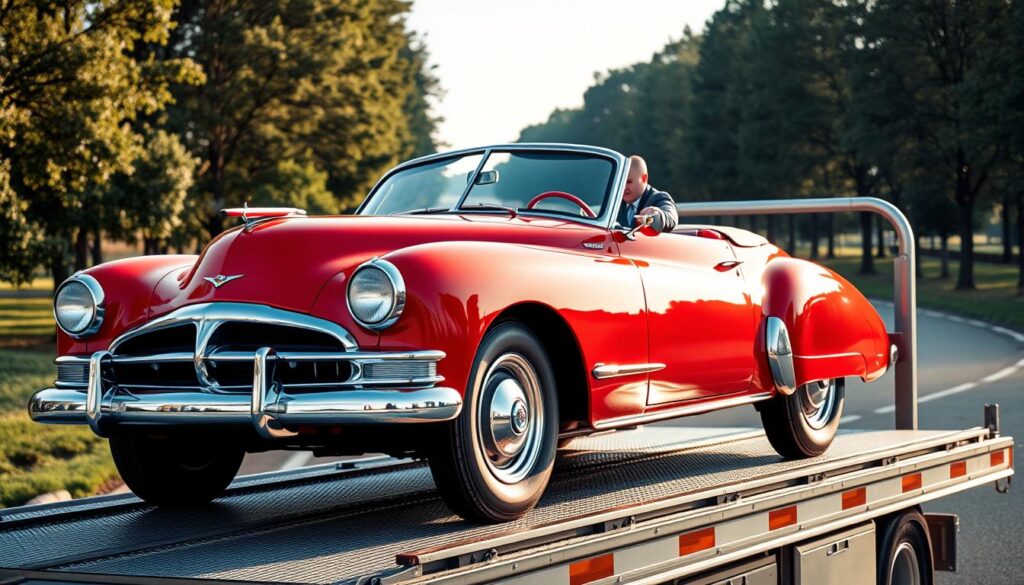
Professional handling preserves a vintage vehicle’s market value and historical details during overland moves.
Specialized vehicle movers focus on protection. They limit added mileage and reduce wear that lowers resale value. This expertise matters to collectors and owners who expect careful handling.
The service often includes door-to-door pickup and delivery. That convenience keeps the vehicle close to desired locations and shortens exposure to road risks.
A reputable carrier combines experienced crews, tailored equipment, and verified coverage to protect condition and provenance.
- Minimizes miles and mechanical wear during long distance transit.
- Provides specialized loading and secure stowage.
- Offers insurance levels suited to high-value vehicles.
| Service Type | Protection Level | Typical Use |
|---|---|---|
| Enclosed carrier | High: weather and debris protection | High-value or concours vehicles |
| Open carrier | Moderate: efficient and cost-effective | Routine long-haul moves |
| Door-to-door specialist | Variable: tailored handling and pickup | Collectors needing precise delivery |
Compare providers and read reviews. For vetted options and carrier lists, review recommended auto hauler companies.
Why Specialized Transport is Essential for Vintage Vehicles
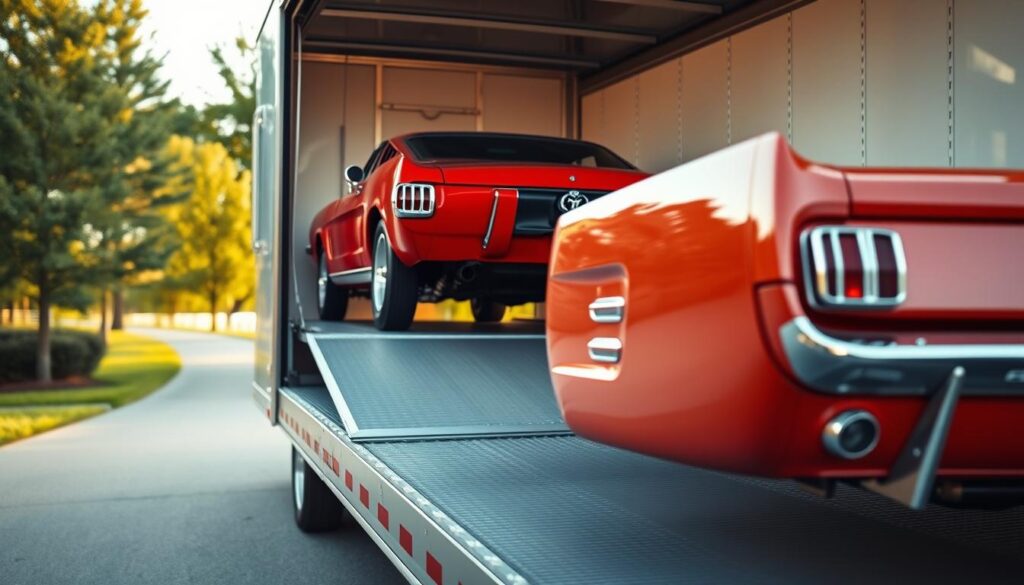
Vintage vehicles need specialized handling to preserve original finishes and mechanical integrity during long moves.
Preserving Historical Integrity
Collectors value authenticity. A tailored approach keeps paint, trim, and original parts protected from wind, dust, and road grit. Enclosed trailers provide a controlled space that limits exposure to weather and debris.
Minimizing Road Wear
Driving long distances adds miles and increases wear. Choosing professional classic car transport reduces unnecessary odometer accumulation and lowers the risk of mechanical stress.
- Protection: Enclosed transport shields against weather and debris.
- Preservation: Handling protocols keep condition and value intact.
- Care: Experienced carriers secure vehicles for safe delivery.
Owners who need vetted options can review dedicated services at transporte de carros. Proper selection of a carrier and clear coverage details help limit damage and preserve legacy.
Car Shipping for Classic Cars: Safe Transport Guide
A methodical pre-shipment routine keeps vintage finishes intact and reduces risk.
Owners should start by cleaning the vehicle thoroughly. A clean surface makes inspections accurate and shows existing wear.
Remove personal items and secure loose parts. Loose trim or luggage can shift and cause damage during transit.
Document condition with photos and short video clips. Time-stamped media helps with any later claims and offers clear proof of pre-load condition.
- Check fluid levels and top off where needed to avoid leaks.
- Disconnect the battery to prevent electrical shorts in transit.
- Note tire pressure and any mechanical issues to inform the carrier.
| Preparation Step | Purpose | Pro Tip |
|---|---|---|
| Clean and inspect | Reveal chips, rust, and prior damage | Use close-up photos of problem spots |
| Secure loose parts | Prevent movement and scratches | Pack small items separately and label |
| Document and record | Support claims and reviews | Store media off-site or in cloud |
Following these steps improves the delivery outcome and protects value. To request quotes and vetted carriers, visit request quotes.
Evaluating the Costs of Enclosed Versus Open Carriers
Choosing between enclosed and open carriers starts with a clear budget and the vehicle’s preservation needs.
Open transport typically runs between $800 and $1,500. It is the more budget-friendly way to move a vehicle over distance.
Enclosed transport usually ranges from $1,100 to $2,000. This option offers higher protection against road debris and weather. It is recommended for high-value and vintage vehicles.
Compare price against risk: if value and condition matter most, the added cost often pays off.
- Open carriers: lower cost, good for routine moves and shorter timelines.
- Enclosed carriers: premium protection, less exposure during transit.
- Request transparent quotes and confirm coverage and carrier reviews before booking.
| Option | Typical Range | Best Use |
|---|---|---|
| Open transport | $800–$1,500 | Budget moves, standard vehicles |
| Enclosed transport | $1,100–$2,000 | High-value and vintage vehicles |
Questions about quotes or coverage? Contact the company at (307) 288-5972 or email info@bestcarshippinginc.com for a clear comparison and next steps.
Key Factors Influencing Your Total Transport Quote
Several elements affect the final estimate for classic car transport. Knowing them helps owners plan budgets and timelines.
Distance and Route Complexity
Longer routes raise base costs. Complex paths with detours, mountain passes, or restricted access add time and labor.
Expedited pickup windows can add $200–$500 depending on urgency. Ask the carrier about specific route fees when requesting quotes.
Seasonal Demand Fluctuations
Prices often spike in summer and again in January. High demand means fewer available crews and higher rates.
Scheduling outside peak months can reduce overall costs and improve pickup options.
Vehicle Size and Weight
Larger, heavier vehicles occupy more space on the carrier and may increase the quote. Enclosed transport typically costs more than open transport due to added protection.
Tip: Request a detailed quote that breaks down distance, time, and coverage. For a route example, see a sample Sacramento-to-Dallas option at Sacramento to Dallas service.
Preparing Your Classic Car for a Secure Transit
A clear, consistent checklist helps owners protect valuable vintage vehicles during transit.
Begin with a full clean and a short inspection. A tidy surface makes it easier to spot chips, rust, or prior marks. Document these areas with time-stamped photos.
Inflate tires to recommended pressure to prevent shifting during loading and unloading. Check fluid levels and top off to avoid leaks in transit. Disconnect the battery to reduce electrical risks.
- Remove toll responders and loose interior items to prevent movement and scratches.
- Secure loose trim and detach aftermarket accessories that might snag.
- Label small parts and store them separately to preserve provenance and value.
Work with the chosen carrier to confirm pickup requirements and coverage. Ask for written confirmation of insurance limits and any handling protocols for enclosed transport or open transport options.
Proper prep reduces damage claims and helps speed delivery. Follow this routine to make classic car shipping and car shipping straightforward and reliable.
Managing Fluids and Battery Disconnection
A focused pre-trip routine keeps fluids steady and electronics protected during long moves.
Check coolant levels before handoff. Antifreeze prevents engine block cracking in extreme temperature swings. Top off or drain coolant based on seasonal needs.
Inspect oil and transmission fluid. Low or contaminated fluids raise the risk of leaks and mechanical damage during transit. Top off to recommended levels or consult a technician if leaks are present.
Disconnect the battery to avoid electrical shorts and drained cells while the vehicle sits on a carrier. Secure terminals and note any alarm or immobilizer settings with the carrier.
- Verify no visible leaks under the vehicle.
- Note fluid levels in writing and photos for delivery inspection.
- Label battery status and any special handling instructions for the carrier.
| Task | Reason | Owner Action |
|---|---|---|
| Coolant check | Prevents freezing or boiling damage | Top off or drain per mechanic advice |
| Oil & transmission | Reduces leak and wear risk | Fill to spec; repair leaks before pickup |
| Battery disconnect | Prevents shorts and power drain | Disconnect and label terminals; note alarm codes |
These steps reduce the chance of mechanical issues during transit and protect vehicle value. Owners seeking a vetted transport company can request quotes and confirm coverage before pickup.
Selecting a Reputable and Insured Transport Company
Choosing the right carrier begins with confirming credentials and documented coverage.
Verify that the company holds active licensing and can show recent reviews from owners of vintage vehicles. Sherpa Auto Transport, for example, maintains a 4.9‑star rating and requires every contracted carrier to carry at least $1,000,000 in liability and $100,000 in cargo insurance.
Ask the provider to send proof of insurance and copies of carrier licenses before booking. Keep those documents with your shipment records. This step reduces the risk of uncovered damage and simplifies claims.
Use a simple vetting checklist:
- Confirm license and insurance limits with the carrier.
- Read recent reviews and note recurring praise or complaints.
- Request written policies on handling, delivery windows, and quotes.
Work with firms that vet every contractor. That ensures licensed carriers, verified coverage, and consistent handling. For questions or to request vetted options, contact (307) 288-5972 or email info@bestcarshippinginc.com.
The Importance of Carrier Vetting and Insurance Coverage
Proper vetting and clear coverage reduce risk and protect the value of a vintage vehicle.
Choosing a vetted carrier starts with written proof of liability and cargo limits. Owners should request certificates and confirm policy dates before booking.
Verifying Liability Insurance
Verify liability limits and confirm who handles claims. Intercity Lines, for example, provides $2,000,000 in cargo insurance per load. That level of coverage reduces financial exposure if damage occurs.
Checking Carrier Safety Records
Review safety histories and audit logs. Clean driving records, incident reports, and regulatory compliance show professionalism.
- Ask for recent inspection reports and proof of active licensing.
- Confirm carriers list protocols for enclosed transport and open transport.
- Check independent reviews and the carrier’s claim response time.
Rigorous vetting and verified insurance create a secure environment that protects your investment from pickup through delivery.
Navigating the Logistics of Non-Running Classic Cars
Moving a non-running vintage vehicle demands precise planning and specialized lifting gear.
Intercity Lines has handled these needs since 1980. The company provides trained crews and equipment for inoperable models under restoration or awaiting repair.
If the vehicle rolls, steers, and brakes, most professional carriers will load it with hydraulic lift gates and careful strapping. This reduces the chance of scratches and mechanical harm.
If a vehicle will not roll or steer, a flatbed or tow service is required. Intercity Lines coordinates these services and documents handling to protect value and limit damage.
Expert care prevents further harm during every step. Teams use soft straps, padded supports, and step-by-step protocols for loading, stowage, and delivery.
- Specialized lift gates and winches for gentle loading.
- Flatbed coordination when rolling is impossible.
- Customized quotes based on condition, access, and distance.
| Condition | Typical Equipment | Delivery Consideration |
|---|---|---|
| Rolls/steers/brakes | Hydraulic lift gate, enclosed carrier option | Door-to-door pickup possible |
| Does not roll | Flatbed or tow truck, winch | Extra handling time; higher costs |
| Under restoration | Padded supports, soft straps | Special handling notes; documented pickup |
Contact (307) 288-5972 or email info@bestcarshippinginc.com to get a customized quote and discuss carrier options and insurance limits.
Essential Documentation for Your Vehicle
A clear paper trail is as important as secure straps when preparing a valuable vehicle for transit.
“The Bill of Lading is both a receipt and a contract. Keep it with your records.”
Owners should get a signed Bill of Lading at pickup. This document states condition, route, and agreed terms. It is the primary proof if a dispute arises.
Photograph and film the exterior and interior before loading. Time-stamped media creates an objective record to compare at delivery.
Keep copies: inspection report, photos, timestamps, and the Bill of Lading. Store digital backups off-site or in the cloud.
Confirm carrier identity and ask about insurance limits. Clear paperwork helps settle any damage claims quickly and protects value.
The team assists with forms, explains each clause, and provides guidance on required documents. Call (307) 288-5972 or email info@bestcarshippinginc.com for help with quotes and documentation.
What to Expect During the Loading and Unloading Process
Loading and unloading are the most hands-on moments of any move and require clear protocol.
Professional carriers use hydraulic lift gates and articulating interior decks to position and raise the vehicle into an enclosed carrier. Crews secure wheels with soft straps and padded chocks to prevent movement.
Owners should supervise whenever possible. A brief presence at pickup and delivery helps confirm that handling meets agreed standards and that insurance paperwork is signed.
“A final walk-around at delivery is the best way to confirm condition and document any discrepancies.”
Conduct a final inspection immediately after unloading. Note fluid leaks, panel gaps, and finish details. Photograph any concerns and attach them to the Bill of Lading before the driver leaves.
| Step | Equipment | Owner action |
|---|---|---|
| Loading | Hydraulic lift gate, articulating deck | Be present; verify straps and alarm codes |
| Securing | Soft straps, padded chocks | Confirm tightness and note tire pressure |
| Unloading | Controlled ramp descent, lift gate | Perform walk-around and sign delivery papers |
Stay informed about timing and any route delays. Clear communication with the carrier reduces surprises and helps protect value throughout delivery.
Monitoring Your Vehicle During Transit
Owners gain peace of mind when they can see a live route and ETA for their vintage vehicle.
Transparent tracking keeps the process accountable. Real-time tracking tools show the exact location of a classic car from pickup through delivery. Updates reduce uncertainty and let owners plan around arrival windows.
Utilizing Real-Time Tracking Tools
Most carriers provide GPS updates and status alerts. A typical coast-to-coast move takes about 10–14 days. Live feeds and text notices flag delays, route changes, and expected delivery time.
The company offers a tracking portal and proactive calls. Customers can confirm pickup times, follow the route, and check estimated delivery dates. Staff will answer questions and provide status on request.
Benefits:
- Continuous location visibility during the entire car shipping process.
- Faster responses to route changes or unexpected delays.
- Clear communication about ETA and any carrier issues.
Stay connected with monitoring tools to protect value and reduce stress while the vehicle moves across states.
Conducting a Thorough Inspection Upon Delivery
Take time at delivery to compare current condition with pre-shipment photos and the Bill of Lading. This step confirms the vehicle arrived in expected condition and helps flag any new issues quickly.
Perform a careful walk-around. Check panels, glass, trim, and visible undercarriage areas. Open doors and inspect the interior for scuffs or loose parts.
Use your pickup records as the baseline. Match each photo and note against the delivered state. Note any discrepancy immediately on the delivery paperwork.
If you find damage, document it with time-stamped photos and detailed notes. Contact the company and request next steps for a claim. Keep copies of the Bill of Lading and inspection media.
| Step | What to Check | Owner Action |
|---|---|---|
| Exterior walk-around | Panels, paint, glass, trim | Photograph and mark new issues |
| Interior review | Seats, dash, trunk, loose items | Note damage and secure evidence |
| Paperwork match | Bill of Lading and pickup photos | Sign only after noting discrepancies |
Prompt documentation preserves insurance options and speeds resolution. Call (307) 288-5972 or email info@bestcarshippinginc.com for assistance with claims or quotes.
Handling Potential Damage Claims
When damage shows up at handoff, a fast, methodical response improves claim outcomes.
Document first. Take time‑stamped photos of every affected panel and the surrounding area. Note any new dents, scratches, fluid leaks, or mechanical issues.
Contact the carrier and the company immediately to start a formal claim. Keep the signed Bill of Lading and delivery checklist handy. These documents speed the review and resolution.
Verify insurance coverage next. Comprehensive insurance is the primary protection when handling potential damage claims on high‑value vehicles. Confirm policy limits and claim procedures in writing.
“Prompt evidence and clear records make a fair settlement far more likely.”
- Preserve all photos, inspection notes, and correspondence.
- Record the carrier name, driver ID, and pickup/delivery times.
- Contact support at (307) 288-5972 or email info@bestcarshippinginc.com for help.
For relocation planning and to review options before a move, see our state transfer page at ship your car to another state.
Conclusion
A clear closing checklist helps owners lock in protection and avoid last‑minute surprises. Keep steps simple and documented.
Plan, research, and choose a reputable company. Verify coverage, review condition photos, and confirm pickup details to limit risk and unexpected cost.
Follow the prep routine outlined above. Proper preparation, paperwork, and insurance preserve value during classic car shipping and classic car transport.
Need assistance or a quote? Call (307) 288-5972 or email info@bestcarshippinginc.com. Thank you for trusting the team to protect your timeless cars.