
Reliable vehicle transport starts with clear rules and careful planning. Electric models often carry heavier battery systems, so weight and handling matter. Professional companies follow strict U.S. regulations for lithium-ion batteries to reduce risk.
Preparation protects your investment. Owners should check documentation, insurance, and condition before pickup. Proper steps cut the chance of damage during transit and make the process smoother for carriers and clients alike.
Best Car Shipping Inc. offers specialized services and clear communication throughout the experience. Our team manages equipment needs, timelines, and costs while prioritizing safety and protection. Call (307) 288-5972 or email info@bestcarshippinginc.com to discuss requirements for your shipment.
Key Takeaways
- Electric models require special handling because of battery weight and systems.
- Follow documentation and insurance protocols to reduce transit risk.
- Choose carriers with experience in vehicle transport and auto transport services.
- Prepare the vehicle ahead of pickup to protect condition and prevent damage.
- Transparent communication and specialized equipment improve the shipping experience.
Understanding Car Shipping for Electric Vehicles: What to Know

A-1 Auto Transport has updated routines to move modern electric models safely across North America. These changes reflect industry shifts in equipment and handling. They address battery weight and special powertrain needs.
Shipping hybrid and battery-powered cars differs from traditional gasoline models. Carriers adjust loading procedures, securement, and documentation to meet manufacturer guidelines and safety rules.
The process aims to protect value and reduce risk. A professional auto transport service removes long drives and manages logistics, timelines, and route planning.
- Adapted handling: straps, ramps, and lift settings suited to heavier battery packs.
- Regulatory focus: compliance with lithium-ion rules and carrier insurance checks.
- Customer ease: door-to-door delivery options and clear communication throughout the journey.
| Aspect | Standard Cars | Electric Models |
|---|---|---|
| Weight concerns | Lower average weight | Higher due to battery pack |
| Loading method | Routine straps and ramps | Adjusted ramps, torque limits |
| Documentation | Title and insurance | Title, insurance, battery status |
| Transit prep | Basic fluid checks | Charge level and safety disconnects |
Why Electric Vehicles Require Specialized Transport
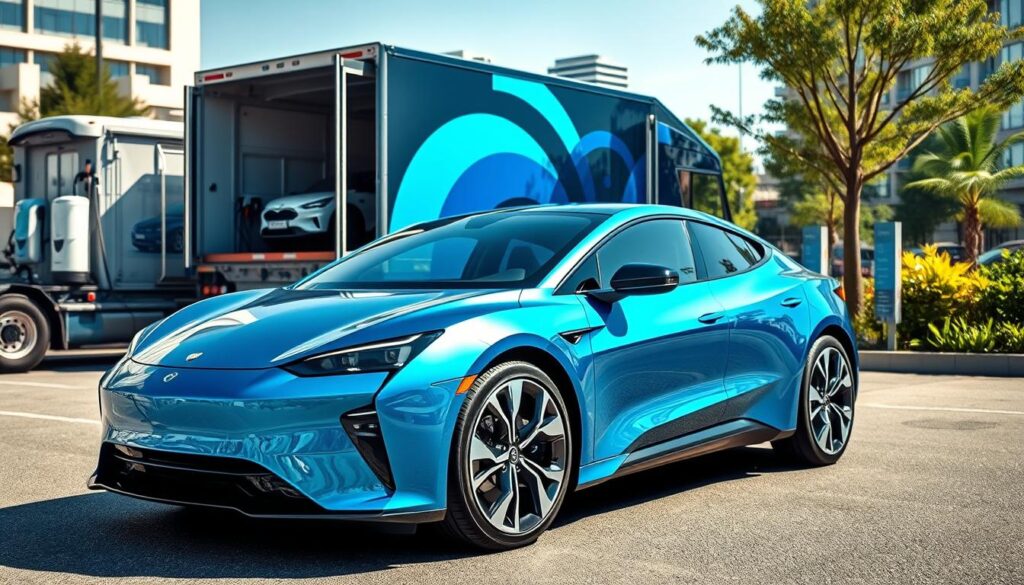
Heavy battery packs and advanced cooling systems demand specialized handling during transit. Modern models often integrate lithium-ion cells into the floor. This raises weight and securement needs.
Battery Electric Vehicles
Battery Electric Vehicles (BEVs) run solely on rechargeable packs. Their weight sits low in the chassis. Carriers use adjusted ramps and torque limits to protect the understructure.
Plug-in Hybrid Electric Vehicles
PHEVs pair battery power with a gasoline engine. That dual system changes how fuel and charge are managed before pickup. Trained teams follow manufacturer requirements to preserve warranties and safety.
- Safety systems: handlers verify liquid cooling and disconnect protocols.
- Experience: carriers adapt procedures to each model’s systems.
- Time savings: professional teams reduce handling delays and risk.
| Type | Primary Power | Transport Focus |
|---|---|---|
| BEV | Battery only | Battery securement, weight distribution |
| PHEV | Battery + engine | Fuel/charge prep, hybrid system checks |
| Manufacturer tech | Cooling systems | Electronic safety and monitoring |
Comparing Open and Enclosed Shipping Methods
When choosing between open and enclosed methods, owners must weigh protection against price. Enclosed transport gives complete protection from rain, snow, road debris and UV exposure. It is ideal for high-value or show-ready vehicles that need maximum protection during transit.
Open transport mirrors the carriers that deliver new stock to dealerships. This option is more economical and still reliable. Providers use comprehensive strapping systems tuned for the unique weight distribution of modern battery packs.
The loading process matters. Teams carefully manage placement and securement so the vehicle remains stable for the entire journey. Proper balance prevents movement and reduces risk of damage.
- Enclosed: maximum protection from elements and debris.
- Open: cost-effective, widely available, uses specialized straps.
- Both: professional carriers handle loading, delivery, and transit with safety as a priority.
Choose based on budget and the level of protection desired. For questions about services or to arrange delivery, contact Best Car Shipping Inc. at (307) 288-5972 or info@bestcarshippinginc.com.
Preparing Your Battery for Transit
A controlled charge level reduces risk and ensures the vehicle can be moved safely during loading and unloading. Proper prep protects the pack and lowers the chance of damage during transit.
Optimal Charge Levels
Most manufacturers advise keeping a 40–60% charge when a model sits idle for an extended period. Carriers, however, commonly recommend a narrower range of 20–50% for transport safety.
Follow both guidelines where possible. A mid-level charge prevents short circuits and leaves enough energy to drive on and off the trailer if needed.
- Document condition: record battery percentage and take photos before pickup to support insurance and documentation claims.
- Coordinate with carriers: confirm charge targets, any disconnect procedures, and handling notes ahead of transit.
- Protect the pack: secure systems during loading unloading and avoid deep discharge while awaiting pickup.
- Reduce risk: proper battery management helps preserve pack health and ensures a smoother shipment end-to-end.
For assistance arranging pickup and meeting transit requirements, consult Best Car Shipping Inc.’s auto transport services or contact (307) 288-5972.
Essential Steps for Vehicle Inspection
Documenting every scratch and dent at pickup protects the owner and validates insurance later.
Conduct a full visual review the day the carrier arrives. Note exterior marks, loose trim, or glass chips. Record current mileage and any dashboard alerts.
Use time-stamped photos from multiple angles. Take close-ups of problem areas and overall shots of each side. Save images with timestamps to support any claims.
- Use the Bill of Lading (BOL) as the primary documentation of condition.
- Ensure the driver and owner sign and verify every entry on the BOL.
- Confirm insurance details and keep copies of all documentation.
A final inspection at delivery confirms the vehicle arrived in the same condition. Report damage immediately and follow the carrier’s damage claim process. This step preserves warranty and ensures a transparent auto transport service.
| Inspection Item | Action | Why It Matters |
|---|---|---|
| Exterior marks | Photograph and note on BOL | Proves pre-existing condition |
| Mileage & alerts | Record odometer and dashboard | Verifies usage and mechanical state |
| Signatures | Driver and owner sign BOL | Validates documentation and insurance |
Managing Weight and Equipment Considerations
Proper planning begins with a clear assessment of weight placement. Battery packs often sit low along the floor. That shifts load points and affects handling during loading.
Weight Distribution Challenges
Uneven mass changes securement needs and trailer balance. Carriers adjust strap placement and lift settings to protect the underbody.
Incorrect balance increases risk to suspension and batteries. Teams run model-specific checks before transit to lower that risk.
Manufacturer Guidelines
Professionals follow maker requirements on tethering, charge state, and disconnects. This step preserves warranty and meets safety requirements.
Specialized trailers are used when weight exceeds standard limits. That equipment reduces handling time and sets realistic costs and transit windows.
- Model assessment before pickup
- Use of weight-rated trailers and anchor points
- Documentation of battery state and securement
| Issue | Solution | Benefit |
|---|---|---|
| Concentrated weight | Adjusted tie-downs | Protects chassis and suspension |
| Higher gross mass | Specialized trailer | Safer handling and legal compliance |
| Manufacturer rules | Checklist and documentation | Preserved warranty and reduced claims |
To get an accurate quote and confirm equipment needs, get a quote today. Expert teams ensure safe, efficient vehicle transport across the United States.
Safety Protocols During the Loading Process
Technicians verify approved tie-down points and deactivate remote-access apps before loading. This prevents unwanted wake commands and reduces battery drain during transit.
Carriers do not troubleshoot software alerts or charge the battery while the vehicle is on the carrier. That rule protects the shipment and keeps liability clear.
Loading uses model-specific anchor points and securement techniques. Teams place straps where manufacturers allow to avoid stress on battery housings and underbody systems.
- All alarms and remote systems must be turned off before pickup.
- Drivers document the vehicle condition with time-stamped photos and notes.
- Trained carriers handle loading and unloading to minimize risk and protect the battery.
| Protocol | Action | Benefit |
|---|---|---|
| Approved tie-downs | Use manufacturer anchor points | Protects battery compartments |
| Systems shutdown | Deactivate alarms and remote apps | Prevents drain and unintended access |
| Documentation | Photos and signed records at pickup | Supports insurance and delivery claims |
These safety steps ensure secure transport and reliable delivery. For questions about protocols, contact Best Car Shipping Inc. at (307) 288-5972 or email info@bestcarshippinginc.com.
Navigating Long Distance and Interstate Logistics
Protecting battery life during lengthy transit starts with climate-aware planning. Temperature swings can harm lithium-ion packs. Extremes in heat or cold reduce performance and raise risk.
Professional teams design routes that limit exposure to harsh weather. They choose timing and stops that keep the battery within safe ranges. This reduces stress on the pack and lowers claims risk.
Climate and Temperature Management
Monitoring matters throughout the journey. Drivers and coordinators track conditions and adjust when needed. They also account for weight and model-specific requirements during planning.
- Plan routes to avoid prolonged heat or cold stretches.
- Stage pickups and drop-offs to reduce exposure time.
- Use climate-aware handling to preserve battery health during interstate transit.
For owners needing interstate assistance, consult Best Car Shipping Inc. and review options for efficient vehicle transport between states. Expert teams manage logistics, monitor the environment, and help ensure a smooth delivery.
Selecting a Reliable Auto Transport Company
A reliable auto transport provider makes the difference between a smooth delivery and unexpected delays.
Choose experience. RoadRunner Auto Transport, with over 30 years in nationwide vehicle shipping, is an example of a long-standing carrier that maintains trained crews and proper equipment.
Ask targeted questions. Confirm specific experience with heavy-battery models, securement methods, and any manufacturer procedures the company follows.
Compare costs and services side by side. Request written protocols on pickup, transit updates, and delivery windows. Insist on clear insurance terms and documented battery handling steps.
- Verify model-specific experience and equipment.
- Confirm transparent communication from pickup through delivery.
- Compare quotes, transit time, and included services.
| Criteria | What to Verify | Benefit |
|---|---|---|
| Experience | Years nationwide, model handling history | Fewer delays and lower risk |
| Equipment | Weight-rated trailers, approved tie-downs | Protects batteries and underbody |
| Communication | Tracking, pickup and delivery updates | Transparent timelines and fewer surprises |
Need guidance? Review the ultimate guide for questions to ask and how to compare providers.
Handling Documentation and Insurance Requirements
Confirming coverage and recording condition are the first steps before pickup. Owners should review the Bill of Lading and photographic records to verify the vehicle condition at handover.
Verify insurance limits early. Ask the carrier for a certificate of insurance and confirm what damages are covered. Note any exclusions that affect battery or underbody components.
Complete paperwork at pickup and delivery. The Bill of Lading is the legal record used for claims. Both driver and owner must sign each entry.
“Proper documentation and verified coverage simplify claims and protect owner assets.”
- Document condition: time-stamped photos and odometer readings at pickup and delivery.
- Confirm insurance: request written policy limits and contact details.
- Follow regulations: ensure batteries are secured per U.S. rules before transit.
| Item | Action | Benefit |
|---|---|---|
| Bill of Lading | Complete and sign at pickup/delivery | Legal proof for claims |
| Insurance certificate | Verify limits and exclusions | Financial protection during transport |
| Battery securement | Document fastening and state of charge | Reduces movement and short-circuit risk |
Questions about documentation or coverage? Contact Best Car Shipping Inc. at (307) 288-5972 or info@bestcarshippinginc.com for a clear review of requirements and cost impacts.
Conclusion
A knowledgeable carrier reduces risk and simplifies the entire delivery process for battery-powered models.
Following simple prep steps—managing battery charge, documenting condition, and confirming coverage—helps ensure a smooth transport. Owners gain peace of mind when professionals handle load, securement, and timelines.
The team offers tailored services and transparent estimates. Contact experts to discuss specific needs and get an accurate quote. For an online estimate, get an estimate.
Call (307) 288-5972 or email info@bestcarshippinginc.com for prompt support. Trusting experienced providers protects your electric vehicle from pickup through final delivery.