
Transporting a pickup requires different planning than moving a standard sedan. Size, weight, and trailer limits change the logistics and the final quote. Owners often move a vehicle when relocating or buying from a private seller in another state. This section outlines key steps to keep the process simple and reliable.
Professional auto transport services protect oversized vehicles and reduce risk. Understand how dimensions affect costs. Choose a carrier licensed by FMCSA with a USDOT number. Verify insurance and ask about enclosed options when extra protection matters.
Plan ahead. Compare quotes and timelines. For detailed route examples and cost factors, see this resource on long-haul moves between states: Florida to North Dakota transport details.
Key Takeaways
- Pickup size and weight change the transit method and price.
- Use licensed, insured carriers for safe auto transport.
- Compare service types: open, enclosed, door-to-door, terminal options.
- Document vehicle condition and confirm coverage before handoff.
- Plan timelines and budget early to avoid peak-rate surcharges.
Understanding the Unique Challenges of Pickup Truck Shipping
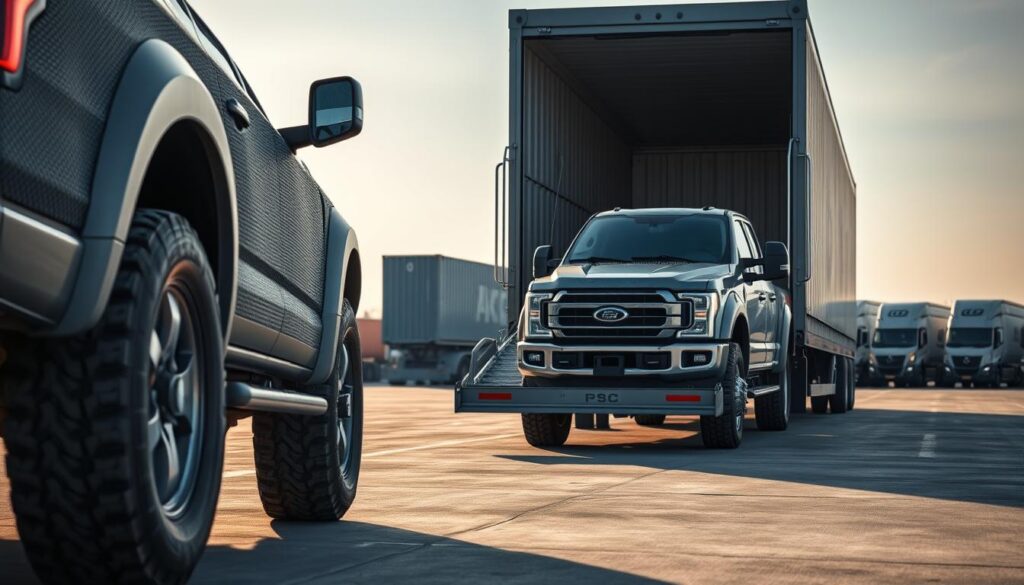
Oversized trucks demand specialized handling and affect every step of the transport process.
Size and weight raise costs. Shipping a pickup can run 15% to 40% higher than moving a standard sedan. Heavier curb weights and long beds take more trailer real estate and burn extra fuel.
Aftermarket changes often complicate loading. Lift kits, wide tires, or added racks can prevent a vehicle from fitting on standard carrier decks. That leads to the need for specialized auto transport options.
“Selecting carriers with experience in heavy-duty rigs reduces risk and downtime.”
- Pickups use more deck space, raising per-unit prices.
- Higher curb weight increases fuel and handling concerns.
- Modifications may require custom tie-downs or enclosed trailers.
- Choose carriers who prioritize safety and proper securing.
| Challenge | Impact | Typical Solution |
|---|---|---|
| Extended bed | Less space on standard carrier | Use specialized trailers or skip loading order |
| Lift kit or tall tires | Height clearance issues | Enclosed or custom deck placement |
| Heavy curb weight | Higher fuel use and axle limits | Carrier selection with heavy-duty capacity |
Understanding these logistical hurdles is the first step to a safe move. Contact a trusted carrier to confirm specs and insurance before transit. For direct assistance, email info@bestcarshippinginc.com or call (307) 288-5972.
Car Shipping for Pickup Trucks: Full Guide to Industry Standards
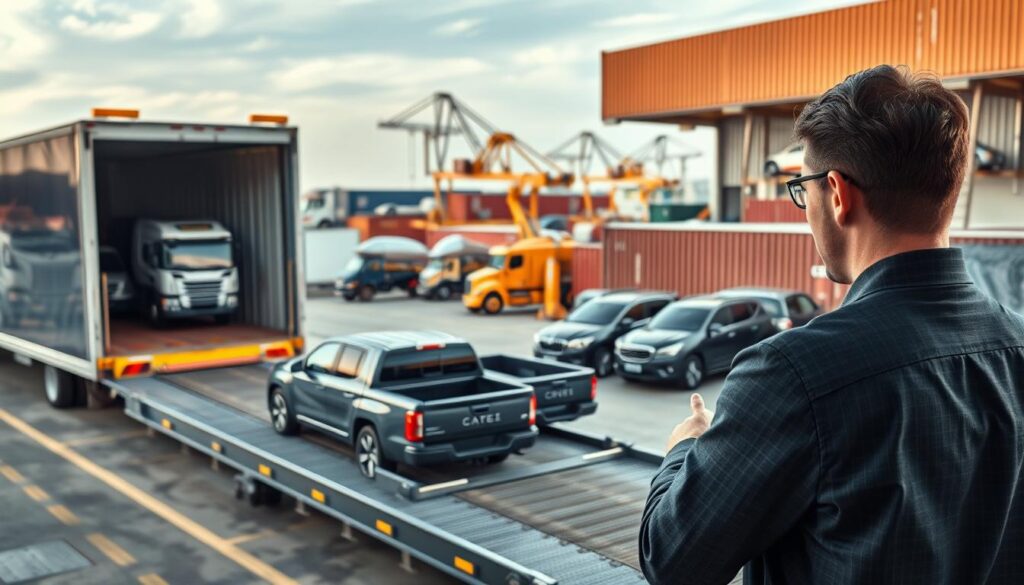
A broker’s role is to match a shipment with a qualified driver and trailer.
Legitimate brokers must identify themselves up front and take responsibility for vetting the right carrier. They check trailer type, timing, insurance, and driver safety scores before assigning a haul.
When a transport company acts as a broker, it connects owners with carriers that meet safety and insurance standards. This reduces risk and speeds up the booking process.
“Brokers that verify trailer capacity and driver ratings protect both the owner and the operator.”
- A professional transport company will vet each carrier against insurance and safety criteria.
- Obtain multiple quotes to compare price, timing, and trailer options.
- Transparency in contracts and coverage helps owners trust the car transport process.
Follow these industry standards and your pickup or truck is more likely to arrive on schedule and intact. Contact info@bestcarshippinginc.com or call (307) 288-5972 for assistance.
Categorizing Your Truck by Size and Weight
Knowing a truck’s dimensions and curb weight is the first step to an accurate transport quote.
Mid-size pickups
Examples like the Toyota Tacoma typically weigh about 4,000 lbs and run 17–18 ft long.
Mid-size models usually fit a standard carrier. That keeps car shipping costs lower and loading simple.
Full-size pickups
Vehicles such as the Ford F-150 weigh near 5,000 lbs and measure 19–20 ft.
They take more trailer footprint and reduce available slots on an auto transport trailer.
Heavy-duty trucks
Heavy rigs like the Ram 2500 often exceed 7,500 lbs and pass 21 ft in length.
These units need specialized carrier space to meet axle limits and legal weight rules.
- Sizing ensures the correct trailer assignment.
- Proper categorization helps estimate shipping costs and avoid delays.
| Category | Typical Weight | Length | Carrier Need |
|---|---|---|---|
| Mid-size | ~4,000 lbs | 17–18 ft | Standard carrier |
| Full-size | ~5,000 lbs | 19–20 ft | Expanded deck space |
| Heavy-duty | >7,500 lbs | >21 ft | Specialized carrier |
Classifying trucks before booking improves accuracy. Contact a vetted carrier to confirm capacity and insurance.
Factors Influencing the Cost of Auto Transport
Several predictable variables determine how much cost you should expect when moving a pickup. Distance and route popularity are the main drivers of the final quote.
Open trailers remain the standard option. They offer lower rates. Enclosed trailers add protection but carry a 30–50% premium.
Short hops under 300 miles often cost more per mile. Loading and handling take similar time whether the haul is short or long. That raises the effective hourly expense.
Fuel prices and seasonal demand also change prices. Peak seasons like snowbird moves push rates higher. Booking early can reduce surprises.
“Distance, equipment, and timing are the clearest predictors of cost.”
- The cost of car shipping depends heavily on distance and route demand.
- Enclosed trailers protect the vehicle but increase cost by 30–50%.
- Fuel and seasonal demand cause rate swings—book ahead when possible.
- Short-distance moves often have a higher cost per mile due to fixed loading time.
BestCarShippingInc analyzes these variables to estimate how much cost to expect. For sample price ranges and detailed pricing, see car shipping prices. Contact info@bestcarshippinginc.com or call (307) 288-5972 for a tailored quote.
Comparing Open and Enclosed Carrier Options
Choosing between open and enclosed carriers hinges on budget and vehicle sensitivity.
Open transport is the industry’s backbone. It offers wide availability and lower rates. Most customers prefer it when cost and timing matter.
Benefits of Open Transport
Open carriers move more units per run. That lowers per-unit fees and shortens wait times. They suit standard vehicles and routine moves.
Advantages of Enclosed Trailers
Enclosed car trailers shield vehicles from road debris, rain, and hail. This option suits high-end or modified rigs that need extra care.
- Open transport equals cost-efficiency and high availability.
- Enclosed car transport delivers maximum protection against the elements.
- Owners of classic or modified models benefit most from enclosed trailers.
- BestCarShippingInc works with multiple carriers to match price and protection needs.
“Choose the carrier that matches your priorities: lowest cost or highest protection.”
For service details and to compare options, review our open auto transport services page or contact info@bestcarshippinginc.com.
Evaluating the Feasibility of Rail Shipping
Freight trains offer lower line-haul rates, but they run only on set routes and timetables. Rail can be 10–20% cheaper than truck moves on main corridors between major hubs.
However, rail lacks door-to-door flexibility. Vehicles often need a local carrier to move them between a station and the pickup or delivery address.
“Rail is best suited to bulk moves where thousands of vehicles travel the same corridor.”
- While rail may reduce line-haul cost, it is less convenient for those moving across country.
- Fixed routes and schedules mean trains depart only when full, so timing can vary.
- If you have questions about feasibility for your pickup, BestCarShippingInc can compare rail vs. traditional auto transport.
- Most individuals prefer a trucking carrier for door-to-door service despite modest rail savings.
If there are any questions, contact BestCarShippingInc at info@bestcarshippinginc.com or (307) 288-5972. The team will review route options and recommend the best transport approach.
Navigating Local Pickup and Delivery Logistics
Local runs demand a nimble trailer and tight scheduling to meet pickup delivery windows.
Hot shot trailer logistics make short moves faster. These rigs fit narrow streets and tight driveways. They offer quick turnaround and fewer loading constraints.
Short hauls have higher per-mile rates. Fixed costs like loading time and driver pay stay the same. That raises the effective price for local pickup delivery.
“Hot shot services deliver speed and flexibility when door service matters most.”
Same-day or next-day service is often available. BestCarShippingInc assigns carriers that specialize in local delivery to speed door-to-door handoffs. Staff coordinate timing, permits, and safe tie-downs.
- Hot shot trailers navigate residential routes efficiently.
- Per-mile costs are higher due to limited load sharing.
- Door-to-door delivery is standard on local requests.
- Carriers focus on fast, careful handling and timely delivery.
| Option | Best Use | Typical Speed |
|---|---|---|
| Hot shot trailer | Residential, tight access | Same-day / next-day |
| Local flatbed carrier | Heavier rigs, short runs | Next-day |
| Terminal-to-terminal | Cost sensitive, not urgent | 2–4 days |
Contact info@bestcarshippinginc.com or call (307) 288-5972 to schedule local pickup delivery with a vetted carrier.
Managing Shipments for Oversized or Modified Rigs
Oversized or heavily modified rigs need specialized handling to move safely and legally.
Vehicles over 7 feet tall or with large lift kits often require specialty transport and higher rates. Expect costs to rise by roughly 25% or more when extra height, width, or weight is involved.
Modifications such as a 6-inch lift or oversized tires change height and center of gravity. That affects loading, tie-downs, and clearance beneath overpasses. Standard drivers may not have the required equipment or clearance to carry these loads safely.
- Use a specialized carrier that can handle added height and width.
- Declare all modifications up front to find the correct transport solution.
- Work with carriers experienced in securing modified rigs to prevent damage.
- Plan routes carefully to avoid low bridges and tight corridors that risk harm.
| Issue | Impact | Recommended Action |
|---|---|---|
| 6-inch lift kit | May be oversized; higher cost | Book specialty carrier and verify clearance |
| Oversized tires | Altered center of gravity | Use reinforced tie-downs and experienced crew |
| Height over 7 ft | Route restrictions, permits | Confirm route, secure permits, and check fuel planning |
“Disclose modifications early so carriers can allocate the correct trailer and crew.”
Contact BestCarShippingInc at info@bestcarshippinginc.com or (307) 288-5972 to arrange vetted service and an accurate quote.
Essential Steps for Preparing Your Vehicle for Transit
Small tasks completed before the carrier arrives save time and protect value during transit. Proper prep reduces damage risk and speeds the pickup process. Follow clear steps to make handoff simple and defensible.
Cleaning and Documentation
Thoroughly clean the exterior and interior so scratches and dents are visible. Take timestamped photos from all angles to document the vehicle’s condition.
Share those images with the carrier at pickup. Keep copies in email and on your phone. Remove personal items and toll tags before the carrier arrives.
Mechanical Checks
Check tire pressure, battery charge, lights, and fluid levels. Leave no more than a quarter tank of gas to reduce weight during transit.
Confirm the carrier has your keys and any needed instructions for door access at delivery. This helps prevent delays at the terminal or door step.
- Prepare early: complete cleaning and photos 48–72 hours before pickup.
- Declare modifications: note lift kits, oversized tires, or added racks.
- Keep documents handy: title, ID, and the bill of lading at hand.
“A clean vehicle and clear documentation help avoid disputes and speed handoffs.”
If assistance is needed, contact BestCarShippingInc at info@bestcarshippinginc.com or call (307) 288-5972.
Understanding the Role of the Bill of Lading
Treat the bill lading as both a receipt and a legal checklist that documents the vehicle condition.
The bill lading is a legal contract between the owner and the carrier. It records odometer readings, company details, and any pre-existing scratches or dents. Inspect the vehicle closely at both pickup and delivery and make sure notes match your own photos.
A signed bill lading is required to file an insurance claim if damage occurs during transport. Keep an original and a digital copy. Store these with your shipment documents until any potential disputes are fully resolved.
- The bill lading serves as the contract and receipt for car shipping and auto transport.
- Verify vehicle condition and odometer entries at handoff; ask questions if anything is missing.
- Retain copies; claims require the signed bill lading as primary evidence.
“A clear bill lading protects the owner and defines carrier responsibilities during delivery.”
Need help understanding the form or comparing carriers? Review our car transport services or contact BestCarShippingInc at info@bestcarshippinginc.com or (307) 288-5972.
Vetting Carriers and Checking Safety Records
A simple check of a carrier’s safety history can prevent costly mistakes.
Ask carrier reps for their USDOT and MC numbers before booking. These IDs let anyone verify authority and complaint history.
Use the FMCSA Safety Measurement System to review inspection results, crash data, and compliance scores. Tim DeMille and Jeff Dominas of Sherpa Auto Transport stress that transparency here separates reliable firms from risky ones.
Confirm insurance limits and how the transport company handles claims. Request proof in writing. A reputable auto transport provider will explain driver qualifications and vehicle tie-down procedures without hesitation.
- Verify USDOT and MC numbers against FMCSA records.
- Check driver safety ratings and recent inspections.
- Ask carrier about insurance coverage and claims steps.
“Transparency in vetting keeps shipments safe and reduces surprises.”
When in doubt, call BestCarShippingInc at (307) 288-5972 or email info@bestcarshippinginc.com to confirm a carrier’s credentials before finalizing a booking.
Common Mistakes to Avoid During the Shipping Process
Many transport headaches begin with small oversights during booking and pre-pickup prep.
Failing to disclose modifications is a frequent error. Lift kits, oversized tires, or roof racks can cause a carrier to reject a load at pickup. Always list changes when requesting a quote.
Choosing the lowest quote without vetting often backfires. Some brokers cannot secure a driver for a heavy truck. Verify USDOT or MC numbers and ask for proof of insurance before you accept an offer.
Not cleaning the vehicle prevents a clear inspection of the vehicle condition. Take timestamped photos from all sides and keep copies. Remove personal items to avoid fees and complications at delivery.
- Document modifications, measurements, and pictures early.
- Vet carriers and confirm credentials before paying.
- Clean the vehicle and remove belongings before pickup.
| Mistake | Risk | Preventive Action |
|---|---|---|
| Undisclosed modifications | Load rejection or route delays | Declare lifts/tires and request specialty equipment |
| Choosing lowest quote | No driver assigned; poor handling | Verify carrier credentials and reviews |
| Dirty vehicle / items left inside | Disputed damage claims; extra fees | Clean, photograph, and remove all personal items |
| Skipping bill of lading review | Unresolved claims after delivery | Inspect, sign, and retain originals at handoff |
If questions remain, contact BestCarShippingInc at info@bestcarshippinginc.com or call (307) 288-5972. These simple tips reduce risk and save time during the car shipping process.
Handling Seasonal Demand and Route Popularity
Demand spikes tied to migration and holiday cycles often shift available capacity and rates.
Winter migrations and holiday moves can create sharp price swings. The “snowbird” flow to Florida is a common example that raises demand on north–south corridors.
Major interstates like I-10 and I-95 usually cost less. These routes have higher carrier traffic and more frequent runs. That increases supply and lowers per-unit fees.
Flexibility in pickup and delivery dates helps most. Moving your timetable by a few days can save hundreds. Allowing a wider delivery window gives carriers space to optimize routing and reduce idle time and fuel use.
“Plan dates around off-peak windows to capture better rates and faster service.”
- Seasonal demand affects cost—expect higher rates in peak months.
- Popular routes offer more carriers and often lower fees.
- Be flexible with dates to secure the best rate and faster delivery.
- Contact the team with any questions; they will review options for your route.
If owners need specific advice on timing or route selection, contact BestCarShippingInc at info@bestcarshippinginc.com or call (307) 288-5972. The team will evaluate seasonality and help manage the transport process to reduce surprises.
Addressing Specific Regional Shipping Challenges
Northeast corridors demand route choices that reduce exposure to winter storms and tight rural approaches.
Northeast Route Considerations
Winter months raise rates due to higher insurance risk and slower travel. Lake-effect snow can close passes and extend delivery time.
Narrow, winding roads in rural towns often make terminal drops the safer option. Terminals limit hazards and simplify handoffs when direct delivery risks damage to vehicle condition.
- Plan an alternate route to avoid known low-clearance corridors.
- Allow flexible delivery windows to offset weather delays and fuel stops.
- Choose a terminal drop when access is tight or when rural delivery adds risk.
| Regional Issue | Impact | Recommended Action |
|---|---|---|
| Lake-effect snow | Road closures, delayed delivery | Set flexible delivery dates; monitor forecasts |
| Narrow rural roads | Limited access; higher damage risk | Use terminal delivery or smaller local carrier |
| Winter insurance surcharges | Higher rates | Compare quotes and confirm carrier coverage |
“Choosing the right route and delivery method reduces surprises and protects value.”
If owners need help routing a vehicle or selecting a carrier, contact BestCarShippingInc at info@bestcarshippinginc.com or (307) 288-5972.
Insurance Considerations for Your Pickup Truck
Insurance is the safety net that decides who pays if damage occurs during transit.
The carrier’s policy should be your primary protection during any car shipping job. Before you hand over keys, verify the carrier’s coverage limits and required endorsements. Ask for written proof and a copy of the policy summary.
Document the vehicle condition with timestamped photos and notes. That record is essential if a claim becomes necessary after delivery.
- Confirm carrier insurance: ensure limits meet state and federal standards.
- Talk to your agent: consult a personal insurer if you have questions about secondary coverage.
- Keep documentation: photos and the bill of lading speed any claim process.
“Always verify coverage before transport begins to avoid unexpected liability.”
BestCarShippingInc vets carriers and confirms insurance on every assignment. For route-specific details or to schedule service, see Scottsville transport services or contact info@bestcarshippinginc.com / (307) 288-5972.
Conclusion
A documented handoff and direct communication keep every delivery on track.
Plan early and pick a trusted company with proven credentials. Verify insurance and ask any questions before the scheduled time. Photograph the vehicle and note its condition on the bill of lading.
Following this guide helps owners navigate the auto transport process with confidence. Work with vetted carriers to secure a safe, timely delivery to your door. The team remains available to answer questions and provide practical tips.
Need help? Email info@bestcarshippinginc.com or call (307) 288-5972. BestCarShippingInc supports clear communication and professional service every step of the way.