
Moving a vehicle for school is a major task. Students and parents need clear steps, reliable carriers, and realistic timing. This guide outlines the auto transport process and the choices that affect price and delivery.
Ted L. from Chicago used professional car shipping services when his daughter moved to California. He chose a reputable company for safety and on-time delivery. That experience shows the value of planning and working with experienced transport teams.
The right prep saves time and stress. Learn about open versus enclosed transport, door-to-door pickup, and common costs. Use a quick online tool to get a fast quote and compare services before booking.
Our focus is clear: protect your vehicle, pick the best carrier, and make the move efficient. For an easy start, get a quick quote from our estimate page and review options that match your schedule and budget: get a quick quote.
Key Takeaways
- Plan early and choose between open or enclosed transport based on value and distance.
- Compare quotes with identical service details to find the best price.
- Document vehicle condition and follow provider pickup instructions.
- Door-to-door service adds convenience but may cost more than meet points.
- Reliable companies prioritize safety, on-time delivery, and clear communication.
Why Students Choose to Ship a Car to Campus
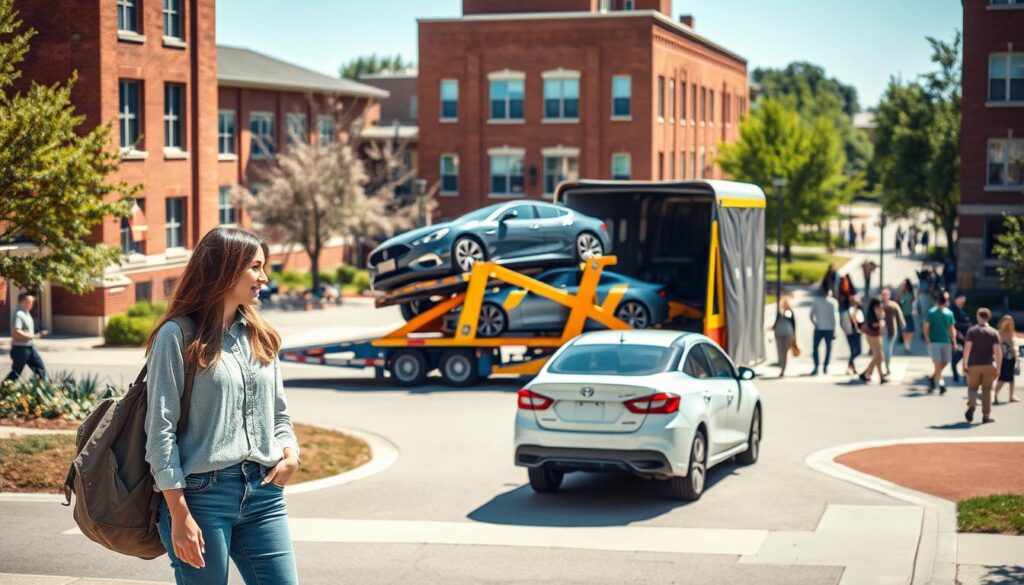
For students relocating across states, professional car shipping often replaces a cross-country drive. This option preserves time and energy during a busy move. It also reduces wear on the vehicle and removes long hours behind the wheel.
Independence and convenience top the list. Having a personal vehicle on campus makes errands, work shifts, and weekend plans easier.
Choosing student car shipping ensures the vehicle arrives safely. Reputable auto transport providers offer tracking, insurance, and scheduled delivery. That reliability lets students focus on studies rather than logistics.
Many families view this service as a practical investment. It balances cost with reduced stress, and it supports a smooth transition into university life.
- Retains mobility without reliance on public transit.
- Prevents additional mileage and fatigue from long drives.
- Provides scheduled pickup and campus-aware delivery options.
Explore service areas and secure a tailored quote via our service locations.
Evaluating the Pros and Cons of Having a Vehicle at School

Bringing a vehicle to school can change campus life, but it also brings ongoing bills and responsibilities.
Convenience and Independence
Having a car provides clear benefits. Students gain flexibility for classes, jobs, and errands. Short trips across the city become simple and fast.
Time savings often outweigh the hassle of scheduling rides or relying on public transit. A college car lets students manage their own schedule and respond to unexpected needs.
Financial Considerations
Bringing a vehicle also adds ongoing costs. Budget items include gas, parking permits, insurance, and maintenance during the year.
- Compare permit fees and parking availability before deciding.
- Account for gas and routine upkeep when planning the school budget.
- Using car shipping or auto transport can avoid wear from a long trip and protect the vehicle.
Recommendation: Assess monthly costs against the value of independence. Students who ship their car often preserve vehicle condition and reduce stress, letting them focus on studies from day one.
How to Ship a Car to a College Campus
A smooth campus delivery begins with a trusted company that offers door-to-door service and clear timelines.
Select a carrier that serves your city. Confirm the company provides campus drop-offs and understands campus restrictions.
Schedule shipment at least 2–3 weeks ahead. That lead time reduces stress and helps meet class start dates.
“Choosing professional transport removes the hazards of the road and lets students focus on packing and classes.”
Our step-by-step process secures pickup from home and delivery to the school lot. National Dispatch is an example of a firm that offers door-to-door service.
- Step 1: Pick a reputable company that serves your city.
- Step 2: Book shipping early and confirm insurance and timing.
- Step 3: Coordinate campus delivery and final inspection.
Every student deserves a stress-free move. Once the shipment is set, focus on belongings and your next chapter. For best practices in college car shipping, review carrier policies and delivery windows.
Understanding the Costs of Vehicle Transport
Transport fees vary widely; understanding what drives those numbers helps families budget smartly.
Several factors influence the final shipping rate. Distance is primary. Vehicle type, season, and pickup or delivery restrictions also matter.
Factors Influencing Shipping Rates
- Distance and route demand.
- Open versus enclosed transport and vehicle size.
- Seasonality and school move windows.
- Exact campus location and access constraints.
RoadRunner uses over 25,000 certified carriers to keep quotes competitive. For short trips (0–500 miles) the market average runs near $0.80 per mile.
| Factor | Impact | Typical Range |
|---|---|---|
| Distance | High | $0.60–$1.20 per mile |
| Transport Type | Medium | Open (lower) / Enclosed (higher) |
| Season | Medium | Peak semesters cost more |
Compare quotes carefully. Shipping often costs less than driving once gas, food, and hotels are included. Request an accurate estimate that accounts for school location and timing via this short form: vehicle shipping estimate.
Preparing Your Car for Professional Shipping
A few focused steps before handoff reduce risk and help the carrier document condition accurately. Proper preparation protects the vehicle and speeds processing time for delivery at college.
Cleaning and Inspection
Clean the interior and exterior so scratches and dents are visible during inspection. Provide accurate information about existing damage.
Document condition with photos and notes. This helps the carrier record pre-existing issues and avoids disputes after the shipment.
Managing Personal Belongings
Remove valuables before transport. If items remain, keep them under the window line and under 100 pounds total.
Students should not rely on the carrier for personal effects. Keeping belongings minimal simplifies claims and speeds loading.
Fuel and Maintenance Requirements
Leave roughly a quarter tank of gas at pickup. This meets driver needs without adding weight.
Check tire pressure, battery, and fluid levels. Proper maintenance prevents delays and protects your vehicle while away from home.
| Prep Item | Requirement | Reason | Action |
|---|---|---|---|
| Clean & Inspect | Interior/exterior clean | Visible condition for documentation | Photograph; note damage |
| Personal Belongings | <100 lbs, below window | Weight and safety limits | Remove valuables |
| Fuel | ~1/4 tank | Driver access; weight control | Refuel before pickup |
| Maintenance | Tires, battery, fluids | Safe transit and delivery | Perform quick check |
Follow these preparation steps for a safer, more efficient auto transport experience. For questions, contact Best Car Shipping Inc. at (307) 288-5972 or info@bestcarshippinginc.com.
Selecting the Right Auto Transport Company
Choosing the right auto transport partner removes uncertainty and protects your vehicle during campus delivery.
Look for clear pricing and service details. A transparent company explains vehicle shipping costs, delivery windows, and insurance. This helps students plan and budget for the year.
Door-to-door delivery is the most convenient option for busy families. Confirm campus access rules and any permit requirements before booking.
- Verify carrier reviews and safety records.
- Ask for a written quote for vehicle shipping and services.
- Confirm the auto transport process for luxury cars or standard vehicles.
| Service Feature | Why it Matters | What to Ask |
|---|---|---|
| Door-to-door delivery | Convenience for students | Are campus drop-offs available? |
| Transparent quote | Avoids hidden costs | Is pricing itemized and guaranteed? |
| Insurance & claims | Protects vehicle value | What coverage applies during transit? |
Contact pricing specialists at (888) 422-7584 for a personalized quote. For general inquiries email info@bestcarshippinginc.com or call (307) 288-5972.
Essential Tips for a Smooth Delivery
A reliable delivery plan reduces last-minute problems and keeps students on schedule.
Schedule early. Book transport at least two to three weeks before your move. This helps match pickup windows and secures the best carrier for the distance.
Keep lines open with the carrier. Regular updates cut uncertainty as the shipment travels the road. Ask for ETA changes and tracking when available.
- Be present at delivery for inspection and signatures.
- If streets are tight, plan a nearby meeting spot so the truck can load or unload safely.
- Pack essentials separately—do not leave valuables in the vehicle.
Document condition with photos before pickup and again at delivery. That speeds any claims and confirms a fair handoff.
Planning ahead lets students focus on classes while professionals manage logistics. For a detailed route example, review the Florida to North Dakota car shipping.
“Staying organized and communicating clearly is the simplest way to ensure a timely, safe delivery.”
Conclusion
A planned vehicle transfer removes long drives and frees up valuable preparation time. Choosing professional auto transport saves time and reduces stress for students and families.
Proper preparation and early scheduling help lower costs and ensure smooth delivery. Get a firm price and carrier details before booking for clear expectations and reliable transit.
BestCarShippingInc offers competitive quotes, campus-aware service, and door‑to‑door delivery. Request a free quote via our college car shipping page or call (307) 288-5972 for fast assistance.