
Professional auto transport firms use many variables to set a final rate. Distance, vehicle size, and market demand shape each estimate. Systems combine these factors into a tailored number for every request.
As of October 2025, the nationwide average cost to ship a car is $1,215. That figure comes from thousands of completed moves and helps buyers set expectations.
When a customer requests a quote, the carrier assigns a unique tracking number. That number ties the vehicle to permits, pick-up windows, and delivery details. Clear communication lets owners know what they pay for and why.
Comparing multiple car shipping quotes reveals differences in service levels and carrier availability. A reliable provider will explain the process, list fees, and protect the vehicle during transit.
Key Takeaways
- Estimates use specific data: vehicle type, distance, and market demand.
- The national average cost is $1,215 as of October 2025.
- Each request gets a tracking number for logistics and transparency.
- Comparing quotes helps find carriers that prioritize vehicle care.
- Providers must explain the process and all fees before transport.
Understanding Why Car Shipping Quotes Are Different Online

Rates change because transport firms must factor in volatile fuel costs, driver availability, and the exact route your vehicle will travel.
The system also checks make and model to assign space on the carrier. That step helps ensure safe loading and clear capacity planning.
Professional auto transport providers use algorithms and real-time market data. These tools adjust estimates to match current demand and route conditions.
“Accurate estimates come from combining vehicle specs, route data, and live market signals.”
Avoid low-ball offers. Extremely cheap estimates often hide fees or cut corners on protection. Reliable vehicle shipping prioritizes safety and proper handling.
- Compare multiple quotes to balance cost and care.
- Look for transparency about fees and transit windows.
- Confirm how the provider protects your unit during transit.
For a verified estimate, request professional auto shipping quotes that reflect your route and vehicle condition.
The Role of Distance in Pricing
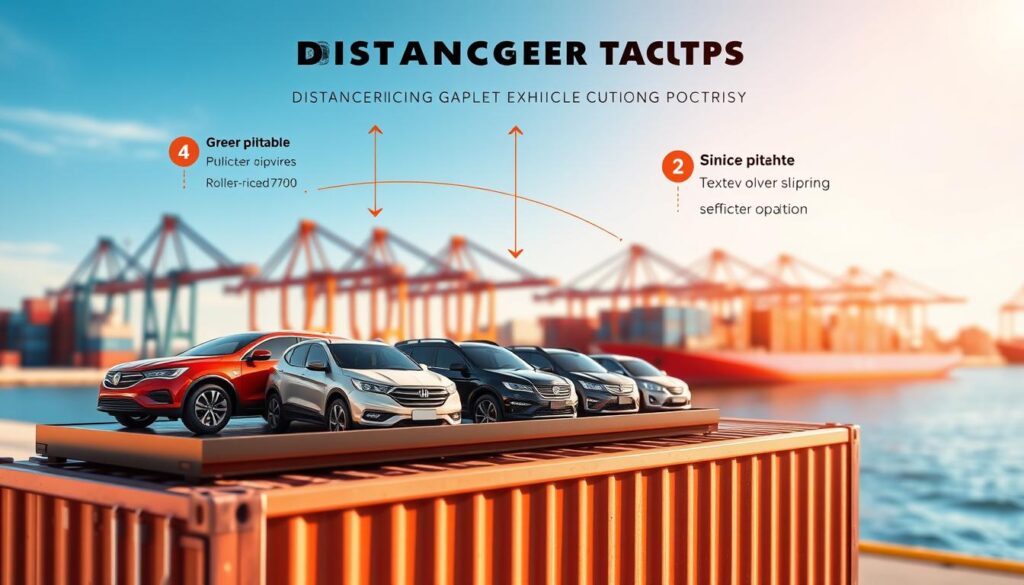
Distance drives the largest share of any transport bill, so exact mileage matters. The median shipment covered 987 miles, which explains why many estimates start with route length.
Mileage factors influence both the total price and the per-mile rate. Short moves (about 300 miles) often cost $1.50–$2.00 per mile. Long hauls (around 2,000 miles) commonly fall to $0.50–$1.00 per mile.
Mileage Factors
Regional examples show the effect. A California to Virginia trip averages $2,225. A Michigan to Texas move averaged $1,495 in January 2025. These figures reflect distance and route demand.
Cost Per Mile Trends
- The miles between origin and destination are the top factor shaping rates.
- Total price rises with distance, but per-mile cost often drops on longer runs.
- Carriers gain efficiency on long routes and can offer lower per-mile rates.
“Understanding distance-based trends helps owners see why a short transport can cost more per mile than a cross-country move.”
For a tailored estimate, use the vehicle shipping calculator to see how mileage and carrier routing affect your vehicle shipping quote.
How Vehicle Type Influences Your Estimate
A vehicle’s size and weight determine the carrier choice and the tools needed for safe transit.
Weight and size considerations
Heavier units take more space and add fuel load. That increases the final price and may change routing.
Custom accessories raise height or length. A bike rack or roof box can push a unit into a different category. Accurate details let the provider pick the right carrier and lower risk.
Key comparisons
- Small passenger vehicles fit standard open carriers and usually cost less.
- Midsize SUVs need more clearance and can raise the per-mile price.
- Heavy trucks often require ramps or lift gates and specialized carriers, increasing the price.
| Vehicle Type | Typical Equipment | Relative Price |
|---|---|---|
| Compact sedan | Standard open carrier | Low |
| Midsize SUV | Extra clearance, wider spacing | Medium |
| Heavy-duty truck | Special ramps, tilt beds | High |
“Providing exact vehicle specs helps carriers give a fair, transparent estimate.”
Best practice: share make, model, dimensions, and any modifications when you request a car shipping quote. Clear details protect the unit and produce an accurate estimate.
Impact of Pickup and Delivery Locations
Access and geography at both pickup and delivery points change how carriers price a move.
Urban pickup and delivery zones usually lower the final bill. High carrier density and frequent routes create competition. For example, routes between Detroit and Houston often cost less due to better carrier availability.
If a pickup or delivery address is remote, the carrier may add time and access fees. Drivers might need extra mileage, permits, or specialized equipment. That raises the overall price on a shipment.
Practical steps help reduce costs. Customers can choose accessible lots or commercial drop points if a residential street is tight. Professional auto transport companies often request a nearby meeting spot to speed loading and delivery.
- Every quote uses specific zip codes to capture local logistics and tolls.
- Businesses and individuals benefit from selecting accessible pickup and delivery points.
- Our carrier network handles complex locations, but surcharges can apply for remote service.
“Choosing an accessible pickup or delivery point keeps the final quote predictable and fair.”
For a precise car shipping quote, provide exact pickup and delivery zips. Contact Best Car Shipping Inc. at (307) 288-5972 or info@bestcarshippinginc.com for help planning your vehicle shipping.
Seasonal Fluctuations and Market Demand
Seasonal demand reshapes rates throughout the year, with clear peaks and lulls that affect planning.
Winter shipping challenges include slow lanes and weather delays. Snow and ice can force route changes and extra time. Lower demand in winter often offsets added risk, so prices may fall on some routes.
Summer Peak Demand
Summer brings the busiest period for auto transport. Families moving and vacation traffic reduce carrier availability. That scarcity pushes up the price and tightens delivery windows.
Spring and Fall Transitions
Spring and fall often offer the best balance. Weather is milder and demand stabilizes. Customers who plan ahead in these seasons can lock better rates and more reliable delivery times.
- Snowbird flows cause notable swings — New York to Florida showed $1,315 in Feb 2025 vs $1,215 in Oct 2025.
- Carriers adjust rates by season; every quote reflects current market demand.
- Advance planning helps customers secure lower prices and predictable delivery.
“Understanding seasonality lets customers pick the right time to ship and save on total costs.”
Choosing Between Open and Enclosed Transport
Deciding between open and enclosed trailers changes both cost and protection level.
Open car transport is the most common and economical option. It keeps the price lower on most car shipping requests. Modern carriers design open rigs to reduce road debris and exposure risk.
Enclosed transport adds a few hundred dollars but offers superior protection. Classic, luxury, and exotic vehicles benefit from the added security. Professional auto transport firms recommend enclosed service when pristine condition matters.
- Open serves budget-focused moves with acceptable risk.
- Enclosed suits high-value vehicles and owners who avoid any damage risk.
- Every car shipping quote lets customers pick the transport type that fits needs and budget.
“Compare the price of open versus enclosed transport to protect your investment and stay on budget.”
Questions about the right service or a tailored car shipping quote? Our team is available at (307) 288-5972 or info@bestcarshippinginc.com.
The Effect of Fuel Prices on Shipping Rates
Fuel expense is a primary operating cost that auto transport companies factor into each estimate.
Every car shipping quote reflects current fuel costs. When pump prices climb, carriers must raise rates to cover longer runs and added refuels. That change usually appears in the per-mile portion of the final price.
Because vehicles travel in groups, fuel costs are shared across loads. This split helps keep the cost to ship car units lower than a solo run. Still, long-distance transport sees greater sensitivity to fuel swings.
Professional carriers monitor fuel trends closely. They update quotes to remain fair and transparent. Customers should request a timely car shipping quote before booking to lock expected rates.
“Accurate quotes tie fuel assumptions to the transit time and route, protecting both carrier and owner.”
| Factor | Impact on Rate | What Owner Should Do |
|---|---|---|
| Fuel price rise | Increases per-mile charge | Request updated quote before booking |
| Shared loads | Reduces individual cost | Choose consolidated transport |
| Long distance | More price volatility | Plan and book early |
For current estimates and a clear breakdown of car shipping prices, see our car shipping prices page or contact (307) 288-5972 / info@bestcarshippinginc.com.
Why Inoperable Vehicles Cost More to Ship
Non-operational vehicles require special handling that changes the scope of a standard transport job.
Specialized equipment such as winches, ramps, or forklifts is often needed to load a non-running unit onto the carrier. That gear adds time and cost to each shipment.
Auto transport companies include these expenses in the final car shipping quote. Drivers spend extra time securing and loading the vehicle, which increases labor charges.
- If the vehicle cannot brake, steer, or roll, owners must inform the carrier before pickup so the right equipment is sent.
- Honest disclosure ensures the quoted price matches the actual job and prevents surprise fees at pickup.
- Professional transport companies prioritize safety and send experienced crews for complex loads.
“Accurate details about a vehicle’s condition lead to fair pricing and a safer shipment.”
| Factor | Running Vehicle | Inoperable Vehicle |
|---|---|---|
| Loading gear | Standard ramps | Winch, tow dolly, or forklift |
| Driver time | Normal load time | Extended loading and securing time |
| Typical price impact | Base rate | Higher due to labor and equipment fees |
Transparent pricing is standard practice. Best Car Shipping Inc. provides clear breakdowns for car transport and vehicle shipping, so owners can plan budget and time.
For an accurate car shipping quote, contact (307) 288-5972 or info@bestcarshippinginc.com.
Expedited Shipping and Time Sensitivity
Expedited service lets owners request a firm pickup and delivery window when timing cannot be flexible. This option costs more than standard service, because the provider must prioritize the shipment and often dispatch a dedicated carrier.
When customers choose expedited auto transport, routing is adjusted for speed. Drivers may take faster corridors or reduce stops to meet a set delivery date.
Every car shipping quote for expedited service shows the premium tied to specific pickup and delivery times. The quote lists any added fees for a dedicated carrier or guaranteed pickup slot.
Owners on tight schedules can work with the team to design an expedited car transport plan that matches their required time frame. Staff use the carrier network to find the fastest route and available trucks.
“Expedited service is best when a flexible pickup window is not an option.”
- Request an expedited car shipping quote to see the extra cost for faster delivery.
- Standard shipping remains the budget-friendly choice for flexible schedules.
- Contact the carrier team to arrange a time-sensitive shipment and confirm pickup details.
For assistance, call (307) 288-5972 or email info@bestcarshippinginc.com for a tailored plan and firm timelines.
Preparing Your Vehicle for Transport
Preparing a vehicle for transit starts with a simple inspection and a quick clean, which saves time at pickup. This step makes visual checks faster and helps document any pre-existing damage before the carrier arrives.
Cleaning and Inspection
Clean the exterior and interior. Remove dirt so scratches and dents are visible. Take date-stamped photos from multiple angles. Note any marks in writing.
Check tire pressure, fluid levels, and battery charge. A running vehicle cuts loading time and reduces risk during the shipment.
Removing Personal Items
Empty the trunk and cabin. Most carriers prohibit personal goods for safety and liability reasons. Loose items can shift and cause damage.
- Remove personal belongings before pickup.
- Secure or remove custom parts that extend beyond the body.
- Confirm your car meets the carrier’s prep checklist included in the quote.
Documenting condition and following prep steps protects the owner and the carrier during transport.
For detailed prep instructions or help with a quote, contact Best Car Shipping Inc. at (307) 288-5972 or info@bestcarshippinginc.com.
Avoiding Common Pitfalls in Auto Transport
Checking insurance, reviews, and service terms prevents most common transport problems. Start by selecting reputable companies that publish clear car shipping quotes and terms.
Be wary of very low price offers. Extremely low estimates often hide extra fees or poor handling. A brief background check saves money and time.
Require a Bill of Lading. A professional auto transport provider issues this document at pickup to record the vehicle condition. That record protects customers if any damage occurs.
Verify a carrier is fully insured and bonded. Confirm coverage limits and ask about claims steps before you sign. This reduces financial risk during transit.
Flexibility with pickup and delivery dates can lower rates. Adjusting windows helps carriers consolidate loads and cut costs for customers.
- Read reviews and check company history.
- Confirm all fees are listed in the written quote.
- Ask about equipment for nonstandard pickups or long distance moves.
“Transparent communication and paperwork turn a risky transport into a predictable service.”
Researching options is a simple step that prevents scams and ensures the vehicle arrives safely. For a trusted way to ship, use this verified request form: send my car.
Benefits of Working with Professional Carriers
Hiring a vetted carrier reduces risk and simplifies each step from pickup to delivery. Professional firms bring clear procedures and proven protections that protect the vehicle and the owner.
RoadRunner Auto Transport offers a wide range of options through a large, vetted network. The company connects customers to 59,000+ qualified auto transport carriers and more than 10,500 certified open carrier experts.
That scale matters. It creates reliable scheduling, consistent coverage, and faster problem resolution. Professional carriers provide door-to-door pickup and delivery and full insurance coverage for peace of mind.
- Access to a vast carrier network reduces wait time and saves money.
- Certified open car transport experts handle loading and securement with care.
- Dedicated customer support answers questions and confirms every step of service.
“Every step, from the initial quote to final delivery, is designed to give customers a clear, reliable experience.”
To discuss options, call (888) 777-2123 or (224) 218-2949 for tailored auto transport service and coverage details.
Conclusion
Clear planning and trusted providers make long-distance vehicle moves straightforward and secure.
Choosing the right auto transport company protects time and value. Understand the factors that shape rates and request a detailed estimate before booking.
Professional auto transport companies offer insurance, scheduling transparency, and trained crews to reduce risk. Compare options and confirm written terms to avoid surprises.
For vetted partners and carrier verification, see our page on auto-hauler companies. Contact the team at (307) 288-5972 or info@bestcarshippinginc.com to get a personalized car shipping quote and secure reliable service today.