
Best Car Shipping guides owners through reliable car shipping with clear, caring service. Forbes benchmarks show an average of about $1,150 (roughly $1.15 per mile), with real-world ranges near $550–$2,450 depending on distance, type, and method. This guide explains what those numbers include and how the company keeps pricing transparent.
Who needs this? Relocating families, online buyers, seasonal movers, and corporate transfers often choose professional auto transport to save time and lower risk. Best Car Shipping focuses on protection and clear communication so customers feel secure.
Expect market-driven pricing based on route, service level, and timing. Choices such as open vs. enclosed, door service vs. terminal pick-up, and flexible windows affect final totals. Extremely low offers can mean missing fees or service gaps.
Get a quote: request personalized quotes at average cost per mile, email info@bestcarshippinginc.com, or call (307) 288-5972 to speak with a coordinator.
Key Takeaways
- Best Car Shipping offers transparent, caregiver-style service for car shipping.
- U.S. averages sit near $1,150, with a wide real-world range based on factors.
- Service choices—open vs. enclosed and door vs. terminal—drive pricing differences.
- Professional auto transport reduces risk and saves time versus self-driving.
- Request tailored quotes and speak with a coordinator for lane and timing guidance.
Cross-Country Car Shipping Costs Right Now in the United States

Right now, U.S. long-haul auto transport pricing varies widely by route, demand, and carrier capacity. Typical totals often fall between about $550 and $2,450, with a national average near $1,150 and roughly $1.15 per mile.
Understand two measures: the total shipment price and the per-mile rate. The total gives a real budget figure. The per-mile rate helps compare quotes fairly across short and long runs.
Longer trips usually cost more overall but often less per mile. Carriers gain linehaul efficiency on major corridors and can reduce per-mile pricing. Rural pickups, inoperable units, and enclosed transport will raise totals.
- Typical transit: 5–10 days, often near 10 depending on route and weather.
- Variability drivers: dispatch timing, traffic, multi-stop routing, and seasonal demand.
- Communication: expect regular status updates and coordinated delivery windows.
For a defensible estimate, request an auto transport quote based on exact ZIPs and compare results with the benchmarks above.
What Impacts the Price: The Biggest Drivers Behind Shipping Costs
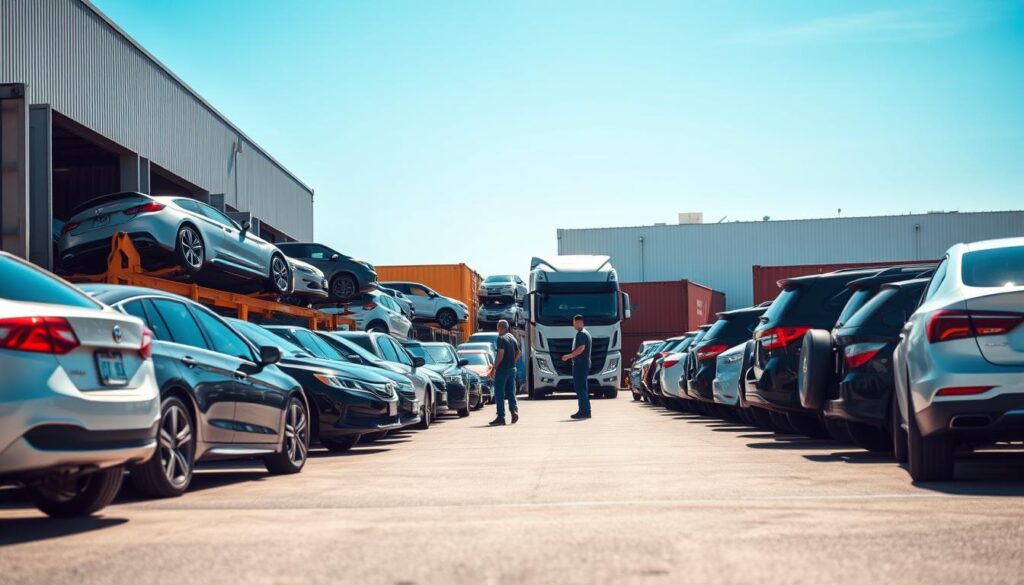
Operational details — not just distance — drive what reputable car shipping companies charge. Understanding those drivers helps customers compare quotes and approve shipments with confidence.
Distance, route complexity, and urban vs. rural pickup
Major metro pickups near highways cut transit time and lower handling. Rural or tight-access locations add routing, time, and potential extra fees.
Fuel, carrier availability, and seasonal demand
Fuel swings and limited carriers raise prices during peak seasons. Summer moves and holiday windows often push rates up and tighten capacity.
Size, weight, and operability
SUVs and pickups use more deck space and add weight. Modified or inoperable units need special handling and can require winching or extra labor.
Pickup windows, expedited options, and delivery dates
Flexible pickup windows lower bids. Expedited service or guaranteed delivery dates increases charges because carriers must prioritize routing and driver time.
Regulatory and market shifts
New environmental rules, permit changes, and tech investments like GPS dispatch can raise operating expenses. Those shifts reflect in final prices.
“Best Car Shipping explains why numbers differ so customers approve shipments confidently.”
| Driver | Operational Impact | Typical Effect on Price |
|---|---|---|
| Route Type | Metro vs. rural access, distance to highway | Low to High |
| Fuel & Demand | Fuel surcharges and seasonal carrier availability | Variable week-to-week |
| Vehicle Factors | Size, weight, operability, modifications | Moderate to High |
| Service Window | Flexible pickup vs. expedited delivery dates | Lower when flexible; higher for guarantees |
Best Car Shipping acts as a clear coordinator. They list fees, explain shipping costs components, and guide customers through carrier choices. For questions, email info@bestcarshippinginc.com or call (307) 288-5972.
Cost to Ship Vehicle Across Country: Realistic Per-Mile Pricing Benchmarks
D. Simple per-mile ranges let you compare offers and spot outlier shipping prices fast.
Use these per-mile brackets as a screening tool for an operable car on an open trailer. Apply the range that matches your planned distance, then request a precise ZIP-to-ZIP quote to confirm current market rates.
Short-distance expectations
0–500 miles: about $1.55–$2.50 per mile. Short runs often look expensive per mile.
Loading, unloading and dispatch time are fixed. Those costs spread over few miles raise the per-mile figure.
Mid-distance benchmarks
501–1,000 miles: roughly $1.00–$1.45 per mile.
1,001–1,500 miles: roughly $0.80–$1.10 per mile. These lanes benefit from better carrier density and more efficient routing.
Long-distance ranges
1,501–2,000 miles: about $0.65–$0.90 per mile.
2,001–2,500 miles: about $0.55–$0.75 per mile. 2,500+ miles: about $0.50–$0.65 per mile. Per-mile rates typically fall as distance rises.
| Distance (miles) | Per-mile Range ($/mi) | Notes |
|---|---|---|
| 0–500 | $1.55–$2.50 | Higher per-mile due to fixed handling and dispatch |
| 501–1,000 | $1.00–$1.45 | Common interstate moves; improved carrier availability |
| 1,001–1,500 | $0.80–$1.10 | Efficient lanes with steady demand |
| 1,501–2,000 | $0.65–$0.90 | Long-haul discounts begin |
| 2,001–2,500 | $0.55–$0.75 | Linehaul efficiency and route optimization |
| 2,500+ | $0.50–$0.65 | Best per-mile values for coast-to-coast moves |
Note: These benchmarks assume an operable car on open transport. Enclosed carriers or inoperable units will raise rates.
Apples-to-apples tip: Verify that quotes use the same service level, vehicle condition, and pickup window before comparing numbers.
Next step: Request a Best Car Shipping quote at info@bestcarshippinginc.com or call (307) 288-5972 to confirm the real-time market rate for your lane.
Open Car Transport vs. Enclosed Transport: Which Shipping Method Fits Your Budget?
Choosing open or enclosed transport starts with what you value most: price or protection.
Open car transport for affordability and wide carrier access
Open car transport is the default choice for most drivers. It offers faster matching with carriers and lower prices because trailers hold more units.
Expect normal exposure to weather and road debris. For everyday cars, this level of protection is standard and reliable.
Enclosed transport and when extra protection pays
Enclosed transport provides shelter and fewer handling risks. It typically runs about 30%–50% higher than open due to limited capacity and special equipment.
This option suits classics, exotics, and high-value cars where reduced exposure matters more than added lead time.
How car type affects method and scheduling
SUVs and pickups take more space and weight. That can limit carrier choices and raise prices. Sedans usually fit easily and are less likely to need special planning.
| Method | Protection | Typical premium | Best for |
|---|---|---|---|
| Open | Standard exposure | Base | Daily drivers, common models |
| Enclosed | High protection | +30%–50% | Classics, luxury, show cars |
| Type transport | Depends on size/mods | Variable | SUVs, lifted cars, oversized units |
Buyer checklist: car condition, clearance, modifications, budget, and risk tolerance. For a tailored recommendation and a fair quote, review your lane at how much does it cost to ship a or contact Best Car Shipping at info@bestcarshippinginc.com or (307) 288-5972.
Door-to-Door Service vs. Terminal-to-Terminal: Service Levels That Change Shipping Prices
Service level—door pickup versus terminal handoff—shapes timing and fees. Door service means a carrier will pick up and deliver as close to an address as safely and legally possible. That does not always mean curbside placement.
Door pickup: convenience and access limits
Door service is ideal when ease matters. Drivers aim for the safest nearby spot for pickup and delivery.
Common access constraints include narrow streets, low branches, HOA rules, tight turning radii, and municipal limits. These can force a meet at a nearby lot and may trigger small fees or a price adjustment.
Terminal handoff: savings and tradeoffs
Terminal-to-terminal reduces routing complexity and lowers shipping costs by cutting deadhead miles. It often fits larger carriers and busy lanes.
Tradeoffs: added transit time, stricter drop-off windows, and more customer handling of pickup and delivery.
How to choose: pick door service when local access and schedule matter. Choose terminal service when flexibility and lower price matter more. Best Car Shipping confirms feasibility before dispatch and helps compare options.
| Service | Convenience | Typical Price Effect | Best When |
|---|---|---|---|
| Door-to-Door | High | Moderate–Higher | Home pickup, limited mobility |
| Terminal-to-Terminal | Moderate | Lower | Flexible timing, near terminals |
| Hybrid (Meet Nearby) | Variable | Small adjustment | Access constraints |
Request a quote with both service options so the shipping company can show clear comparisons. Email info@bestcarshippinginc.com or call (307) 288-5972.
Popular Routes and Sample Price Ranges to Compare Your Quote
Understanding typical lane ranges makes it easier to evaluate an offered price. The examples below reflect open, operable shipments on major corridors. Use them to sanity-check quotes and flag outliers.
New York routes and what they typically cost
New York city lanes show steady demand and frequent carrier coverage. Typical ranges include:
- New York City – Miami: $1,100–$1,400
- Miami – New York City: $1,000–$1,525
- New York City – Los Angeles: $1,325–$1,625
Congestion and limited urban access in New York can affect pickup windows and final price. For local guidance, see car shipping in New York.
Coast-to-coast lanes and flagship corridors
The Los Angeles ↔ New York City corridor is high volume and well serviced. Typical ranges:
- Los Angeles – New York City: $1,350–$1,925
- San Francisco – New York City: $1,425–$1,875
Other high-volume routes and weekly pricing shifts
Additional sample lanes help compare a wider set of quotes:
- Washington, D.C. – Los Angeles: $1,225–$1,475
- Los Angeles – Dallas: $1,025–$1,375
- Chicago – Phoenix: $1,050–$1,225
- Atlanta – Los Angeles: $1,100–$1,475
- San Francisco – Washington, D.C.: $1,225–$1,650
Week-to-week shifts happen. Fuel swings, carrier repositioning, seasonal surges, and weather change shipping prices. Collect multiple quotes and check the service terms, insurance, and transparency—not just the lowest number.
| Route | Typical Range | Notes |
|---|---|---|
| NYC – Miami | $1,100–$1,400 | High demand; urban pickup limits |
| LA – NYC | $1,350–$1,925 | Coast-to-coast lane; many carriers |
| San Francisco – NYC | $1,425–$1,875 | Long haul with steady volume |
| Chicago – Phoenix | $1,050–$1,225 | Mid-range with good carrier density |
Reminder: These ranges are for open, operable cars. Enclosed transport, inoperable units, or remote pickups will raise totals. Share ZIPs with Best Car Shipping so the team can confirm current market pricing for your exact route. Email info@bestcarshippinginc.com or call (307) 288-5972.
How to Get an Accurate Auto Transport Quote (and Avoid Hidden Fees)
Get a precise quote by giving exact ZIPs, car make and model, and preferred dates so carriers can plan accurately.
What information creates a reliable estimate
Provide ZIP-to-ZIP locations, year/make/model, operable status, and whether you want open or enclosed transport.
Mention tight access, oversized mods, or inoperable units up front. That prevents surprise adjustments later.
What a transparent quote should include
- Insurance coverage: carrier limits and cargo protection.
- Surcharges: fuel or market-based adjustments spelled out.
- Service assumptions: pickup window, door or terminal service, and payment terms.
Why very low offers can be risky
Extremely low pricing often hides missing fees or weak carrier vetting. Watch for vague terms, pressure to pay without written details, or unclear refund policies.
Compare companies the smart way
Check FMCSA registration and a USDOT number. Read recent reviews and confirm insurance handling with carriers.
“Request a full, written quote and a carrier profile before booking.”
| Quote Element | What to verify | Why it matters |
|---|---|---|
| ZIP-to-ZIP | Exact pickup and delivery ZIP codes | Determines routing and accurate pricing |
| Vehicle Details | Year, make, model, operability | Affects trailer space and handling |
| Service Level | Open vs. enclosed; door vs. terminal | Changes transit time and final price |
| Fees & Insurance | Surcharge rules and carrier limits | Prevents surprise charges at delivery |
Best Car Shipping focuses on clear, written quotes and verified carriers. For a dependable estimate and a friendly coordinator, request a written quote or call (307) 288-5972. You can also review a detailed Upton guide at car shipping and auto transport in or email info@bestcarshippinginc.com.
Ways to Lower Your Car Shipping Cost Without Risking Service Quality
Simple timing and location adjustments unlock real savings while keeping carrier standards intact.
Book early. Reserving spots well ahead gives the network time to match a carrier. That reduces last-minute premiums and improves routing options.
Be flexible. Wider pickup windows let carriers group loads and lower price. A small shift in delivery timing often saves money without lowering service quality.
Choose the right transport and pickup points
Prefer open car transport when the car is a regular daily driver. It is the most affordable and widely available option.
Meet near highways or metro terminals when feasible. Urban pickup and delivery spots reduce deadhead miles and often lower shipping costs.
Ask about discounts and avoid risky cuts
Ask companies about multi-vehicles, military, student, and seasonal promos. Those discounts add up for fleet moves or repeat customers.
Warning: Don’t pick the lowest quote without checking insurance, carrier vetting, and written terms. That gamble can cost more at delivery.
| Savings Lever | How It Helps | When to Use |
|---|---|---|
| Early Booking | More carrier matching, lower premiums | When dates are flexible |
| Flexible Pickup Window | Groups shipments, reduces routing cost | If exact delivery time is not required |
| Open Car Transport | Lower base price, more carrier options | For standard cars with normal exposure risk |
| Metro Meet Points | Less handling, faster pickup/delivery | When rural access adds complexity |
| Discount Programs | Direct price reductions or credits | Multi-vehicle, military, student moves |
Best Car Shipping helps customers balance savings and secure service. Contact a coordinator to review your lane, timing, and available promos. Email info@bestcarshippinginc.com or call (307) 288-5972.
Preparing Your Vehicle for Shipment: Steps That Prevent Delays and Extra Charges
A short prep routine can prevent fees and speed up both pickup and delivery. Best Car Shipping provides clear guidance so the car is ready when the carrier arrives.
Personal items, weight limits, and what to remove
Most carriers limit or prohibit personal items. Remove valuables and most personal items. If limited items are allowed, keep them light and below the window line or inside the trunk.
Pre-shipment checklist
Wash the exterior and take dated photos from all angles. Note existing scratches and dents for the bill of lading.
Disable alarms, deactivate toll tags, remove loose accessories, and check tire pressure and battery health. Top off fluids and leave roughly a quarter tank of fuel.
Day-of pickup and delivery basics
Perform a joint inspection with the driver and document condition on the bill of lading. Confirm any remaining balance and the accepted payment method before release.
Tip: Coordinators help customers prepare and avoid surprise fees. Request a prep checklist or a quote at cheap car shipping or contact info@bestcarshippinginc.com and (307) 288-5972.
Conclusion
Final decision points are simple and practical. Compare lane demand, car size and condition, open versus enclosed transport, and door versus terminal handling when evaluating offers from car shipping companies.
Use per-mile benchmarks and route examples as a reality check, then confirm with a ZIP-to-ZIP quote. For quick action, get car shipping quotes and lock a workable pickup window to improve price and on-time performance.
Require no surprises: ask for transparent fees, written service assumptions, and documented insurance handling. Avoid suspiciously low offers and verify credentials before booking.
For immediate support and scheduling, email info@bestcarshippinginc.com or call (307) 288-5972. Best Car Shipping prioritizes reliable execution, clear communication, and careful handling from pickup through delivery.