
Planning vehicle transport starts with a clear budget. The average auto transport cost sits near $650, with per-mile ranges from $0.40 to $2.00 in January 2026. Prices vary by distance, carrier type, locations, vehicle size, season, and speed.
Professional auto transport providers handle pickup, transit, and delivery so owners can plan with confidence. Market-driven rates replace flat fees; the total price and the per-mile figure both matter when comparing quotes from companies.
Prioritize trust signals: transparent pricing, vetted carriers, clear insurance terms, and a documented process. These factors protect your vehicle and reduce surprises.
Best Car Shipping Inc. focuses on reliability and clear communication. For a direct quote, request one via info@bestcarshippinginc.com or call (307) 288-5972. Learn more about the average cost per mile here.
Key Takeaways
- Average national cost ≈ $650; per-mile varies by many factors.
- Compare total price and per-mile rates when evaluating quotes.
- Look for transparent pricing, vetted carriers, and clear insurance.
- Service tier, season, and route drive cost differences.
- Contact Best Car Shipping Inc. for a reliability-first quote.
Car Shipping Cost Snapshot for the U.S. in 2026
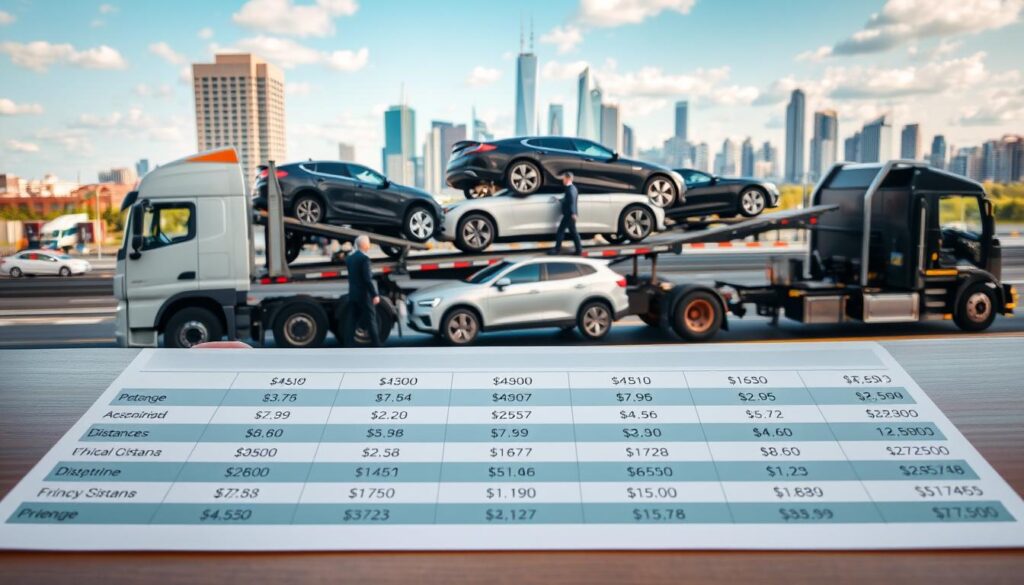
This snapshot offers clear 2026 benchmarks so buyers can spot outlier quotes fast. National planning figures center near $650. Per-mile norms in January 2026 run about $0.40–$2.00 depending on lane demand and season.
Per-mile rates shift with supply and demand on a route. Fuel, labor, and how often carriers run a lane drive those swings. Short, frequent lanes usually cost less per mile than one-off long hauls.
Open vs Enclosed Averages by Distance
| Distance Band | Open Average | Enclosed Average |
|---|---|---|
| <500 miles | $630 | $930 |
| 500–2500 miles | $1,135 | $1,550 |
| 2500+ miles | $1,350 | $1,830 |
Average Costs by Vehicle Type and Distance
Vehicle size affects price through trailer space, weight, and loading time. Below are typical averages by distance band for planning:
| Vehicle Type | <500 miles | 500–2500 miles | 2500+ miles |
|---|---|---|---|
| Sedan | $425 | $725 | $925 |
| Compact SUV | $455 | $775 | $1,025 |
| SUV | $505 | $825 | $1,075 |
| Truck | $575 | $925 | $1,275 |
Practical takeaway: Treat these numbers as planning values. Final quotes vary by ZIP-to-ZIP routing, pickup window, and carrier availability. If a quoted price sits well below these benchmarks, ask what is excluded—insurance limits, extra fees, or operability conditions often explain low offers.
- National averages help spot outliers.
- Open carriers cost less; enclosed adds protection and space limits.
- Vehicle type raises price with size and loading complexity.
Ready for an exact price? Request a documented quote for your vehicle and lane through our detailed process at service pricing.
How Much Is Car Shipping Based on Distance and Route?

Distance, demand, and corridor access determine whether a quote looks fair or too low. Short lanes under 500 miles tend to carry higher per-mile rates because fixed costs — loading, paperwork, and initial dispatch — are spread over fewer miles.
Long-haul moves usually show lower per-mile rates, yet total cost rises with added miles, driver time, and capacity use. Carriers price these runs to cover multi-day labor and fuel even when per-mile numbers fall.
Pickups near major corridors like I-76, I-79, or I-70 schedule faster and quote better rates. Remote or rural pickup points need detours, which raise fees and extend transit days; typical Pittsburgh lanes move in about 2–6 days under normal conditions.
Buyer comparison checklist
- Compare total price, not only per-mile rates.
- Ask about dispatch windows and expected transit days.
- Consider route balance: high-demand lanes cost less; off-route moves cost more.
For a clear estimate, request a transport quote details with route and pickup info to see exact rates for your delivery window.
Vehicle Factors That Change Auto Transport Prices
A carrier prices each load by the physical demands a vehicle places on equipment and crew.
Size and weight matter. Larger vehicles take more trailer space, raise fuel use, and slow loading. Trucks and full-size SUVs typically add more to the final cost than sedans. For example, local data shows pickups and SUVs carry higher adders versus a sedan baseline.
Make, model, and added dimensions
Carriers classify a vehicle by year, make, model, and trim. That classification sets the transport category: sedan, crossover, SUV, or pickup.
Common surprises that change a quote include lift kits, oversized tires, roof racks, bed caps, bike racks, and aftermarket bumpers. Always disclose these features up front.
Operable vs inoperable condition
Operable means the vehicle can be driven onto and off a trailer under its own power. Inoperable means it cannot.
Inoperable loads need winches, dollies, or forklifts and extra labor time. That raises cost and may require special equipment reservations.
Risk management and buyer action
- Document vehicle condition with dated photos before pickup to limit delivery disputes.
- Share accurate external measurements and notes during quoting to protect transit schedules and pricing integrity.
- Disclose non-standard gear and operability to avoid re-quoting at pickup.
| Vehicle Type | Typical Adders vs Sedan | Primary Reason |
|---|---|---|
| SUV / Crossover | $+122 | Extra space and weight, loading complexity |
| Pickup / Full-size | $+229 | Bed gear, larger footprint, higher fuel impact |
| Sedan (baseline) | $0 | Standard fit on open trailers |
For clarity and an accurate quote, provide year, make, model, trim, dimensions, and notes about condition to info@bestcarshippinginc.com or call (307) 288-5972. Proper disclosure protects the vehicle and the delivery timeline.
Pickup and Delivery Choices That Affect Shipping Costs
Choosing accessible pickup and delivery points can reduce fees and speed the transit window. Simple location choices influence route bundling, driver assignment, and final price.
Door-to-door vs terminal-to-terminal
Door-to-door provides maximum convenience and direct delivery at your address. It suits busy owners and those with limited time.
Terminal-to-terminal often lowers the price. It requires a short drive to a depot but can save money for flexible schedules.
Metro pickup locations vs rural pickup locations
Metro locations usually cost less. Higher carrier density and frequent runs let companies bundle loads and cut deadhead miles.
Rural pickups raise costs. Detours off main corridors and fewer nearby loads add time and fees to a shipment.
Neighborhood access and meeting options
Narrow streets, low trees, and HOA rules can block a direct drop. In those cases, carriers will arrange a nearby lot or public curbside point.
- Decide: convenience needs, local parking, and desired delivery time.
- Tip: choose a pickup point near major roads to lower price pressure and improve availability.
For a reliable, transparent estimate from this company, contact info@bestcarshippinginc.com or call (307) 288-5972.
Open Transport vs Enclosed Transport: Cost vs Protection
Everyday moves typically rely on open transport for reliable, cost‑efficient delivery.
When open carrier service is the best-value choice for most cars
Open transport is the industry norm for routine vehicles. It pairs lower rates with standard safety practices. Most owners choose open service for sedans and common SUVs.
When enclosed auto transport is worth the premium for high-value vehicles
Enclosed trailers suit luxury, classic, and exotic vehicles. Carriers limit exposure to road debris, weather, and casual handling. Choose enclosed when paint condition or rarity raises risk intolerance.
Typical enclosed price uplift compared with open transport
Market data shows a clear premium. Sherpa’s Pittsburgh set reports an average uplift of +$673 (+74%). Broader metrics place enclosed at roughly 40–60% higher than open.
| Service | Open Avg | Enclosed Avg |
|---|---|---|
| <500 miles | $630 | $930 |
| 500–2500 miles | $1,135 | $1,550 |
| 2500+ miles | $1,350 | $1,830 |
Insurance: standard carrier cargo insurance usually covers transit damage limits. For high‑value assets, consider supplemental policies or declared value coverage through your auto transport provider.
Decision rule: match trailer type to vehicle value, paint status, and risk tolerance—not only price. For a clear quote, contact info@bestcarshippinginc.com or call (307) 288-5972.
Expedited Car Shipping vs Standard Service: What You Pay For Speed
When delivery timing matters, buyers trade flexibility for guaranteed pickup dates and tighter planning windows.
Standard service offers a multi-day pickup window. Carriers can bundle loads and seek the best routing. That often lowers prices and improves availability.
Expedited service locks an exact pickup date. Carriers adjust schedules and reduce load stacking. Those constraints raise operational costs and final rates.
Service tier examples
- Standard open: $855 — flexible pickup window, typical transit time.
- Expedited: $1,105 — tighter dispatch, faster pickup opportunity.
- Enclosed expedited: $1,530 — premium protection plus date certainty.
Note: expedited improves pickup timing but cannot remove major weather or road closures. Buyers with tight deadlines — job moves, auction wins, or seasonal needs — should request an expedited quote with documented expectations.
To compare options or request priority service, contact info@bestcarshippinginc.com or call (307) 288-5972. See our cheap car shipping page for pricing guidance.
Seasonal Car Shipping Costs: Cheapest Time of Year to Ship a Vehicle
Timing your move by month can lower your budget exposure and scheduling risk. Seasonal patterns affect availability, rates, pickup windows, and transit days across the U.S.
Winter realities and the February value window
Winter brings mixed effects. Harsh weather can slow transit and add delays.
February often shows softer demand. Carriers return from holidays and lanes loosen, which can reduce costs and shorten wait times.
Spring northbound demand
Late March through May shifts traffic north. That tightening raises rates on certain lanes.
Plan earlier for northbound moves or keep pickup flexibility to avoid peak premiums.
Summer peak: high demand, shifting prices
Summer has the most requests. More trucks run, but high demand still drives price swings by route.
Book early for specific delivery dates. Flexible pickup windows can reduce fees.
Fall shoulder season and college moves
September shows a small spike from student relocations. Overall fall rates are slightly lower than summer.
Avoid exact campus move weeks or reserve weeks in advance to maintain price control.
Holiday weeks to avoid
Major travel holidays create scarce capacity and longer transit days. Holiday weeks can raise fees and risk missed windows.
Planning recommendation: Lock service sooner during peak months. For budget-sensitive moves, target February or the fall shoulder months and keep pickup windows flexible.
| Month | Typical Market Signal | Buyer Tip |
|---|---|---|
| January | Moderate — snowbird demand rises | Book early for winter lanes |
| February | Lower demand — value window | Seek flexible pickup to secure lower rates |
| Mar–May | Rising demand — northbound tightening | Reserve sooner for spring corridors |
| Jun–Aug | Peak demand — high availability, variable rates | Confirm dates early; accept flexible pickup to save |
| Sep–Nov | Shoulder months — minor college spikes | Avoid campus move weeks or book in advance |
For a focused estimate and firm dates, get a quote from Best Car Shipping Inc. or contact info@bestcarshippinginc.com and (307) 288-5972.
Insurance, Transparency, and Hidden Fees to Watch For
Insurance and clear pricing protect both vehicle and budget. Buyers should confirm carrier cargo coverage and ask for written limits before pickup. Standard carrier policies commonly cover transit damage to a shipment up to stated limits, but coverage varies by provider and declared value.
What standard cargo insurance typically covers
Request proof: ask the company for an active policy declaration, coverage limits, and exclusions. Typical carrier minimums include large liability and cargo floors, but actual coverage for damage depends on the declared value and carrier terms.
Documentation matters: the Bill of Lading inspection at pickup and delivery plus time-stamped photos govern claims. Keep copies of both documents and note any preexisting marks.
Common add-ons that raise the final price
- Enclosed trailer upgrade
- Expedited scheduling or guaranteed pickup dates
- Inoperable loading with winches or dollies
- Oversize or modified vehicle dimensions
- Remote pickup or delivery detours
Personal items often carry weight limits and exclusion from cargo coverage. Best practice: travel light and remove valuables unless written permission and coverage are confirmed.
Upfront pricing and price‑lock-style guarantees
Transparency checklist: obtain an itemized quote, clear pickup window, payment terms, cancellation rules, and any market-adjustment language. A reputable company will document exceptions that void a price lock.
Price locks usually guarantee the quoted price unless stated conditions change (vehicle condition, added services, or routing changes). Ask which triggers permit adjustments and get confirmations in writing.
Final note: clear communication and documented proof reduce surprise fees and protect against delivery damage. For questions or a documented quote, contact info@bestcarshippinginc.com or call (307) 288-5972.
How to Compare Car Shipping Companies and Quotes Like a Buyer
A buyer who supplies precise vehicle details gets the most useful quotes. Start with exact pickup and delivery ZIP codes, year/make/model, operable status, preferred trailer type, and desired timeframe.
What to provide for an accurate auto transport quote
Provide: pickup/delivery ZIPs, vehicle info, operable condition, and open or enclosed choice. Nexus data shows accuracy needs these items for firm pricing.
Comparing apples to apples
Match carrier type, timing, and access notes when comparing offers. Align open vs enclosed, window vs exact date, and pickup restrictions before judging price.
Red flags of unusually low prices
“Vague terms, missing insurance details, or unclear payment rules often signal later problems.”
Watch for absent insurance limits, no itemized fees, or pressure to prepay outside standard methods.
Flexibility lowers rates
Sherpa data: a multi-day pickup window can cut cost and improve availability. Flexibility lets carriers optimize routes and offer better service.
| Action | Benefit | Check |
|---|---|---|
| Provide ZIPs & vehicle data | Accurate quote | Match inputs across companies |
| Choose pickup window | Lower price, higher availability | Ask for flexible dates |
| Verify insurance & terms | Fewer surprises | Request written limits |
Evaluate companies by review volume, complaint trends, carrier vetting, and written guarantees. Prioritize documented standards over the lowest number. For a verified estimate, request a formal vehicle transport quote.
How the Car Shipping Process Works From Booking to Delivery
Best Car Shipping Inc. outlines a clear, three-step process so customers know what to expect from booking through final sign-off.
Scheduling and confirming pickup and delivery locations
After a quote is accepted, the scheduler confirms exact pickup and delivery addresses and any access constraints. A realistic pickup window helps secure a carrier and reduces reroutes.
Vehicle prep checklist
Prepare the vehicle before pickup. Wash the exterior so inspections are clear. Take dated photos of all sides and of existing marks.
Disable alarms. Remove toll tags and personal items. Leave fuel at about one-quarter tank to limit weight while keeping enough for movement.
Pickup day: inspection and loading
On pickup the driver and owner perform a joint inspection. The Bill of Lading records condition and mileage. The carrier then loads the vehicle and secures it for transit.
Transit expectations
Transit timelines vary by lane. Typical local lanes run 2–6 days; cross-country moves take longer. Winter weather and road closures can delay pickup and delivery windows.
Delivery day: inspection, sign-off, and payment
At delivery perform a final inspection against the Bill of Lading and your pre-shipment photos. Sign only after verifying condition.
Payment may be due at pickup or on delivery depending on terms. Clear communication with the provider avoids surprises.
Need a detailed timeline or to schedule a shipment? Request service details at Best Car Shipping Inc. Upton or contact info@bestcarshippinginc.com and (307) 288-5972.
Conclusion
An informed buyer selects service by matching vehicle value to protection and timing needs.
Benchmark planning: national averages sit near $650, and per-mile ranges in January 2026 often run about $0.40–$2.00. Open trailers cost less; enclosed can run materially higher (one dataset showed +74%).
Price drivers include distance, route access, vehicle type and condition, pickup/delivery limits, seasonality, and desired speed. Keep scheduling flexible to reduce costs and improve availability.
Protect your budget: choose the right trailer, disclose accurate vehicle details, and verify insurance and pickup windows before you sign.
Next step: request a transparent quote with ZIP codes, vehicle info, trailer preference, and timing. Email info@bestcarshippinginc.com or call (307) 288-5972 to confirm availability and receive a documented estimate.