
Door to Door Transport brings 25 years of experience to help owners plan a safe vehicle move. The process needs clear steps and focused preparation to avoid delays and damage.
Start by selecting a trusted company that offers door-to-door pickup and real-time tracking. Take dated photos of the vehicle from multiple angles and note its condition on the bill lading before loading.
Check fluid levels and the fuel tank, remove loose items, and disable alarms. Ask the carrier about insurance coverage and request driver contact details once dispatch confirms scheduling.
The team helps compare companies and read reviews so customers can choose the right service. For a detailed quote and the full process, visit the Upton auto transport page.
Key Takeaways
- Document vehicle condition with dated photos before pickup.
- Confirm insurance coverage and get a clear bill lading.
- Prepare fluids, fuel level, and secure loose parts.
- Choose vetted carriers with door-to-door service and tracking.
- Keep driver contact and scheduling details handy during transit.
Understanding the Auto Transport Industry

A knowledgeable broker acts as your logistics coordinator, turning a complicated move into a predictable process.
In auto transport, brokers connect vehicle owners with vetted carriers. They manage quotes, schedules, and paperwork so the owner spends less time on logistics.
When you call (866) 802-7447, our representatives explain how a professional company handles routing, timelines, and required insurance checks. This conversation clarifies the process and sets expectations.
The Role of Brokers
Brokers act as intermediaries between the consumer and the carrier. A reputable broker verifies carrier safety records and confirms adequate insurance before booking transit.
- Vetting: Ensures carriers meet safety and insurance standards.
- Efficiency: Saves time by finding options that match schedule and vehicle needs.
- Transparency: Keeps communication open from pickup to delivery.
For details about how brokers operate and to connect with a trusted partner, visit our auto shipping broker page or call (866) 802-7447.
Essential Car Shipping Checklist for First-Time Customers
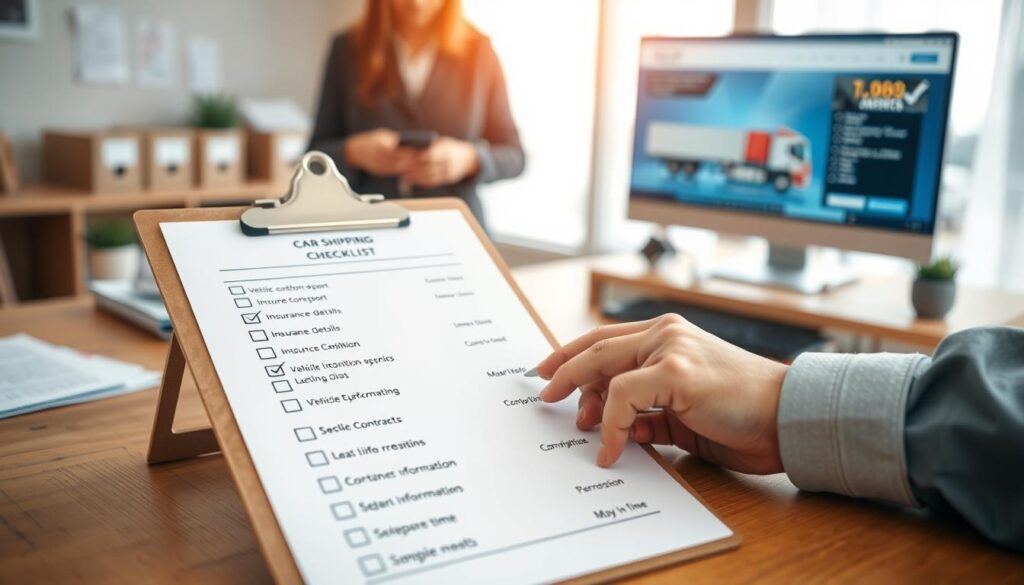
Start your prep by confirming carrier licenses, insurance limits, and inspection practices. This simple step reduces risk and saves time during the pickup.
Be present at the initial inspection. Note every scratch, dent, and the overall condition on the bill lading. Keep a dated copy; it is required if you file an insurance claim.
“Do your research first; it is the foundation of a successful transport,” — Tim DeMille and Jeff Dominas, Sherpa Auto Transport.
- Remove all personal items before pickup to avoid delays and complications.
- Obtain multiple quotes to compare service, transit times, and insurance coverage.
- Verify the carrier’s credentials and ask for driver contact details before transit.
- Inspect on delivery and record any new damage on the bill lading immediately.
| Step | Why it matters | Action |
|---|---|---|
| Research carriers | Ensures safety and proper insurance | Check licenses, reviews, and insurance limits |
| Document condition | Needed for claims and proof | Take dated photos and sign the bill lading |
| Prepare vehicle | Makes pickup safer and faster | Remove personal items; secure loose parts |
If you need to ship car, contact the team or visit the Charlotte Michigan auto transport page for tailored guidance. For support, email info@bestcarshippinginc.com or call (307) 288-5972.
Selecting a Reliable Shipping Company
A reliable provider makes the move straightforward by proving compliance and safety records up front.
Vetting Carriers and Safety Records
Door to Door Transport manages a network of over 60,000 vetted car carriers across the United States. Ask for the carrier’s USDOT and MC numbers. These identifiers let you check FMCSA records and safety scores.
Read recent reviews to judge on-time performance and damage history. Confirm the carrier lists insurance limits and can share a sample policy. A thorough inspection at pickup should document condition and any existing damage.
Questions to Ask Before Booking
- What are the carrier’s USDOT and MC numbers?
- What insurance coverage and limits apply during transit?
- Will the driver perform a documented inspection at pickup?
- Is door-to-door pickup and delivery available on my route?
- Can you share recent customer reviews and transit times?
| Check | Why it matters | Action |
|---|---|---|
| USDOT / MC | Shows regulatory compliance | Verify on FMCSA site before booking |
| Insurance coverage | Protects against damage in transit | Request policy details and limits |
| Driver inspection | Records pre-existing condition | Attend inspection; take dated photos |
| Customer reviews | Indicates reliability and timing | Read multiple reviews and ratings |
Need more options? Compare vetted transport companies on our automotive shipping companies page to find a provider that meets your needs.
Preparing Your Vehicle for Transit
Preparing a vehicle before transit reduces delays and protects its condition.
Start with cleaning and documentation. A thorough wash makes scratches and dents easy to spot. Take clear photos from all angles and keep the images with your records.
Cleaning and Documentation
Empty the interior and trunk. Remove personal items to avoid fines and loss. Note any existing damage in writing.
Tip: Keep a dated copy of the photo set and the signed bill lading for insurance coverage.
Managing Fluids and Fuel
Check all fluid levels and repair leaks before pickup. Keep the fuel tank between a quarter and a half full.
This amount reduces weight but allows the driver to move the vehicle if needed during delivery or pickup.
Removing Personal Belongings
Remove personal belongings and loose items. Doing so protects the owner and the driver and avoids extra fees from carriers.
- Disable alarms and anti-theft systems to prevent disruptions during transit.
- The driver will perform the final inspection and ask you to sign the bill lading.
- Accurate photos and documentation support any insurance claim in the rare event of damage.
Need local service? Learn more about reliable options at auto transport in Scottsville.
Choosing Between Open and Enclosed Transport
Choose the transport style by balancing cost, protection, and the vehicle’s value.
Open transport is the most economical option for car shipping. It uses large exposed trailers and suits standard vehicles and routine moves.
Enclosed transport provides superior protection from weather and road debris. Owners of antique or high-end exotic vehicles often prefer it for discretion and added safety.
- Cost vs. protection: open transport saves money; enclosed shields valuables.
- Carrier care: every carrier in the network trains to handle both methods professionally.
- Insurance: coverage is standard for both options, protecting your vehicle during transit.
- Pickup planning: the team will recommend the best method at scheduling based on value and route.
“Choose the method that matches the vehicle’s worth and your risk tolerance.”
Decision tip: Many owners choose open transport for everyday vehicles and enclosed for rare or high-value models. For extra guidance and stress-free planning, review our stress-free vehicle transport tips.
Managing Pickup and Delivery Logistics
Coordinating pickup details early keeps the delivery on schedule and predictable. Managers confirm windows, driver contact, and any special needs before the move begins. This reduces surprises and missed appointments.
The transport company will coordinate with the assigned driver to set the pickup time and route. Whether using door or terminal service, clear communication ensures the driver knows access instructions and any parking limits.
The Importance of the Bill of Lading
The bill lading is a legal record of the vehicle’s condition at pickup and delivery. Make sure you or an authorized representative are present during the inspection.
Take dated photos at pickup and keep them handy for the final inspection. Compare images at delivery to spot any transit damage quickly.
“Attend the inspection and verify every note on the bill lading before signing.”
- Expect longer transit times for island moves; shipping to Hawaii often takes 2–3 weeks via cargo ship.
- Confirm fuel limits; leave minimal gas in the tank to meet carrier rules.
- Inspect at delivery and note any new damage on the bill lading immediately.
Final tip: For local route guidance and service options, check our Jeanerette, Louisiana auto transport page to align scheduling and expectations with your carrier.
Conclusion
A few clear actions at pickup and delivery make the entire transport experience predictable.
Research the shipping company and read recent reviews. Verify insurance coverage and ask about policy limits before you book auto transport.
Prepare car by removing personal items and belongings. Document the vehicle with dated photos and confirm the bill of lading is accurate before the driver departs.
If you need help to ship car, contact the team at (307) 288-5972 or email info@bestcarshippinginc.com. Following these steps will make your vehicle transport reliable and stress-free.