
This introduction explains how to move a prized classic with care. It outlines the transport process, cost trade-offs, and the protection steps every owner should take. The goal is clear: preserve condition and avoid surprises during long-distance moves.
Open trailers often cost between $800 and $1,500. Choosing an enclosed trailer adds roughly a 50% premium but gives extra protection for vintage vehicles. Every carrier must carry at least $1,000,000 in liability and $100,000 in cargo insurance to meet industry safety standards.
Proper preparation makes a big difference. Owners should document condition with time-stamped photos, remove loose items, and note mechanical quirks before pickup. Verify VINs, confirm coverage, and read the bill of lading carefully at delivery.
To research reputable firms, consider ratings and review scores like Sherpa Auto Transport’s 4.9 Total Review Score. For a vetted list of reliable auto hauler companies, see auto hauler companies.
Key Takeaways
- Prioritize protection: enclosed transport reduces exposure.
- Verify insurance: minimum liability and cargo limits are essential.
- Document condition: photos and notes speed claims if needed.
- Compare service: check ratings and clear communication.
- Prepare the vehicle: remove loose items and disable alarms.
Understanding the Importance of Professional Classic Car Shipping
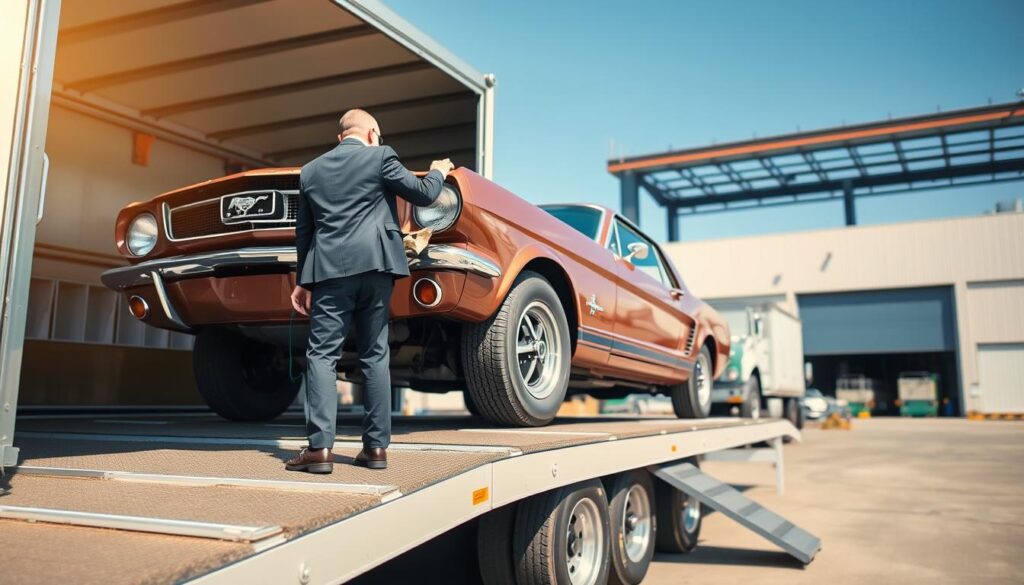
Entrusting a prized classic to experienced handlers protects its value and legacy. Professional classic car shipping focuses on preserving condition, not just moving a vintage vehicle from one place to another.
Avoiding unnecessary miles helps maintain originality and long-term value. Specialized transport reduces wear and keeps odometer readings intact.
Door-to-door services add convenience. Experts pick up and deliver close to specified locations, easing logistics for collectors and curators.
- Tailored handling: teams trained in delicate loading and securement.
- Value protection: minimized risk of dings, weather exposure, and road damage.
- Peace of mind: documented condition and insured transit.
| Service Type | Typical Benefit | Best Use |
|---|---|---|
| Enclosed transport | Maximum protection from elements | High-value vintage models |
| Door-to-door service | Convenience and lower handling | Concierge moves and shows |
| Specialized carriers | Trained crews and insurance | Long-distance transfers |
Many reputable companies provide these services and focus on vintage needs. Learn more about the full process in our ultimate cross-country resource.
Why You Should Choose Specialized Transport for Your Vehicle
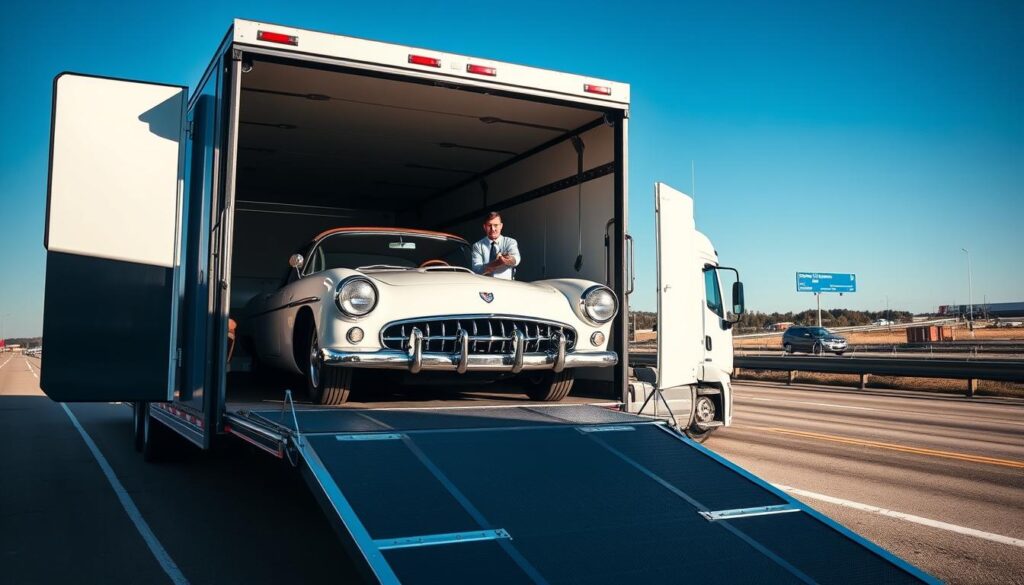
Entrusting a vintage vehicle to specialists reduces exposure to common transport hazards. Professional teams focus on preserving historical value and preventing avoidable damage during transit.
Preserving Historical Value
Specialized transport limits rock chips, road debris, and weather-related wear that can harm a classic car’s finish and market value.
Enclosed trailers offer the highest level of protection from rain, snow, and dust. That protection matters when provenance and original condition affect resale and show status.
Minimizing Road Damage
Experienced carriers use equipment such as hydraulic lift gates and low-angle ramps to load low-clearance vehicles safely.
This reduces contact, scrapes, and stress on suspension components. Many owners prefer professional transport over driving long distances to avoid needless miles and exposure.
- Choose specialists to keep vehicles show-ready.
- Use enclosed options to shield from elements and debris.
- Rely on trained crews to manage loading and unloading with care.
Comprehensive Car Shipping Guide for Classic Car Owners
Selecting the right transporter begins with clear priorities and a written plan. This checklist-style approach helps owners match service capabilities to the vehicle’s needs and schedule.
Understand options. Open transport is cost-effective and widely available. Enclosed transport adds protection and reduces exposure to road debris and weather.
Verify each company’s credentials. Ask for proof of insurance, USDOT numbers, and recent references. Transparent pricing and clear delivery windows are signs of a reliable service.
- Document condition and request a written estimate.
- Confirm insurance limits and pickup/delivery terms.
- Pick a carrier with experience handling vintage models.
| Option | Benefit | Best Use |
|---|---|---|
| Open | Lower cost, faster availability | Routine moves with standard protection |
| Enclosed | Maximum protection from elements | High-value or concours-ready vehicles |
Following this process reduces risk and makes the transportation experience predictable. For quotes or questions, contact the company at (307) 288-5972 or email info@bestcarshippinginc.com.
Essential Steps to Prepare Your Vehicle for Transit
A clear pre-shipment routine protects value and limits surprises. Follow these steps the day before pickup to ensure smooth handling and a predictable delivery.
Documenting Vehicle Condition
Take time-stamped photos and a short video. Capture every panel, the interior, wheels, and the odometer. These records support claims and confirm condition at pickup.
Note any pre-existing dings, scratches, or mechanical quirks in writing and keep a copy with the bill of lading.
Managing Fuel and Battery
Keep the fuel level low — no more than a quarter tank. Lower fuel reduces weight and meets carrier safety advice.
Disconnect the battery to prevent shorts and drain. Secure loose wiring and tape terminals if needed.
Removing Personal Items
Remove valuables and limit personal items to 100 lbs or less, stored in the trunk. Excess cargo can affect coverage and safe handling.
- Prepare a checklist: keys, spare tire, and fluids.
- Confirm insurance and carrier policies on permitted items before pickup.
These steps help ensure the shipment finishes with the vehicle in the expected condition. For state-to-state moves, see state transport options or contact (307) 288-5972 for specialized assistance.
Comparing Open and Enclosed Trailer Options
Choosing the right trailer type directly affects how well a prized vintage stays preserved during transit. Open trailer transport is the most common and budget-friendly option. It works well for routine moves and shorter hauls.
Open carriers expose the vehicle to wind, road debris, and changing weather. That exposure can mean chips, dust, or minor cosmetic wear on long trips.
Enclosed trailer transport offers the opposite. It shields the vehicle from rain, snow, dust, and debris. Many enclosed units include air ride suspension and hydraulic lift gates. These features reduce jostling and ease loading for low-clearance or high-value classic car shipments.
“For rare or high-value classics, an enclosed trailer minimizes environmental risk and preserves show-ready condition.”
Selecting the proper carrier and trailer type will directly affect the safety of the vehicle on the truck. Owners should weigh cost against protection and choose the option that matches the vehicle’s value and the trip’s conditions.
Need help weighing these options? See our stress-free vehicle transport tips to balance price with protection.
Key Factors That Influence Your Total Shipping Costs
Total transport pricing reflects a blend of distance, timing, and the protection level you choose.
Distance and vehicle size are primary cost drivers. Longer hauls raise fuel and driver time charges. Larger vehicles need more space and securement, which can increase the final cost.
Trailer type and options matter. An open carrier typically runs between $800 and $1,500 for an operable classic car, depending on distance. An enclosed carrier carries a premium, often between $1,100 and $2,000.
The Impact of Seasonal Demand
Seasonal demand has a notable effect. Peak months like January and summer often push prices higher. High demand reduces available capacity and increases lead times.
Plan ahead to avoid surcharges. Requesting a pickup during off-peak months can reduce cost and simplify scheduling.
“Get a custom quote from a reliable company to see how distance, trailer type, and timing shape your final shipment cost.”
- Get a tailored estimate: custom quotes account for vehicle specifics and route.
- Verify insurance: confirm limits that match your vehicle’s value.
- Compare options: weigh open versus enclosed against risk and budget.
Understanding these factors helps owners budget accurately and pick the most cost-effective transport option for a valued classic car. For questions or a quote, contact (307) 288-5972 or info@bestcarshippinginc.com.
How to Vet and Select a Reliable Transport Company
A careful vetting process separates reliable carriers from risky operators.
Begin with credentials. Confirm USDOT numbers and written proof of insurance limits. Sherpa Auto Transport requires at least $1,000,000 in liability and $100,000 in cargo coverage. Ask for copies of those certificates.
Check track record. Look for high review scores and recent references. A consistent 4.9 rating signals reliability and low damage claims.
Ask direct questions about handling procedures for vintage and low-clearance models. Ensure the crew uses lift gates, air-ride trailers, and securement methods suited to your vehicle.
- Verify insurance and coverage to match the vehicle’s value.
- Confirm experience moving vintage vehicles and request handling details.
- Require transparent communication with tracking and status updates.
- Read reviews from other owners to gauge damage-free delivery rates.
| Vetting Step | What to Request | Why It Matters |
|---|---|---|
| Insurance Check | Liability & cargo certificates | Protects value and claims process |
| Experience | References and ratings | Shows proven handling of vintage vehicles |
| Process Review | Loading methods and trailer type | Ensures proper care and lowers damage risk |
Select a company that prioritizes safety and clear terms. For questions or to request vetted quotes, contact (307) 288-5972 or info@bestcarshippinginc.com.
Best Practices for Inspecting Your Car Upon Delivery
Inspecting the vehicle at handover is the last chance to catch transit issues before you sign. Perform a calm, methodical check before accepting the delivery. This step protects value and clarifies responsibility.
Conducting a Thorough Walkaround
Start with a full perimeter walkaround. Look for scratches, dents, fluid leaks, and loose items.
Open doors, trunk, and hood. Note interior condition, seat wear, and dashboard lights.
Verifying Documentation
Compare the vehicle’s condition to the Bill of Lading filled at pickup. Confirm VIN and odometer readings match the original report.
If discrepancies appear, do not sign without notation. Have the driver record issues on the final inspection report and take time-stamped photos.
- Document every defect on the delivery form before signing.
- Contact the carrier or company immediately to start a resolution.
- Use available insurance and coverage if damage is confirmed.
| Inspection Step | What to Check | Action If Issue Found |
|---|---|---|
| Exterior walkaround | Paint, body panels, glass, wheels | Note on delivery report; photograph |
| Interior review | Seats, dash, trunk, loose items | Document, request carrier acknowledgment |
| Paperwork check | Bill of Lading, VIN, odometer | Compare to pickup report; refuse to sign if mismatched |
Final tip: if the vehicle rode on an open trailer and weather exposure was possible, inspect finishes and undercarriage closely. For more detailed protocols and local service options, see this delivery inspection resource or contact (307) 288-5972 or info@bestcarshippinginc.com.
Conclusion
A careful plan and a vetted carrier reduce risk and simplify any long move. Choosing the right team preserves vintage finish and long-term value. Good protection begins with clear expectations and documented condition.
Confirm insurance and coverage before pickup. Ask the company about claims, handling, and steps to limit damage. A reliable service and solid experience make the difference.
Plan ahead to manage cost and timing. Compare quotes and confirm the carrier’s process so you get predictable delivery and peace of mind.
If questions remain, contact the team at (307) 288-5972 or email info@bestcarshippinginc.com. This summary aims to help owners move cars confidently and keep value intact.