
Proper preparation protects your vehicle and reduces risk. Auto transport is a coordinated logistics process. Carriers balance driving hours, weather, and dock slots for every route.
Understanding expectations early helps avoid delays and surprise fees. Most hold-ups happen before loading because customers and carriers miscommunicate. Preparing paperwork, checking fuel level, and documenting condition speeds pickup and protects insurance claims.
Remove personal items, disable alarms, and clear toll tags before pickup. Inspect the vehicle and take date-stamped photos of dents and scratches. For a full checklist and practical steps, see this guide on how to prepare a car for.
Key Takeaways
- Communicate clearly with your carrier about timings and condition.
- Document existing damage and keep fuel at roughly a quarter tank.
- Remove personal belongings and secure loose parts before pickup.
- Follow carrier instructions to reduce delays and extra charges.
- Proper prep protects insurance coverage and ensures a smoother shipping experience.
Understanding the Logistics of Auto Transport

Transport planning balances driver hours, weather, and prior stops for each load.
Professional carriers often carry 6–10 vehicles per load. That means one late pickup can disrupt many stops. Routes are sequenced by location and delivery priority.
The Reality of Pickup Windows
Drivers usually offer a 1–3 day pickup window. Traffic, weather, and earlier pickups change exact arrival time.
DOT hours-of-service rules limit wait time at any single site. If a vehicle is not ready, drivers may need to move on.
Why Flexibility Matters
Being flexible helps avoid delays and extra fees. Provide clear access and a spot where a large truck can safely stop.
“A small delay at one address can cascade across an entire route.”
| Factor | Typical Impact | Customer Tip |
|---|---|---|
| Load Size | 6–10 vehicles per truck | Have vehicle ready within window |
| DOT Rules | Limits driver wait time | Confirm documents and keys beforehand |
| Access | Truck needs clear space | Use open, flat areas or commercial lots |
- Tip: Ask the service team at (307) 288-5972 about route timing.
- Learn more about local options for car shipping in Madisonville.
What to Do Before the Car Carrier Arrives
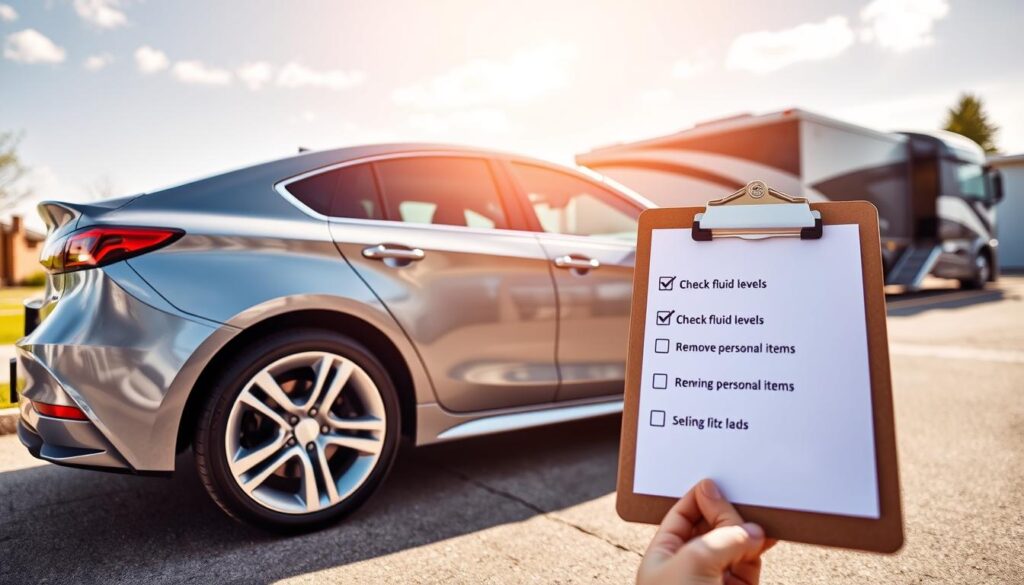
strong, Confirm basic operability. Verify the engine starts, steering feels normal, and brakes respond. This avoids refused pickups and keeps schedules on track.
Note any special handling needs if an enclosed transport was chosen for a classic or exotic car. Tell the carrier about lift points, soft suspensions, or low ground clearance.
Prepare the vehicle for easy loading. Clear loose parts, fold mirrors if possible, and leave fuel at about a quarter tank. Carriers expect a vehicle that loads without extra work.
Document the condition with date-stamped photos and note mileage. This record protects customers and supports insurance claims throughout shipping and delivery.
Confirm service details by calling (307) 288-5972 or emailing info@bestcarshippinginc.com. For practical tips on moving a vehicle, read our guide on stress-free vehicle transport.
Preparing Your Vehicle for Safe Loading
A brief pre-load review of fluids, battery, and tires saves time and reduces shipment risk.
Checking Fluid Levels and Leaks
Inspect under the hood and under the vehicle for any visible leaks. Replace or top off oil, coolant, and brake fluid if low.
Address leaks before pickup. A leaking vehicle can damage other vehicles on the trailer and may be refused at loading.
Battery Health and Tire Pressure
Ensure the battery holds charge so the driver can start the engine for loading and unloading. Weak batteries often cause delays.
Check tire pressure and overall condition. Proper pressure prevents loading problems and reduces risk during transit.
Managing Fuel Levels
Industry standards require roughly a 1/4 tank of fuel. Too much fuel adds weight and may violate DOT limits for the truck.
Remove toll tags and secure loose items inside before pickup. These small steps protect customers and keep the process moving.
- Keep fuel near 1/4 tank to meet weight guidelines.
- Fix fluid leaks and address mechanical issues early.
- Confirm battery and tire condition before driver arrival.
For local support with car shipping, consider this resource on car shipping in Versailles, Kentucky or call (307) 288-5972 for inspection advice.
Managing Personal Belongings and Interior Items
Keep the interior free of personal effects that could add weight or create risk in transit. Carriers generally prohibit personal items inside the vehicle. Most allow a strict 100 lb limit only when items are stored on the truck.
Insurance rarely covers personal belongings left in a vehicle during shipping. Owners who leave valuables accept the loss risk. For protection, remove electronics, paperwork, and loose items before pickup.
Weight from personal items affects load calculations and DOT compliance. An overweight load can delay pickup or cause safety concerns. Empty the trunk and cabin so drivers can secure the vehicle quickly.
- Remove toll tags and any devices that might incur charges while in transit.
- Keep fuel near a quarter tank; full tanks raise weight and safety issues.
- Questions about what may remain? Call (307) 288-5972 for clear guidance.
Final note: Clearing personal belongings protects the owner and helps ensure smooth, compliant shipping. Contact info@bestcarshippinginc.com for assistance.
Documenting Vehicle Condition and Mileage
Create a photographic record and written notes that reflect the vehicle’s exact state at handoff.
Clear evidence speeds claims and protects both parties.
Take 15–20 time-stamped photos of the car. Cover all sides, the odometer, door jambs, front bumper, and any visible scratches or dents.
Record mileage and note any pre-existing damage. Verify that report with the driver before signing paperwork at pickup delivery.
- Keep a signed copy of the bill lading; it is the legal record for shipping and shipment condition.
- Proper documentation helps resolve damage claims and supports insurance if needed.
- Customers who inspect carefully at transfer minimize disputes during transit and delivery.
“Photographs and a signed bill lading make inspection and claims simpler.”
If questions arise, contact (307) 288-5972 or email info@bestcarshippinginc.com for guidance on the inspection process.
Ensuring Accessibility for the Transport Truck
A full-size transport rig can need as much room as a small parking lot for safe maneuvering.
Transport trucks are often 70–80 feet long. That size requires wide turns, clear approaches, and an unobstructed spot for loading. Narrow streets, parked vehicles, or low-hanging branches create real risk for damage and delays.
If a residential street is tight, carriers often suggest meeting at nearby shopping centers or commercial lots. These open locations let drivers position the truck safely and load vehicles without extra handling.
Confirming the pickup location in advance reduces the chance of schedule disruption. Accessibility issues remain a common cause of delays and added cost.
- Check for weight limits, low clearances, and curb restrictions.
- Keep the access area free of loose items and other vehicles.
- Call (307) 288-5972 for help identifying a suitable site.
For local guidance and Rogers City auto transport options, see Rogers City auto transport. Proper planning protects the vehicle, supports the drivers, and keeps the shipment on schedule.
Handling Administrative Requirements and Keys
Confirm who is authorized to release your vehicle at pickup and ask that person to bring valid ID and the registration. An authorized signer must be present to sign the bill lading and complete the legal transfer.
Keep keys and fobs accessible. Drivers need a working key or fob to start the engine and position the vehicle on the truck safely. Leave spare keys with the authorized person when possible.
Follow a simple checklist so administrative steps do not cause delays. Verify ID, confirm pickup location, and present any written instructions for the driver.
- Have the signed bill lading ready at handoff.
- Call (307) 288-5972 for help authorizing a family member or friend.
- Note special handling or inspection needs in writing for the driver.
- Avoid last-minute changes that can force schedule shifts or added fees.
Proper documentation speeds inspection and loading. For help with local arrangements and reliable car shipping options, visit car shipping in Jackson or contact info@bestcarshippinginc.com.
Conclusion
strong, Clear preparation reduces risk and improves every customer’s shipping experience.
Follow simple steps and protect your vehicle during auto transport. Remove personal belongings, document scratches with date-stamped photos, and verify the bill lading before pickup delivery. These actions lower damage risk and speed claims if needed.
Whether open or enclosed transport is chosen, careful prep makes loading unloading straightforward. For questions or help scheduling, contact experts at (307) 288-5972 or visit our Charlotte Michigan resource for trusted car shipping.
Final step: confirm paperwork and keep copies for your records. Good preparation ensures a smoother shipping experience for every vehicle.