
Immediate steps matter. When a vehicle shows signs of damage at delivery, the owner should document the condition with clear photos and notes. This helps speed any claims and clarifies responsibility between the transport company and the insurance provider.
BestCarShipping Inc. offers guidance through this process. Customers can call (307) 288-5972 or email info@bestcarshippinginc.com for rapid support. Our team explains coverage options and the paperwork needed to file a claim.
Proper documentation and timely contact reduce delays. The typical process includes inspection at handover, filing claims with the carrier or insurer, and arranging repairs. Knowing these steps keeps owners informed and protected.
Key Takeaways
- Document any visible damage with photos and notes at delivery.
- Contact the carrier and insurer quickly to start claims.
- Keep copies of all documentation and communication.
- Use professional help from (307) 288-5972 or info@bestcarshippinginc.com for guidance.
- Understand repair and coverage options before accepting final delivery.
Immediate Inspection Upon Delivery
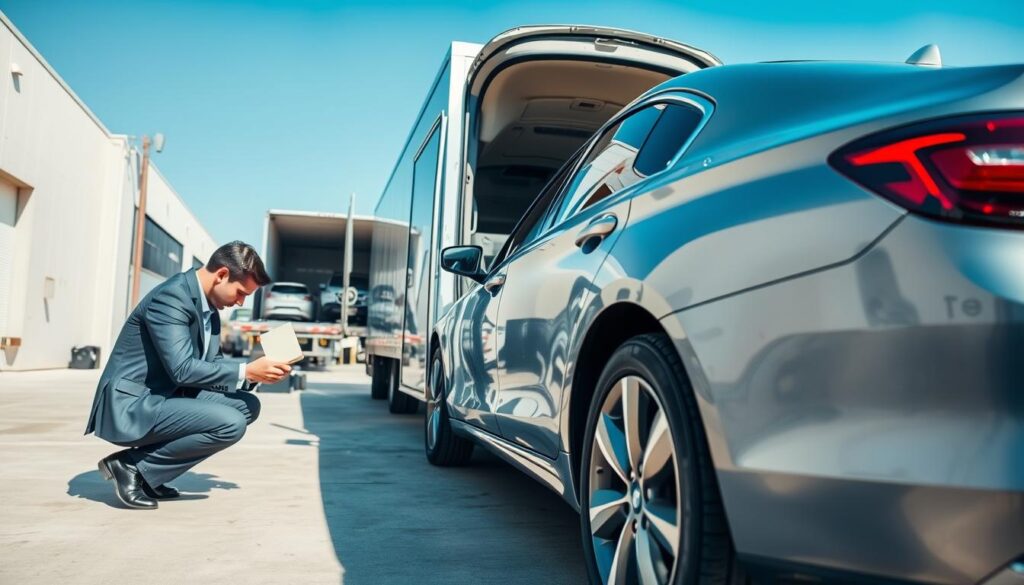
Start a 360-degree check at handover to verify the vehicle matches its pre-transport condition. The driver should remain on-site while the owner or agent inspects every panel, bumper, and wheel well.
Use bright light to reveal subtle scratches or dents. A phone flashlight or a handheld torch works well if delivery occurs at night.
Conducting a Full Walk-Around
Perform a slow, systematic circle around the vehicle. Open doors, trunk, and hood when possible to check internal panels and seals.
Ensuring Optimal Lighting
Capture high-resolution photos from multiple angles under the best light available. Compare these images to pre-shipping photos to spot new damage.
- Driver waits: Require the transport company driver to stay until documentation is complete.
- Bill of Lading: Note any issues on the form before the driver departs.
- Insurance: Share photos and notes with your insurer promptly to support coverage.
| Step | Action | Why it matters |
|---|---|---|
| Walk-around | Inspect all exterior and accessible interior panels | Find fresh scratches, dents, or alignment shifts |
| Lighting | Use flashlight or phone light for detail shots | Reveals minor damage that natural light may hide |
| Documentation | Take high-res photos and note issues on Bill of Lading | Creates proof for the transport company and insurer |
| Follow-up | Send images and notes to insurer and service team | Speeds claim validation and repair authorization |
What Happens If a Car Is Damaged During Shipping?
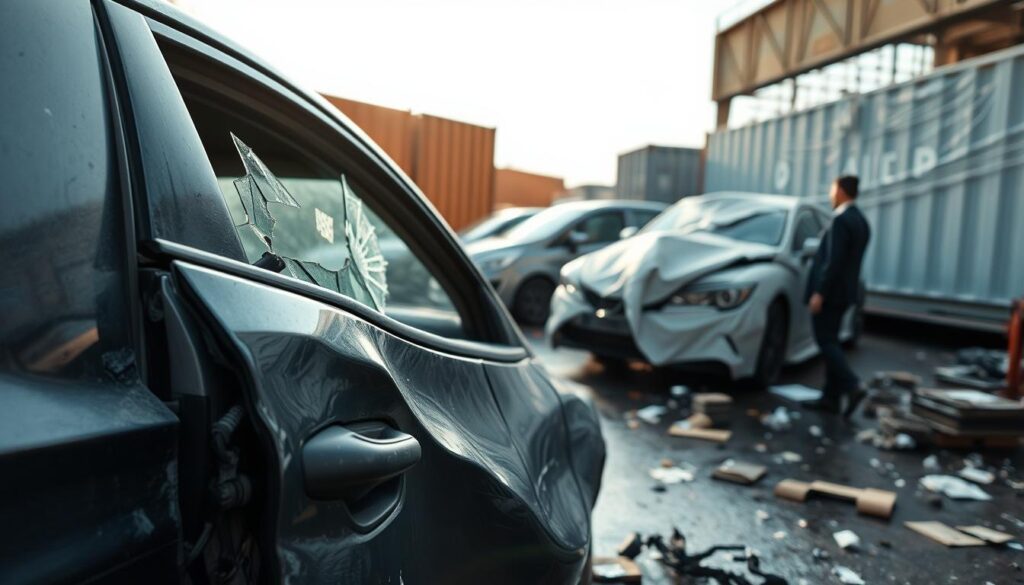
Documenting every flaw at delivery gives the strongest basis for any claim. Start with clear photos from multiple angles and note visible issues on the paperwork before the driver departs.
The transport company bears responsibility for safe transit, and their insurance must be notified immediately. Comparing pre-shipping images to delivery photos proves the case for damage that occurred in transit.
BestCarShipping Inc. uses years of experience to guide owners through the claim process. The team supplies step-by-step information and helps collect the evidence insurers require.
“A thorough delivery inspection speeds claims and protects your coverage.”
- Record condition with high-res photos and notes.
- Mark all issues on the Bill of Lading.
- Send images to insurer and to the transport company promptly.
| Action | Why it matters | Outcome |
|---|---|---|
| Immediate photos | Creates time-stamped evidence | Supports faster claim approval |
| Note on delivery form | Records issues before driver leaves | Clarifies liability for the carrier |
| Contact insurer | Begins official review | Activates coverage and next steps |
| Expert support | Guides documentation and filing | Improves chances of full resolution |
For detailed preparation before transit, review our guide on how to prepare a car for. Questions about coverage or the claim process are handled by our team with clear, prompt answers.
Mastering the Bill of Lading
Owners should treat the Bill of Lading as their primary proof of condition at delivery. This document is the legal contract that records vehicle status at pickup and at handover.
Always inspect before signing. Complete a full walk-around and note any visible damage on the BOL. Do not sign the form until the inspection is finished.
The Importance of Driver Signatures
Have the driver sign or initial every notation about damage. That signature is the strongest proof the transport company acknowledged the issue.
If the driver will not sign, contact the company immediately and record the refusal. Request a signed copy of the Bill of Lading and keep it with your records.
“A signed Bill of Lading is the foundation for any successful claim.”
- Keep the signed BOL: Store it with photos and notes.
- Refusal protocol: Call the carrier and document the time and response.
- Service help: For guidance, contact BestCarShipping Inc. at (307) 288-5972 or info@bestcarshippinginc.com.
| Item | Required action | Why it matters |
|---|---|---|
| Bill of Lading | Record condition at delivery and keep signed copy | Serves as legal contract and core evidence |
| Driver signature | Obtain initials or signature on damage notes | Shows transport company acknowledgment |
| Refusal handling | Contact company and document time-stamped response | Preserves your rights if dispute follows |
Capturing Essential Evidence
High-quality documentation turns uncertainty into a verifiable claim. Owners should start with wide shots, then add close-ups of any scratches, dents, or misalignment.
Use high-resolution photos from multiple angles. Include overall images that show vehicle position on the trailer and tight shots of each flaw. Timestamped files add strong proof.
Using High-Resolution Photography
Capture both the full vehicle and focused details. Shoot from three distances: wide, mid, and macro. Higher pixel counts reveal tiny paint chips and seam gaps that matter to adjusters.
Incorporating Reference Objects
Place a coin, key, or ruler near damage to show scale. This helps the insurance reviewer judge severity and cost. Note object type in your photo log.
The Role of Video Documentation
A continuous walk-around video provides context. Narrate brief notes while recording and pan slowly to show panel edges and hardware.
Pro tip: For special handling needs, consult guidance on flat-tire transport guidance to avoid missed issues during delivery.
“Clear photos and video create an indisputable timeline for your case.”
| Evidence Type | What to Capture | Why it Helps |
|---|---|---|
| Wide photos | Full vehicle on trailer and surroundings | Shows overall condition and placement |
| Close-ups | Scratches, dents, seals, and hardware | Documents exact damage details |
| Reference objects | Coin, key, or ruler beside damage | Provides accurate scale for adjusters |
| Video walk-around | Continuous pan with short narration | Captures context and movement not seen in photos |
Creating a Pre-Shipping Condition Report
Before pickup, document the vehicle thoroughly to set a clear baseline for liability.
Start with wide, mid, and close-up photos. Capture each side, the roof, undercarriage if accessible, and the interior. Record short videos that pan slowly and narrate any prior wear.
Timestamp files and store them in one folder. Keep printed copies with the Bill of Lading for easy reference.
Why this matters: A thorough pre-shipping condition report proves the car’s state before transit. That documentation makes it much harder for a transporter to claim damage was pre-existing.
- Take clear photos of all panels and trim.
- Note scratches, dents, and existing marks in a written log.
- Retain originals and share copies with the carrier and insurer.
“A complete, timestamped report is the strongest evidence if a dispute arises.”
| Item | Action | Purpose |
|---|---|---|
| Wide photos | Shoot full vehicle on driveway or garage | Shows overall condition and baseline |
| Close-ups | Detail existing scratches and dents | Distinguishes old wear from new damage |
| Video log | Walk-around with narration | Provides continuous context for transit review |
For more preparation tips, review our top tips for stress-free vehicle transport.
Filing a Formal Claim
File a timely notice of loss so the carrier and insurer can begin their review. Most contracts require notification within 24 to 48 hours of delivery to preserve your rights and coverage.
Start by calling the transport company and your insurer immediately. Provide the Bill of Lading number, contact information, and a brief description of the situation.
Follow that call with written notice. Attach clear photos and supporting documentation. This creates a paper trail for future claims.
- Include the Bill of Lading number and all photos of the condition.
- Ask the company for a claim number and use it in all communications.
- Keep copies of every email, form, and repair estimate.
“Prompt, complete documentation speeds review and protects your right to compensation.”
| Action | What to include | Why it matters |
|---|---|---|
| Initial call | Bill of Lading, delivery date, contact details | Starts official claim and documents time |
| Written notice | Photos, description, signed forms | Creates a verifiable paper trail |
| Follow-up | Claim number, repair estimates, insurer updates | Ensures steady progress toward resolution |
BestCarShipping Inc. offers help with this process and can explain state requirements. For service and guidance, call (307) 288-5972 or visit our page about car shipping in Scottsville, Kentucky.
Obtaining Professional Repair Estimates
Obtain multiple professional quotes so the insurance review reflects accurate repair costs.
Start with two to three estimates from certified collision shops or dealer service centers. Each estimate must list labor hours, part numbers, and a clear description of proposed repairs.
These documents support your claim and help the transport company and insurer assess the case. Provide copies with your delivery condition report and photos.
- Choose shops experienced with the specific damages to your vehicle.
- Request written breakdowns for labor, parts, and any sublet work.
- Keep originals and send digital copies to the insurance company promptly.
Detailed estimates speed settlement. They show realistic costs and reduce back-and-forth with adjusters. This helps resolve disputes and authorize repairs faster.
“Multiple certified estimates create a clear, fair basis for repair approval.”
| Action | What to include | Benefit |
|---|---|---|
| Obtain 2–3 estimates | Labor, parts, repair steps | Establishes fair market costs |
| Choose certified shops | Stamped or signed quotes | Boosts credibility for claim |
| Share with insurer | Attach photos and BOL | Speeds approval and payment |
Navigating Insurance Coverage and Liability
Knowing who holds liability before filing a claim helps owners avoid delays and unnecessary denials. This section explains carrier liability and personal auto policies so owners have clear next steps.
Carrier Liability Insurance
Every federally registered auto transport carrier must carry liability insurance. That policy responds first for loss or damage caused by negligence in transit, including dents from road debris or handling errors.
Carrier coverage should be documented in your delivery paperwork. Ask the company for their insurer name and policy limits when you arrange pickup.
Personal Auto Insurance Policies
Personal insurance may offer supplemental protection. Some policies include an in-transit clause that covers damage while the vehicle is transported.
Owners should confirm exclusions and deductible amounts before filing. If carrier limits fall short, personal coverage can help, but it may trigger a deductible or affect rates.
- Verify carrier liability and policy limits before loading.
- Check your own policy for an in-transit clause and exclusions.
- Contact the transport company and insurer immediately after delivery to start the claim process.
BestCarShipping Inc. provides clear information and assistance when liability is unclear. For guidance specific to your route, see our page on car shipping in Charlotte, Michigan or call (307) 288-5972.
Exploring Legal Options for Denied Claims
Denied payouts call for clear records and prompt action to preserve recovery options. Keep all photos, the Bill of Lading, repair estimates, and written denials from your insurer or carrier.
The FMCSA accepts formal complaints when a carrier refuses responsibility. Filing with the Federal Motor Carrier Safety Administration can start a regulatory review of the carrier’s practices and liability.
Small claims court offers a cost-effective path for many disputes. Verify your claim value against your state limits before filing. This can speed resolution without heavy attorney fees.
- Document everything: time-stamped photos and written denial letters help any legal process.
- Consider small claims: affordable and faster for modest damages.
- Seek counsel: consult an attorney when coverage gaps or high-value damages exist.
“Clear documentation and informed legal choices increase the chance of fair recovery.”
| Action | When to use | Benefit |
|---|---|---|
| FMCSA complaint | Carrier denial of liability | Regulatory review and records |
| Small claims court | Claim within state limits | Lower cost, quicker hearing |
| Attorney consultation | Large or complex claims | Legal strategy and negotiation |
BestCarShipping Inc. can guide customers through this process. Call (307) 288-5972 or email info@bestcarshippinginc.com for assistance exploring legal options.
Proactive Strategies for Damage Prevention
A clear prevention plan starts with matching transport options to vehicle value and route exposure. Selecting the proper type of transport reduces risk and gives owners peace of mind.
Enclosed transport offers the highest level of protection against road debris and weather. It is the recommended choice for high-value or classic cars that require extra coverage and minimal exposure during transit.
Open transport remains the cost-effective option for many moves. It saves on costs but leaves vehicles exposed to the elements and road debris for the duration of the shipping time.
Preparation and carrier selection
Proper preparation prevents common issues. Remove personal items, disable alarms, and secure loose parts before pickup.
Research the transport company’s safety record and insurance policy. Confirm coverage limits and ask for written information about their insurance and procedures.
- Choose enclosed for maximum protection when value or condition is critical.
- Pick open transport to save money when exposure is acceptable.
- Contact the service team with questions: call (307) 288-5972 or email info@bestcarshippinginc.com for tailored answers and help.
“Investing in the right type of transport and proper prep minimizes risk and speeds any necessary follow-up.”
Conclusion
Effective documentation and prompt action make resolution simpler and faster. Plan ahead and keep clear records to save time and secure protection for valuable items during transport.
If a car damaged claim arises at delivery, document photos, note issues on forms, and contact carrier plus insurer right away. Quick steps improve claim outcomes and reduce delays.
Choose a reputable transport provider and inspect vehicles at handover. For questions or further help, contact BestCarShipping Inc. at (307) 288-5972 or email info@bestcarshippinginc.com. Their team uses experience to provide clear answers and support.