
Passport Transport offers over 50 years of focused experience in auto transport and logistics. This guide outlines essential steps to plan and protect your vehicle during colder months with clear, business-oriented advice.
Proper planning makes a big difference when you arrange car shipping across long distances. Follow proven procedures to keep your vehicle secure and avoid common problems that arise when temperatures drop.
Reliable transport partners handle every detail with care and professional oversight. For questions or personalized service, contact Passport Transport at (307) 288-5972 or info@bestcarshippinginc.com.
Key Takeaways
- Plan early and document vehicle condition before transit.
- Choose experienced auto transport providers with proven safety practices.
- Prepare batteries, fluids, and seals for cold-weather transit.
- Opt for reliable loading methods and secure tie-downs.
- Keep clear communication and tracking through pickup and delivery.
Understanding the Risks of Winter Transport

Cold-season routes often bring unpredictable conditions that extend delivery windows. Professional carriers prepare for slower movement and periodic hold times during the harsh months.
Weather-Related Delays
Severe weather can force carriers to pause or reroute for safety. These interruptions increase transit time and may change scheduled pickup or drop-off dates.
Expect communication from your provider when forecasts affect timing. Transparency helps you adjust plans and reduces surprise costs.
Road Conditions
Icy and snow-packed road surfaces require experienced drivers and careful routing. Safe handling of transport rigs protects both the load and other motorists.
- Harsh weather often means longer arrival windows and occasional temporary detours.
- Carriers monitor road conditions in real time to choose safer corridors.
- Reduced daylight and winter conditions can slow operations and extend transit.
Understanding these risks lets you plan with realistic expectations and keeps your vehicles secure during movement.
Essential Winter Car Shipping Tips in the USA
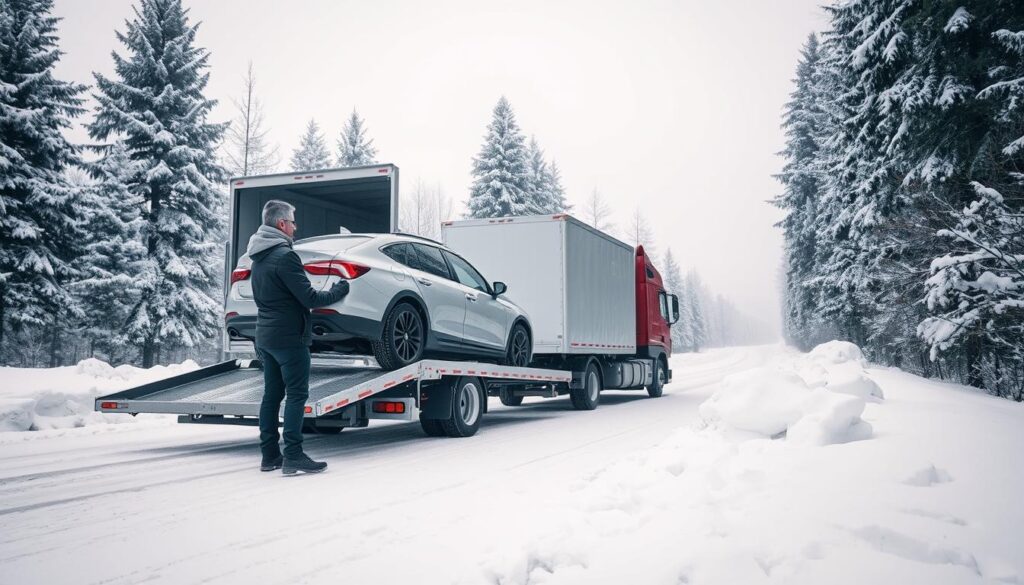
Reserve service two to four weeks before desired pickup to manage demand and cost fluctuations. Passport Transport brings over 50 years of experience and recommends early booking to secure preferred dates and better pricing.
Preparation reduces delays. Compare carriers and service options to balance cost with reliable delivery time. Choose a provider with clear insurance, transparent pricing, and a record of safe handling during harsh conditions.
- Book early: peak months raise demand and affect availability.
- Compare options: open vs. enclosed, door-to-door delivery, and transit windows.
- Prepare the vehicle: basic checks minimize weather-related delays and road hazards.
- Verify reputation: read reviews and confirm licensing before you commit.
For a detailed route example and rate factors, see our vehicle transport guide. Contact Passport Transport at (307) 288-5972 or info@bestcarshippinginc.com for tailored service.
Choosing Between Open and Enclosed Transport
Deciding between open transport and enclosed transport starts with assessing how much protection your vehicle needs.
Benefits of Enclosed Trailers
Enclosed transport is the gold standard for protecting high-value vehicles from road debris and harsh weather. It provides a covered, often climate-moderated space that limits exposure to salt and grit.
Owners of luxury and classic cars often select an enclosed carrier. This option reduces cosmetic risk and gives peace of mind for collectors or sellers.
Open transport remains a cost-effective choice for everyday vehicles. It suits routine moves when budget and availability matter more than maximum protection.
- Choose based on value, risk tolerance, and budget.
- Enclosed trailers offer extra security and fewer exposure-related repairs.
- Reputable carriers provide both options so customers can match service to need.
“Selecting enclosed transport is an investment that minimizes cosmetic damage during transit.”
For more on carrier types and detailed service options, review our open auto transport services guide.
Preparing Your Vehicle for Cold Weather Transit
Simple maintenance steps will reduce loading hold-ups and protect the vehicle during cold weather transit. A concise checklist ensures carriers can secure and move vehicles without avoidable delays.
Battery and Fluid Checks
Confirm the battery is fully charged and test cranking ability. Low output batteries fail more often during cold months and can delay pickup.
Top off fluids, but keep fuel at roughly a 1/4 tank to meet safety rules and reduce weight. Add winter-grade antifreeze where recommended.
Tire Pressure Management
Measure inflation before carrier arrival. Cold weather causes drops in air pressure, so set tires to manufacturer specs.
Removing Personal Items
Clear all personal belongings. Loose objects are not covered by insurance and can shift during transit.
Clean the vehicle for a clear pre-shipping inspection. This step helps both customer and carrier document condition accurately.
- Quick checklist: battery, fluids, 1/4 fuel, tire pressure, remove items, clean vehicle.
- These preparation steps aid safe loading and reduce risk during transport and delivery.
For related guidance on cross-border moves and to arrange vehicle transport, review our vehicle transport page or contact Passport Transport at (307) 288-5972.
Managing Expectations for Delivery Timelines
Expect delivery windows to shift during long routes; realistic timelines reduce stress and confusion.
Cross-country vehicle transport generally takes about 7 to 10 days. This is a safe baseline for most moves and helps set reasonable expectations for car shipping time.
Several factors change that estimate. Severe weather, high seasonal demand, and limited carrier availability can extend transit and cause delays.
Passport Transport uses its decades of auto transport experience to give practical, realistic delivery windows. Clear communication keeps customers updated when conditions shift.
- Book early: early preparation reduces pricing surprises and secures preferred rates.
- Expect updates: carriers may reroute to safer corridors and revise arrival times.
- Plan personal schedules: align pickup and delivery plans with likely transit ranges.
“Transparent timelines and open communication make vehicle transport predictable and manageable.”
For guidance on cost and timing, review our auto shipping cost page or contact Passport Transport at (307) 288-5972 or info@bestcarshippinginc.com. We work to minimize time on routes while keeping vehicles secure during transit.
Verifying Carrier Insurance and Licensing
Confirming a carrier’s credentials prevents costly surprises and protects your vehicle investment.
Before you commit to a transport service, make sure the company is licensed with the FMCSA. This simple check reduces risk and shows the carrier follows federal rules.
Verify that the carrier carries comprehensive cargo insurance. Ask clear questions about coverage limits, deductibles, and any exclusions that could affect your car during shipping.
Reputable auto transport companies will provide proof of licensing and insurance on request. Request documents in writing and keep copies with your booking details.
- Ask specific questions about policy limits and covered events.
- Confirm which services the insurance covers during pickup, transit, and delivery.
- Contact the company or our team with any insurance questions to put your mind at ease.
“Protecting your investment starts with due diligence and verifying carrier legitimacy.”
If you have questions about a carrier or need help confirming credentials, Passport Transport is available at (307) 288-5972 or info@bestcarshippinginc.com.
Navigating Seasonal Pricing and Demand
Strategic timing can lower costs when arranging auto transport during slower months. Demand typically eases, so customers find more flexible pricing and greater carrier availability.
Compare options such as open transport or enclosed service to match budget and protection needs. Flexible schedules often yield better rates for standard vehicles and collector vehicles alike.
Understanding how market demand affects routes and delivery time helps avoid unexpected delays. Passport Transport uses decades of experience to secure competitive rates and clear timelines.
- Book off-peak: lower demand can reduce cost and improve pickup windows.
- Compare carriers: evaluate pricing, insurance, and transit time.
- Plan routes: flexible delivery dates reduce reroute risk during busy periods.
“Choosing the right month and service type can unlock significant savings without sacrificing reliability.”
Contact Passport Transport at (307) 288-5972 or info@bestcarshippinginc.com for tailored rate comparisons and scheduling support.
Protecting Your Vehicle from Road Salt and Debris
Choosing a protective transport option reduces the chance of cosmetic and mechanical harm.
Road salt and grit accelerate corrosion and chip paint during harsh months. Owners who need extra care often prefer enclosed transport for superior coverage.
Open transport exposes vehicles to spray, debris, and salt treatments applied on many routes. That exposure can lead to long-term cleanup and repair costs.
Professional carriers use quality straps, wheel protectors, and covered trailers to limit surface damage. They also follow loading practices that reduce contact with salt and road grime.
- Protect value: shield finish and undercarriage to avoid corrosion.
- Choose equipment: high-grade trailers lower exposure risk.
- Plan for demand: secure the right service early during busy months and rates spikes.
“Proactive protection is the most effective way to keep a vehicle arriving in the same condition it left.”
For questions about carrier procedures or to arrange secure transport, contact Passport Transport at (307) 288-5972 or info@bestcarshippinginc.com.
Inspecting Your Car Upon Arrival
Inspecting your vehicle right after delivery ensures any transit issues are caught immediately. Take a moment at handoff to verify condition before the carrier leaves.
Documenting Damage
Compare the delivery report with your original photos. This side-by-side check makes it easy to spot new dents, scratches, or fluid leaks.
Make sure to take clear, dated photos of any concerns and record them on the Bill of Lading. Signed notes on that form are essential for claims with the carrier.
| Item to Inspect | Why It Matters | Action If Problem Found |
|---|---|---|
| Exterior panels & paint | Road debris and handling can cause chips | Photograph, note on Bill of Lading, notify carrier |
| Tire pressure & tread | Cold and transit affect pressure and wear | Measure psi, document differences, request carrier note |
| Undercarriage & fluids | Road salt and leaks cause long-term damage | Record photos, schedule inspection, keep records for claim |
“A thorough post-delivery inspection protects your interests and holds the carrier accountable.”
For professional support or to arrange future vehicle transport, consider our Charlotte vehicle transport service at Charlotte vehicle transport. Contact Passport Transport at (307) 288-5972 or info@bestcarshippinginc.com.
Conclusion
Small steps before pickup can prevent most problems and protect vehicle value during transit. A a strong, clear plan and a trusted company reduce surprises and keep delivery on track.
Proper preparation and the right choice of carrier help manage cost and seasonal demand. Choose experienced providers for added protection and reliable service.
For details or to get a quote, review our best car shipping Houston guide or call (307) 288-5972. Email info@bestcarshippinginc.com with any questions. Thank you for trusting Passport Transport with your auto needs; our team stands ready to ensure a safe, stress-free delivery.