
Intercity Lines has offered professional auto transport since 1980. Owners facing a non-running vehicle need a clear plan. This guide lays out the logistics and care required to move an inoperable unit safely.
Shipping a non-running car differs from standard transport. It often needs special equipment, extra planning, and trained staff. Teams must secure each vehicle to avoid damage and delays.
The process includes assessment, specialized loading, and coordinated delivery. Professionals protect your asset at every step. Clear communication and a tailored quote help owners avoid surprises.
Key Takeaways
- Non-running units require specialized equipment and handling.
- Experience matters—choose a carrier with a long track record.
- Expect a tailored plan, not a standard quote.
- Proper securing and loading reduce damage risk.
- Clear timelines and communication prevent extra costs.
Understanding Car Shipping for Non-Running Vehicles Explained
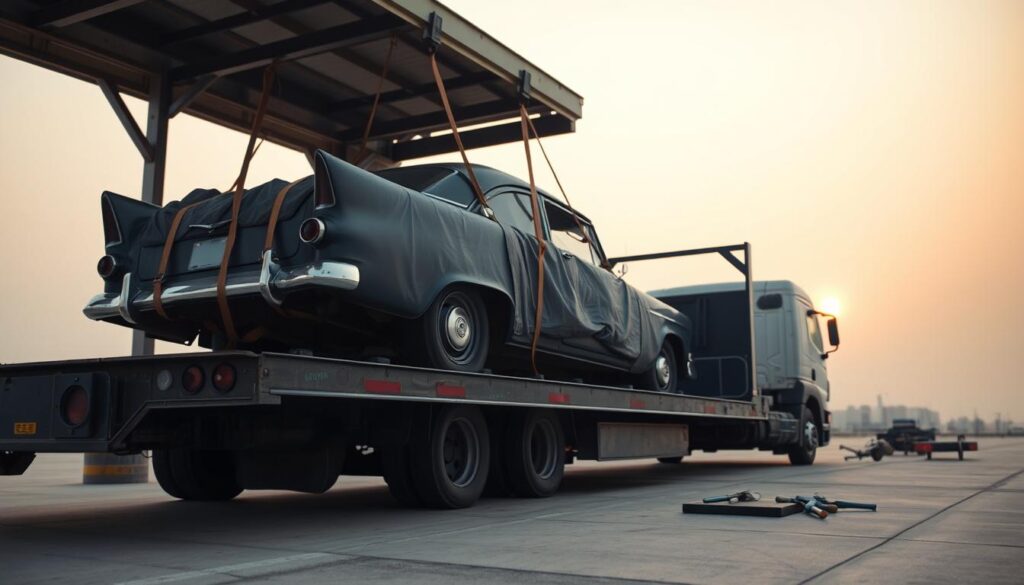
Handling inoperable cars safely starts with understanding the specific risks and tools needed. Intercity Lines has refined its auto transport methods since 1980 to move immobile units with care.
Professional teams assess each vehicle before pickup. They determine needed equipment, securement points, and loading strategy. This prevents damage and delays.
Standard carriers may lack the gear or crew training to load a non-running car without prior notice. Choosing a specialist reduces surprises and speeds up delivery.
Clear communication about condition, access, and required services keeps costs down. Proper planning avoids common complications when vehicles cannot be driven onto a trailer.
- Experienced providers offer tailored quotes and handling plans.
- Specialized equipment and trained staff ensure safe loading and transit.
- Accurate condition reports streamline pickup and delivery.
For practical guidance on affordable options, see the cheapest way to move a non-running.
Defining Inoperable Vehicle Status

A clear status check—can it roll, steer, or stop—shapes the entire transport plan. Intercity Lines has handled auto transport since 1980 and emphasizes precise condition reporting at the time of booking.
Categorizing Vehicle Condition
Teams classify an inoperable vehicle by three simple tests: roll, steer, and brakes. If a unit cannot roll due to flat tires or a locked parking brake, the pickup requires winching or a tilt bed.
Common Mechanical Failures
Flat tires, seized brakes, and dead batteries are the common causes that change the handling plan. Each fault often adds equipment and labor time and can increase the final quote.
The Importance of Accurate Descriptions
Provide precise details. Accurate descriptions let carriers prepare the right gear and avoid delays at pickup. When owners list battery status, tire condition, and steering ability, companies can estimate delivery time and final cost more reliably.
For guidance on engine-related issues and expectations, consult the shipping car with engine problems resource.
Essential Equipment for Successful Transport
Proper loading starts with the right toolkit and trained operators at pickup. Winches and forklifts are the two most common tools that determine how an immobile unit gets onto a trailer.
The Role of Winches and Forklifts
Winches pull a rolling vehicle safely up a ramp. They reduce strain on straps and cut the chance of damage during loading.
When a unit will not roll or steer, a forklift is the practical solution. Using a forklift often adds labor and cost, but it protects the asset and the truck.
- Essential equipment like winches and forklifts lets a carrier manage loading and delivery with care.
- Hydraulic liftgates and securement tools keep the load stable and speed up the pickup process.
- Specialized gear is required if the brakes are non-functional to prevent unintended movement.
“The right equipment minimizes damage and keeps transit time predictable.”
Every carrier in the network is checked to ensure assigned trucks have the needed tools. That way, the company reduces risk and keeps service reliable.
Comparing Open and Enclosed Trailer Options
Open and enclosed rigs offer different trade-offs in cost, access, and surface protection. Open trailers are common and economical. They suit routine transport where weather is not a major concern.
Enclosed transport gives superior protection from road debris and elements. It is the preferred choice for high-value or delicate vehicles.
- Open trailers lower base cost but increase exposure to the elements and potential damage.
- Enclosed units shield a vehicle from debris and weather during long hauls.
- Proper equipment and careful loading reduce surface risk on open rigs.
“Selecting the right trailer ensures protection throughout the entire transport journey.”
| Aspect | Open Trailer | Enclosed Trailer |
|---|---|---|
| Cost | Lower | Higher |
| Protection | Limited | Superior |
| Loading | Faster, careful tie-downs | Slower, staged loading |
| Best use | Everyday moves | High-value or show units |
Our network of carriers offers both options and evaluates each truck and trailer against safety standards. Customers can review choices and select the right trailer based on asset value and risk tolerance. For tips on planning a stress-free move, see stress-free vehicle transport.
Factors Influencing Shipping Costs
Route length and pickup access often have the biggest impact on total transport charges.
Distance drives base mileage charges. Remote or congested routes raise labor time and fuel use.
Pickup complexity adds surcharges. Non-running units often incur extra fees, typically $150 to $350. Forklift use can add about $150 per hour.
Seasonal and equipment effects
Demand spikes in summer and holidays push prices up. Enclosed trucks cost more than open trailers due to protection and limited availability.
- Distance and route complexity affect time and price.
- Expect a non-running surcharge and possible hourly equipment fees.
- Seasonal demand changes market rates and quote timing.
“A clear, detailed quote prevents surprises at pickup.”
| Factor | Impact on Price | Typical Range |
|---|---|---|
| Distance / Route | Primary driver | Varies by miles |
| Condition / Equipment | Surcharges and hourly labor | $150–$350 surcharge; $150/hr forklift |
| Trailer Type | Open vs enclosed | Enclosed: higher |
| Season | Market demand | Higher in peak months |
The company’s quote process accounts for these factors to give an accurate estimate. Compare offers and confirm all fees are listed before you book. See a detailed breakdown of typical rates at cost to ship a car.
Preparing Your Vehicle for Pickup
Simple actions before the carrier arrives can reduce labor time and extra fees. Owners should follow a short, practical checklist to make loading safer and faster.
Begin with the basics: check the brakes and inspect the tires. If you can safely inflate flat tires, do so. Proper inflation helps prevent extra handling and potential damage during loading.
Disconnect the battery before the pickup team arrives. This avoids electrical faults while the unit is secured and in transit.
- Remove loose items from the interior to prevent movement and interior damage.
- Note steering and brake condition on the pickup paperwork so crews bring the right gear.
- Label keys and give clear access instructions to the driver to speed up loading.
“Proper preparation reduces risk and helps the carrier load the vehicle safely.”
BestCarShippingInc offers guidance if owners are unsure about steps. Contact customer care at (307) 288-5972 or email info@bestcarshippinginc.com for specific pickup requirements.
Navigating Auction and Storage Logistics
Timing matters: auction yards commonly start charging daily storage after the first 48 hours. Delays at pickup can add unexpected cost to the final price.
Coordinate pickup windows with the chosen transport company before bidding or release. Clear timing prevents long holds on the lot and limits daily fees.
Plan equipment needs. If the unit has flat tires or faulty brakes, notify the company in advance. The right winch, forklift, or trailer reduces onsite labor and speeds loading.
- Confirm pickup date and time in writing.
- Share lot access details and gate codes early.
- Ask the carrier to list equipment on the quote.
Professional support reduces risk. The service manages auction paperwork, coordinates the pickup, and moves your non-running car before fees mount. For help understanding if you can ship a car that doesn’t start, see can I ship a car that doesn’t.
“A well-planned shipment process is the most reliable way to control cost and protect the asset.”
Verifying Carrier Credentials and Insurance
Before booking transport, confirm the carrier’s credentials and insurance to protect your vehicle and peace of mind.
Always request proof of cargo insurance and active registration. Reputable companies show certificates on request and list coverage limits. Intercity Lines, for example, carries $2 million in cargo insurance per load. West Coast Shipping offers up to $1.5 million per shipment.
Ask the carrier to confirm at least $1 million in cargo protection. This threshold helps cover potential damage during pickup, transit, and delivery.
Check safety records and DOT authority. Verify the carrier’s USDOT number and reviews. Our team can assist in checking a company’s record so you know the chosen carrier is legitimate.
- Request an insurance certificate before the truck arrives.
- Confirm enclosed transport credentials when moving high-value or immobile units.
- Document the carrier name, policy limits, and contact details on the booking form.
“Proper verification ensures your vehicle is handled by a trusted company that prioritizes safe delivery.”
| Item | Recommended Minimum | Example Provider |
|---|---|---|
| Cargo Insurance | $1,000,000 | Intercity Lines: $2,000,000 |
| Per-Shipment Coverage | $1,000,000 | West Coast Shipping: $1,500,000 |
| Documentation to Request | Insurance certificate, USDOT# | Policy copy and carrier authority |
Need help verifying a carrier? Contact BestCarShippingInc at (307) 288-5972 or email info@bestcarshippinginc.com. For local service details, see our Charlotte, Michigan page at auto transport Charlotte Michigan.
Managing International Shipping Requirements
International moves add a layer of port procedures that change loading methods and timelines.
Containerized ocean transport is the common choice when an immobile unit must cross borders. Export warehouses use certified forklifts and crate-style lifts to place the asset into a container safely.
Equipment type at the port is a major factor in total cost and safety. Forklift hours, container prep, and yard handling all affect the final price.
- Specialized forklifts load an inoperable vehicle into containers.
- Documentation and customs clearance shape the overall process and timeline.
- Request a detailed quote that lists extra handling and port charges.
Choose experienced companies that manage packing, lashing, and export paperwork. Their expertise reduces risk during the ocean shipment and helps control price.
“Correct equipment and clear documentation protect the asset from origin to final delivery.”
For guidance on extra fees and handling, check our note on extra handling fees.
Conclusion
A clear plan, the right equipment, and a trained team make the final delivery predictable and safe.,
Car shipping and car transport of an immobile unit demand attention to detail. The auto transport provider must confirm gear, insurance, and timeline before pickup.
Understand the likely cost and extra fees, and factor in time for loading and transit. Enclosed transport may raise the price but adds protection during shipment. Follow the preparation steps and document condition to smooth the process.
Need an accurate quote? Contact the team for professional service and reliable options. Email info@bestcarshippinginc.com or call (307) 288-5972. BestCarShippingInc helps owners ship non-running units the right way in this industry.