
Shipping a vehicle involves more than schedules and routes. Federal law requires auto transport carriers carry liability coverage for legal operation. Professional transport companies must also provide basic protection for every vehicle they move.
Understanding coverage helps manage risk from loading through final delivery. Most shipping insurance policies cover damage during pickup, transit, and handoff. Many owners prefer supplemental protection when the declared value exceeds basic limits.
Before dispatch, verify the assigned carrier’s policy and USDOT number. Confirm coverage limits match the vehicle’s value and request a copy of the insurance policy. Clarify whether the provider is a broker or a carrier, since responsibilities differ.
For expert guidance and a reliable quote, review trusted transport partners such as top-rated car shipping experts.
Key Takeaways
- Federal law mandates basic liability for auto transport carriers.
- Most policies cover loading, transit, and delivery damage.
- Request the carrier’s insurance policy and verify USDOT number.
- Consider supplemental coverage for high-value vehicles.
- Differentiate brokers from carriers to set clear expectations.
- Review personal auto policies for possible secondary protection.
Do You Need Insurance to Ship a Car?
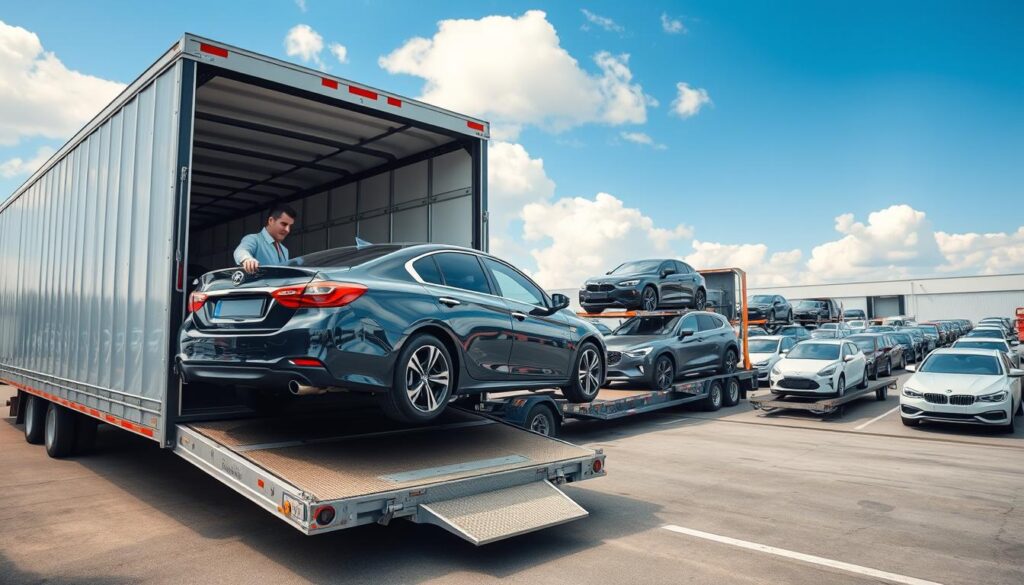
Licensed transport companies must maintain liability coverage that applies from pickup through delivery. Federal rules make that coverage the primary protection for vehicles while under carrier control.
Most owners do not have to purchase extra policies for standard moves. Still, confirming limits is prudent. Ask the assigned carrier for a copy of the policy and check whether the declared value matches the vehicle’s worth.
For long-distance or Hawaii deliveries, carriers often provide specialized routes and documented protection. When value exceeds basic limits, supplemental coverage can bridge gaps.
“Confirm the carrier’s policy limits and clarify whether personal coverage serves as secondary protection.”
- Carriers carry federally required liability that protects vehicles during transport.
- Verify policy limits and licensing before handing over keys.
- Consult an agent about personal policy details that may apply as secondary coverage.
For a step-by-step resource, review the ultimate guide for full details and checklist items.
Understanding Carrier Liability and Cargo Protection

Federal rules set minimum liability limits that carriers must carry before accepting any shipment. These limits form the baseline for legal protection while a vehicle remains under carrier control.
Federal Minimum Requirements
Auto transport companies must hold liability coverage for legal operation and third-party damages. Many carriers also maintain motor truck cargo insurance, which covers physical damage during loading, transit, and unloading.
“Always request the transporter’s Certificate of Insurance (COI) to confirm exact coverage limits.”
Limitations of Cargo Policies
Motor truck cargo policies commonly exclude events such as acts of God, road debris, and personal items left inside the vehicle. Basic cargo protection normally covers driver negligence and handling errors, but not every risk.
At Sherpa Auto Transport, contracted carriers must keep at least $1,000,000 in liability coverage and a minimum cargo limit. For high-value vehicles, confirm the cargo limit equals the vehicle’s replacement value and consider supplemental coverage where gaps exist.
For regional service details and trusted partners, see reputable providers like car shipping in Scottsville, Kentucky.
Essential Types of Auto Transport Coverage
Primary protections vary by carrier and policy; understanding each type helps match coverage to vehicle value.
Automobile liability insurance is the legal baseline for professional carriers. It covers harm the driver causes to others during transit. This protection does not usually pay for physical loss to the vehicle itself.
Motor truck cargo insurance protects the vehicle while in carrier custody. Confirm cargo limits and whether the policy covers loading, transit, and unloading.
Gap coverage bridges the difference between a carrier payout and the vehicle’s market value. This option is useful when declared limits fall short of replacement cost.
Supplemental insurance can extend protection for luxury, classic, or high-value vehicles. Some carriers offer add-ons; Ship A Car Direct provides up to $500 toward a deductible as an extra safeguard.
- Automobile liability — required for legal operation.
- Cargo insurance — covers physical damage while transported.
- Gap and supplemental options — fill value gaps and broaden protection.
“Compare policy limits and confirm what each carrier actually covers before shipment.”
Factors Influencing the Cost of Shipping Insurance
Transport premiums correlate directly with declared value and chosen carriage method. Carriers include basic liability coverage in most quotes at no added fee. That baseline protects against common handling damage during transit.
High-value vehicles raise financial exposure. Supplemental insurance commonly ranges from $50 to $500, depending on distance and declared value.
Enclosed auto transport offers greater protection from weather and road debris. That protection usually comes at a premium compared with open transport.
Longer shipments increase risk for the carrier and can push coverage costs higher. Ask the company for a detailed quote breakdown to see what protection is included and what requires extra purchase.
- Value of the vehicle directly affects premium calculations.
- Transport method (open vs enclosed) changes protection and price.
- Distance of transit influences carrier exposure and cost.
“Request a clear policy breakdown and compare multiple quotes before finalizing a shipment.”
For transparent pricing and tailored options, compare auto shipping quotes and verify what coverage each carrier provides.
Preparing Your Vehicle for Safe Transit
A clear pre-shipment checklist reduces the chance of claims and protects vehicle value. Simple steps before pickup cut risk and speed up any claim process.
Documenting Pre-existing Damage
Take high-resolution photos from all sides, the roof, and the undercarriage. Capture close-ups of scratches, dents, and trim.
Keep timestamps and store images in multiple places. This evidence supports any damage claim and clarifies condition at handoff.
Removing Personal Belongings
All personal items must be removed before carrier arrival. Loose objects can shift and cause interior or cargo damage.
Most coverage excludes personal items, so clearing the cabin preserves protection and avoids denied claims.
Inspecting Upon Delivery
Perform a joint inspection with the driver. Never sign the bill of lading as “clean” if new damage appears.
Report issues immediately. AmeriFreight compensates up to $800 for damage reported within 48 hours of delivery.
| Action | Why It Matters | Suggested Timing |
|---|---|---|
| Photograph vehicle | Creates proof of pre-shipment condition | Before carrier arrival |
| Remove personal items | Prevents interior and cargo damage; aligns with coverage | Day before pickup |
| Joint delivery inspection | Records any new damage on bill of lading | At final handoff |
For a full shipping checklist and step-by-step process, see this guide on shipping a vehicle across the country.
Identifying Red Flags and Avoiding Transport Fraud
Red flags often appear in licensing gaps, odd payment requests, or vague policy explanations.
Fraudulent organizations may display fake USDOT or MC numbers to seem legitimate while lacking proper coverage. Always verify those numbers on the FMCSA website before finalizing any contract.
If a carrier or broker makes its MC number hard to find, treat that as a warning. Reputable providers share licensing and a Certificate of Insurance (COI) without hesitation.
Watch for payment practices that deviate from the original quote. Companies that demand extra funds during the transaction may be attempting a scam. Record all communications and use tracked payment methods.
- Check independent review boards for complaints and patterns of fraud.
- Confirm cargo insurance and policy limits before the vehicle transfer.
- A vague response about coverage or refusal to provide a COI is a major red flag.
“Avoid any transport company that cannot clearly explain coverage or prove legal operating status.”
For concerns or verification assistance, contact Best Car Shipping Inc. at (307) 288-5972 or info@bestcarshippinginc.com.
The Role of Your Personal Auto Insurance Policy
Personal auto policies sometimes offer backup protection when a vehicle is in transit with a licensed carrier. That protection is usually limited and acts as secondary coverage behind the carrier’s cargo and liability insurance.
Policyholders should contact their insurance provider before shipment. Confirm exclusions for commercial transport and any coverage limits that might apply while the vehicle is under carrier control.
The carrier’s liability insurance remains the primary source of protection for damage that occurs during pickup, transit, and delivery. If damage occurs, the carrier’s insurer is typically the first point of contact for filing a claim.
“Relying solely on personal coverage can leave gaps; verify both policies before handing over the keys.”
- Keep a copy of the personal policy and the carrier’s insurance policy in case a claim is needed.
- Consider supplemental coverage when declared value exceeds available protection.
- Document pre-shipment condition to support any claim for damage.
For clarification or assistance, contact Best Car Shipping Inc. at (307) 288-5972 or info@bestcarshippinginc.com.
Selecting a Reputable and Insured Transport Company
Choosing a vetted transport partner starts with validating licensing and driver screening practices. Reputable firms like Sherpa Auto Transport and American Auto Shipping run background checks on contracted drivers. This step reduces risk during pickup, transit, and delivery.
Always confirm a valid USDOT number and active coverage before booking. Verify the carrier’s status on the FMCSA website. Ask for a Certificate of Insurance and review policy limits listed on the quote.
A professional company provides a transparent quote that lists service fees and any insurance costs. Clear communication during the vehicle transport process signals reliable customer care. Read customer reviews for proof of timely delivery and solid claim handling.
“Select firms that explain coverage, show licensing, and answer questions about claims.”
| Verification Step | What to Request | Why It Matters |
|---|---|---|
| USDOT / MC number | FMCSA listing and active status | Confirms legal carrier authorization |
| Driver screening | Background and driving record | Reduces handling errors and damage risk |
| Certificate of Insurance | Policy limits and exclusions | Shows protection during transit |
| Transparent quote | Breakdown of fees and coverage | Avoids surprise costs and disputed claims |
For guidance on interstate vehicle transport, consult this complete guide. For assistance, contact Best Car Shipping Inc. at (307) 288-5972 or info@bestcarshippinginc.com.
Conclusion
A short verification checklist preserves evidence and streamlines any claim.
Understanding car shipping protection helps protect value and reduce stress during transit. Verify the carrier’s credentials and confirm the USDOT number before handoff.
Consider supplemental coverage when market value exceeds basic limits. Document condition with dated photos and remove personal items before pickup.
For questions about policy limits, contact an auto insurance provider or the team at Best Car Shipping Inc. for clear guidance and next steps.
Call (307) 288-5972 or email info@bestcarshippinginc.com for support and confident delivery.