
Intercity Lines delivers secure auto transport solutions for non-running classic vehicles since 1980. The company uses enclosed auto transport and proven loading methods to protect each unit from road debris and weather.
Owners facing restoration or transport needs often ask if shipping non-running vehicles is possible. The answer is yes. Proper gear and trained crews make shipping non-running car models routine.
Intercity Lines arranges full-service car transport, including careful winching, cradling, and enclosed transport options. This ensures safe delivery for project cars and valuable classics.
The team emphasizes clear communication and documented handling. Customers receive timeline estimates and condition reports so expectations match actual delivery.
Key Takeaways
- Enclosed auto transport protects classic car finishes during long-distance shipping.
- Non-running vehicles can be moved safely with winch and cradle techniques.
- Intercity Lines has offered reliable car shipping since 1980.
- Clear pickup and delivery protocols reduce damage risk for project vehicles.
- Professional car transport firms provide documentation and status updates.
Understanding the Logistics of Shipping a Non-Running Vehicle
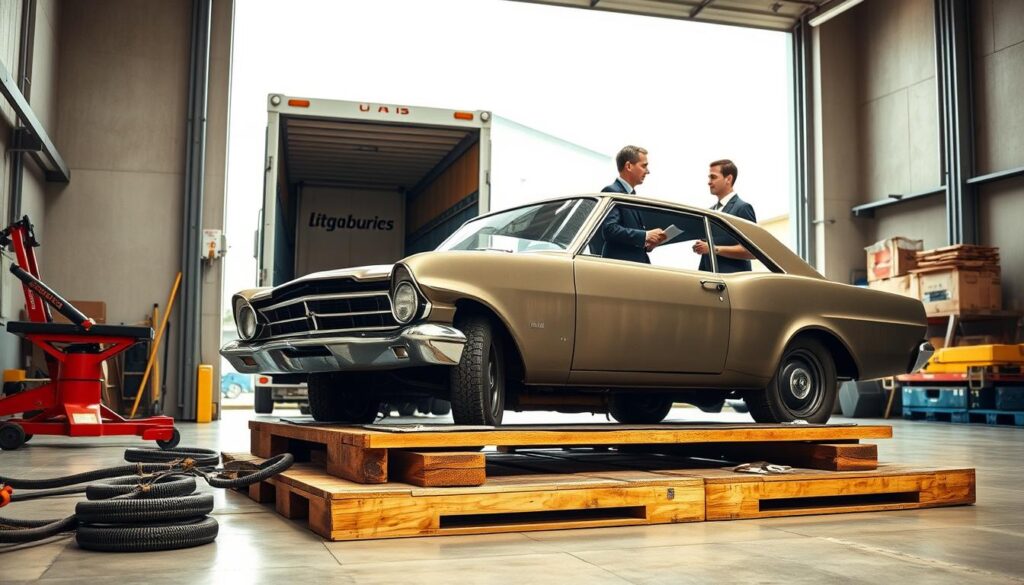
Non-driving vehicles demand careful assessment before any transport crew attempts loading. This process begins with an on-site check to confirm if the car can roll, steer, and stop. Those factors shape the safe handling plan.
Specialized gear is often required. Carriers label these assignments as inop vehicle moves and may add charges for winches, forklifts, or flatbed trucks. When a vehicle is fully inoperable, a flatbed or liftgate-equipped truck ensures secure loading.
- Early condition checks let teams pick the right truck and ensure minimal handling time.
- Experienced carriers provide winch and cradle techniques for prized classic car deliveries.
- Clear planning reduces risk and speeds the overall shipping process.
| Issue | Typical Solution | Best Use |
|---|---|---|
| Cannot roll | Flatbed with winch | Fully inoperable vehicles |
| Steering limited | Cradle and secure straps | Classic car pickups |
| Brake concerns | Hydraulic liftgate | Short-distance moves |
Intercity Lines coordinates carriers and selects the correct transport service to match each vehicle’s needs. For details on cost-effective options, review this cheapest non-running transport guide. Strong planning keeps prized classics protected throughout the move.
Can You Ship a Car That Does Not Run?

Defining inoperable vehicles
Transporting a non-running classic requires a clear condition check before any loading steps begin.
An inoperable vehicle is one that won’t start or is unsafe to drive. Common causes include collision damage, engine failure, or restoration work.
Common reasons for non-running status
Mechanical failure is frequent. A damaged engine, seized parts, or faulty transmission often prevent standard loading onto a trailer.
Collision damage can limit steering or braking. In those cases, crews select flatbeds or liftgate-equipped trucks to reduce movement.
- Assessment first: Teams check if the vehicle will roll, steer, and brake for normal loading.
- Specialized equipment: Winches, cradles, or flatbeds may be required at pickup.
- Accurate quotes: Transport company pricing depends on condition, equipment, and time to load.
- Damage prevention: Securing the classic during loading and transit is the top priority.
Delivery time varies with the vehicle’s condition and loading complexity. For guidance on additional charges tied to inoperable moves, review this extra fees for non-operable car shipping.
Assessing Your Vehicle Condition for Transport
Start by doing a hands-on inspection to spot leaks, loose parts, and visible damage before scheduling transport.
Make sure fluids are not leaking and fasteners are secure. Check tires and steering to confirm whether the vehicle will roll during loading.
Document the current state with dated photos from multiple angles. Photos create a clear record for pickup and delivery reports.
Provide detailed notes on brakes, steering play, and any parts that might shift during handling. This helps the carrier choose winch, flatbed, or cradle equipment.
Intercity Lines guides owners through the inspection process and requires a condition report before the carrier arrives.
“A thorough inspection prevents delays and protects valuable classic car assets.”
- Inspect for leaks and loose parts.
- Photograph damage and unique features.
- Report rolling and steering ability.
- Share findings with the transport company.
Final step: Confirm documentation with the carrier to avoid surprises on pickup. For assistance, contact the team at (307) 288-5972 or info@bestcarshippinginc.com.
Selecting the Right Auto Transport Method
Choosing the proper transport method begins with matching vehicle condition to the trailer type and loading gear needed. This step reduces risk and helps produce an accurate cost ship estimate.
Enclosed auto transport offers maximum protection for classic, antique, and exotic cars. It shields finishes from road debris and weather during long hauls.
Open shipping remains the most economical option. Owners trade exposure for lower price when protection is not critical.
- Loading needs: Determine if a winch or liftgate is required for safe loading.
- Carrier equipment: Confirm the chosen carrier has the right trailer and tools for inoperable vehicles.
- Quotes: Request detailed quotes for both open and enclosed auto transport to compare price and service.
Intercity Lines compares multiple companies and carriers to secure the best balance of price and protection. For specifics on moving vehicles with engine issues, see this shipping with engine problems.
Essential Equipment for Loading Inoperable Vehicles
Loading inoperable vehicles requires purpose-built machinery and experienced crews. Proper gear reduces risk and speeds pickup for classic and project cars.
Winch Systems
Heavy-duty winches are common for non-driving units. A 9,000-lb winch often pulls a non-running car onto the trailer safely.
Best practice uses soft straps and a cradle to protect the bumper and frame during winch loading.
Hydraulic Liftgates
Hydraulic liftgates provide a stable platform for loading and unloading. They are ideal for low-clearance vehicles and reduce undercarriage damage.
Forklift Assistance
Forklifts help when wheel removal or short-distance placement is required. Trained operators secure the load and confirm proper tie-down points.
- Verified equipment: The company confirms each carrier has the right tools before pickup.
- Professional handling: Expert loading prevents damage to the trailer and vehicle.
- Service options: For guidance on whether the vehicle needs to start for transport, see this does the car need to run.
Preparing Your Car for Safe Transit
Proper prep keeps fragile finishes safe and makes loading smoother for crews. Follow a simple checklist to reduce risk and speed pickup and delivery.
Disconnect the battery and any aftermarket electronics to prevent shorts while the vehicle is secured. Confirm there are no major fluid leaks from the engine or transmission.
Remove all loose items from the interior and trunk. Personal belongings are not covered by most carriers and can shift, causing damage during shipping.
- Document condition: Take dated photos from four angles and note existing scratches, dents, and tire condition.
- Check tire pressure: Low or flat tires complicate loading unloading and may require special equipment.
- Secure parts: Use painter’s tape for trim, loose badges, and mirrors to prevent damage in transit.
Intercity Lines provides a printable checklist to confirm each step before the carrier arrives. Proper cleaning and securement let crews focus on safe loading and protect classic car value.
If the vehicle has starting issues, notify the dispatcher so the carrier brings the right winch or flatbed. Early disclosure prevents delays and extra charges.
Comparing Open and Enclosed Auto Transport
Choosing between open trailers and enclosed carriers starts with the vehicle’s value and vulnerability.
Enclosed auto transport provides covered protection from weather and road debris. It is the preferred type for high-value classic car moves. Expect costs roughly 30% to 40% higher than open shipping.
Open carriers remain a practical choice for standard vehicles and shorter hauls. They lower cost but expose the vehicle to the elements and road grit.
Intercity Lines reviews carrier equipment and company practices to match each vehicle to the correct transport method.
Consider condition, security needs, and pickup locations when choosing. For non-running car moves, enclosed options often reduce handling risks.
| Feature | Open Transport | Enclosed Auto Transport |
|---|---|---|
| Protection level | Standard; exposed to debris | High; covered and secure |
| Typical cost | Lower price | About 30%–40% more |
| Best use | Everyday vehicles, budget moves | Classic car, high-value, sensitive vehicles |
| Carrier equipment | Standard trucks, ramps | Specialized trailers, added straps/cradles |
- Make sure the chosen company inspects equipment and confirms handling for inoperable or delicate vehicles.
- Ask carriers about securement methods to avoid damage during transit.
Managing Costs and Surcharges for Inoperable Cars
Estimating final fees for non-operable vehicle moves starts with clear disclosure of condition and pickup complexity.
Non-running surcharges typically add between $100 and $300 for domestic moves. Distance, vehicle size, and the type of equipment needed at pickup drive most extra charges.
Use an online calculator to get an instant quote and plan your budget. A timely quote reduces surprises and helps compare company pricing for car shipping and delivery timelines.
Expect coast-to-coast transport to take about 10–14 days. Planning ahead lowers rush fees and helps secure the best price for the service.
- Distance and route affect base shipping price and delivery window.
- Specialized equipment and labor at pickup cause most surcharges.
- Vehicle size and access constraints influence the final cost ship.
| Factor | Typical Impact | How to Reduce |
|---|---|---|
| Distance | Higher miles raise cost | Book flexible dates for lower rates |
| Equipment need | Surcharge $100–$300 | Confirm tools before pickup |
| Access difficulty | Longer labor time | Provide clear notes and photos |
Transparent pricing helps owners compare quotes. For assistance, contact the team at (307) 288-5972 or info@bestcarshippinginc.com.
Verifying Carrier Credentials and Insurance
Before pickup, verify the carrier’s licensing and cargo insurance limits to reduce risk. This step protects high-value vehicles during any auto transport move.
Intercity Lines carries $2 million of cargo insurance for each load. Customers should also make sure a chosen carrier maintains at least $250k–$1M in cargo insurance.
Request proof of active authority, insurance certificates, and recent references. A reputable transport company will supply documents before scheduling service and provide an accurate quote.
| Item | Minimum Expectation | Why It Matters |
|---|---|---|
| Cargo insurance | $250k–$1M (Intercity $2M) | Covers damage or loss during delivery |
| Operating authority | Active DOT/MC number | Confirms legal carrier status |
| Equipment check | Winch, flatbed, enclosed auto | Matches tools to vehicle condition |
Confirm carriers will inspect the battery and other systems before loading. This prevents delays and helps avoid extra charges tied to condition at pickup.
For insurance questions or credential verification, contact SGT Auto Transport at (864) 546-5038. For guidance about inoperable moves, review this detailed guide.
Conclusion
Final summary: Proper planning and verified credentials safeguard classic vehicle moves. Owners should document condition, secure loose parts, and confirm insurance before pickup.
Use the online calculator to get an instant quote and compare car shipping options. That tool helps estimate total cost and the final price for enclosed or open transport.
For non-running car moves, select a carrier with proven handling and clear insurance limits. Request a written quote and ask about special equipment needed to ship car or to ship non-running safely.
Contact Intercity Lines for a competitive price and professional service: (307) 288-5972 or info@bestcarshippinginc.com.